

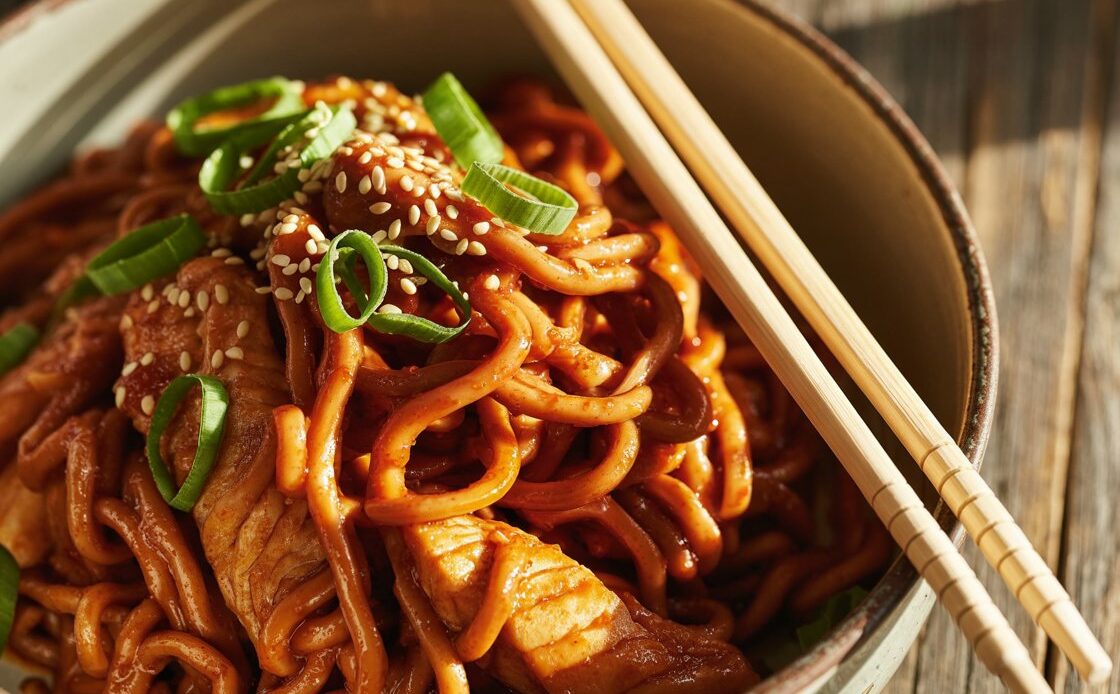
Saucy Gochujang Noodles with Chicken thrive on contrast: a glossy, spicy-sweet sauce that clings to springy noodles, savory depth that keeps every bite interesting, and a fast, one-pan finish that respects busy evenings. This article focuses on the “how it should feel” experience—technique, timing, flavor balance, variations, meal prep, and troubleshooting—while leaving the precise ingredients and instructions for a separate recipe card. The goal is to help this dish become a dependable weeknight hero without diluting creative freedom. Along the way, key tables provide quick answers, and the focus keyword is woven naturally so the guide remains discoverable and enjoyable to read.
Hook: Why These Saucy Gochujang Noodles Win
The appeal of Saucy Gochujang Noodles with Chicken begins with momentum and ends with a payoff that tastes bigger than the clock. The sauce moves through a beautiful transformation—loose to syrupy to glossy—while heat remains assertive yet rounded, and brightness keeps everything lively. This is weeknight food that eats like a treat: minimal fuss, maximum sensation, and a texture-first mindset that elevates the plate without elevating the workload. Instead of fighting time, the method uses it: setting up a simple base, preheating a pan properly, cooking noodles to just shy of done, and finishing with a toss that feels more like choreography than labor.
Another reason these noodles win is versatility. The same foundation adapts to different noodle textures, from springy to chewy to tender, and the protein plays well as sliced, shredded, or ground. The sauce can lean creamier or brighter without losing its identity, and each bowl can be customized at the table to suit varied spice tolerance. That combination—speed, adaptability, and sensory satisfaction—turns Saucy Gochujang Noodles with Chicken into a dish worth repeating often, whether for solo dinners, family nights, or casual hosting when delight matters as much as convenience.
| Item | Value |
|---|---|
| Total Time | 20 minutes |
| Method | One-pan / Wok-style toss |
| Spice Level | Mild to hot (adjustable) |
| Protein Format | Sliced, shredded, or ground |
| Noodles | Ramen, udon, or rice noodles |
| Diet Options | High-protein; gluten-free with rice noodles; dairy-free creamy variants |
Quick Recipe Snapshot – Saucy Gochujang Noodles
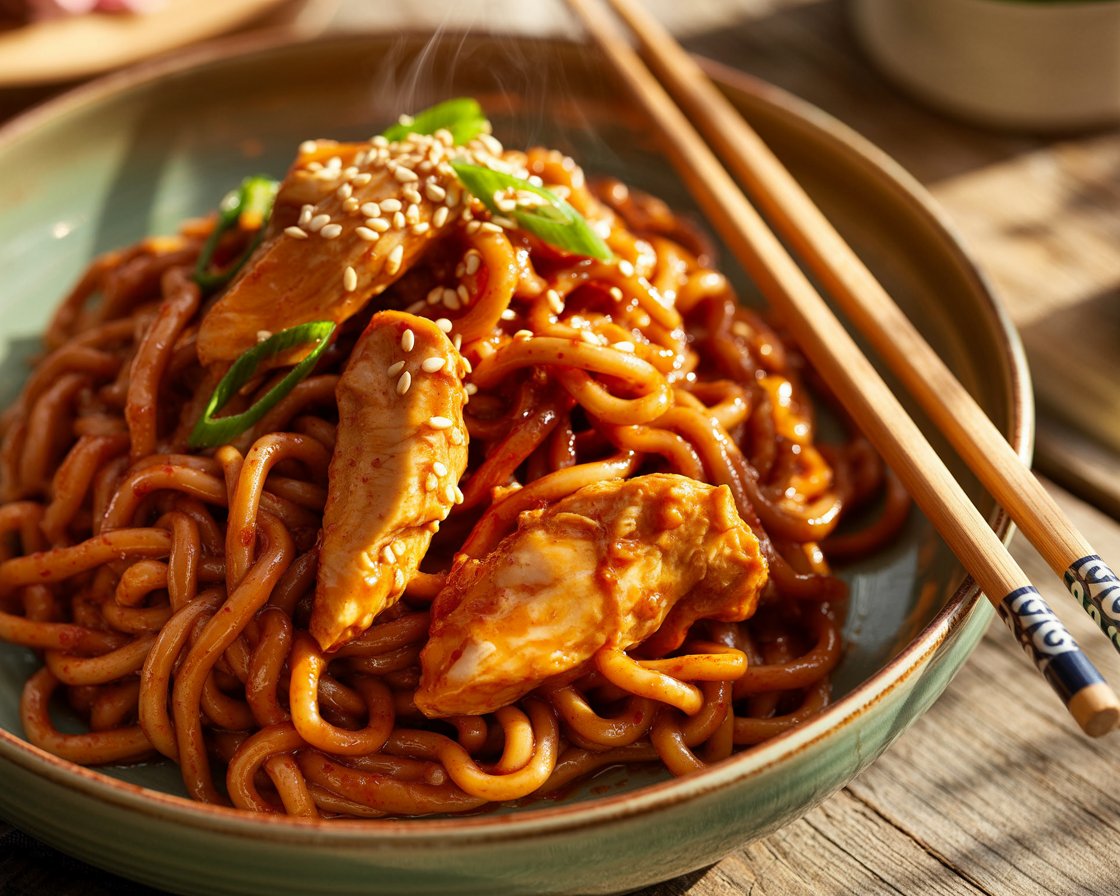
A snapshot clarifies expectations. Saucy Gochujang Noodles with Chicken should finish saucy, not soupy; glossy, not greasy; and balanced across heat, sweetness, savoriness, and brightness. The chicken should remain moist, with light browning that contributes flavor without stealing the show. The noodles should feel bouncy or chewy depending on type, never mushy or clumped. Think of the dish as a jazz trio: spice hums, umami grounds, and acidity conducts, ensuring every note lands in harmony. Building this balance isn’t fussy; it’s deliberate and fast, and it rewards attention in the last few minutes more than anywhere else.
The flow matters as much as the flavor. Work in phases to keep Saucy Gochujang Noodles with Chicken on schedule and under control. Prepare a cohesive base before heat, set tools within easy reach, and treat high heat as a finishing technique rather than a brute-force approach. If the pan is hot, the base is smooth, and the noodles arrive just shy of done, the dish nearly assembles itself. The difference between good and great is usually in the toss—move quickly, taste the balance, and finish with a flourish that adds freshness and contrast.
| Phase | Task | Target |
|---|---|---|
| Prep | Unify base; arrange garnishes and tools | 3–5 min |
| Noodles | Cook to just shy of done | 3–9 min (by type) |
| Protein | Sear hot for juiciness | 4–6 min |
| Final Toss | Reduce, coat, and gloss | 2–3 min |
Outcome Benchmarks
Benchmarks help determine whether Saucy Gochujang Noodles with Chicken has arrived where it should. The sauce should reduce quickly but not scorch; the look shifts from loose to syrupy to a satiny glaze that coats noodles evenly. The aroma should pop with spice and sesame warmth, not smell burnt or dull. Noodles should bend and spring back rather than break or stick, and a light sheen should catch the light instead of an oily slick that runs off the surface. Chicken should slice or shred cleanly and taste seasoned through, not simply coated at the exterior.
Use sound and feel as guides. A lively but controlled sizzle signals appropriate heat; violent sputtering indicates excess moisture or heat too high for the moment. Tossing should feel easy, not resistant; if noodles resist, introduce a small splash of hot water, toss again, and reduce briefly. Finishing garnishes are not decoration but punctuation marks that bring Saucy Gochujang Noodles with Chicken into focus—bright, aromatic, and deeply satisfying.
Ingredients That Matter (Concepts Only) for Saucy Gochujang Noodles
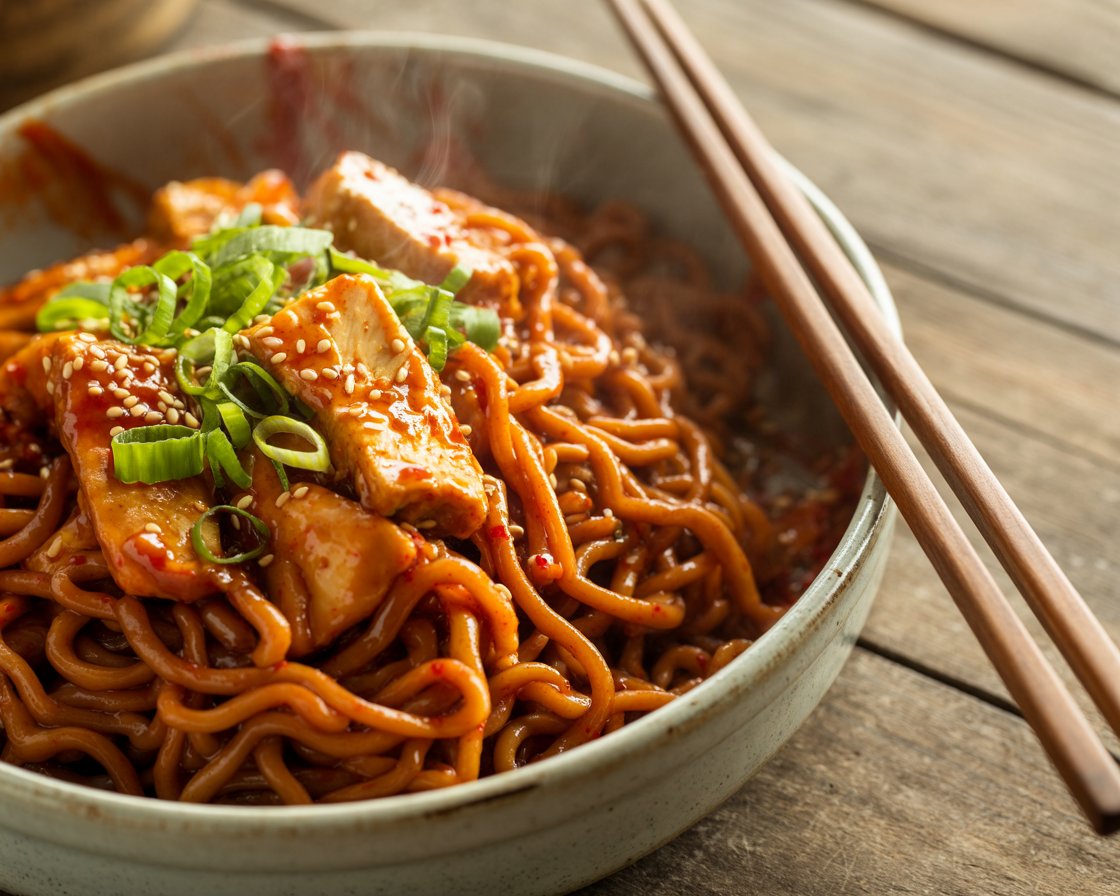
Without listing specifics, it’s helpful to understand why certain conceptual roles matter. The backbone of Saucy Gochujang Noodles with Chicken is a controlled heat that provides body as well as spice, a savory core that anchors the palate, and a light sweetness that rounds rather than dominates. Aromatics amplify everything. Emulsification—achieved through agitation, heat, and a measured addition of liquid when needed—creates the signature cling that transforms a good sauce into a great one, especially over textured noodles.
There are many valid paths to a balanced bowl depending on mood. Craving bolder heat? Keep the base assertive but modularize spice at the table so each diner finds their sweet spot. Want extra silk without heaviness? Build creaminess through emulsification and texture rather than leaning on dairy. Looking for a brighter profile? Sharpen with acidity late, then finish with herbs and citrus to ensure Saucy Gochujang Noodles with Chicken sparkles from first bite to last.
Balance Without Overthinking
Balance emerges through small, timely adjustments rather than dramatic overhauls. If heat crowds other flavors, add a touch of sweetness and a creamy element; if the bowl tastes sleepy, a brief zing of acidity wakes it without making it sour; if savoriness feels thin, deepen that lane gently and reduce until the sauce sings again. Most corrections happen in seconds, especially in the final toss, and the best ones preserve the dish’s identity while nudging it back on course.
The beauty of Saucy Gochujang Noodles with Chicken is its tolerance for personalization. Small shifts in the final minute—more tosses, a shorter reduction, a tighter glaze—can remake the mood. Two bowls from the same pan can feel tailored if finishing choices are offered tableside. The result is a fast dinner that’s both reliable and flexible, ready to match a chilled evening in or an impromptu gathering.
Substitution Logic
Substitution starts with a clear goal. Decide whether the aim is to soften heat, intensify savoriness, introduce silkier body, or brighten the profile. Each aim suggests its own lever: reduce the baseline and add heat at the table, deepen savory elements without oversalting, emulsify for cling, or highlight a clean finish with acidity and herbs. With intent defined, swaps feel like strategic moves rather than compromises.
| Goal | Swap Approach | Why It Works |
|---|---|---|
| Milder heat | Dial base down; offer heat as a finisher | Customizable spice without remaking the pan |
| More umami | Boost savory lane and reduce slightly | Richer mid-palate; balanced salinity |
| Silkier body | Emulsify and agitate during toss | Cling increases without heaviness |
| Brighter profile | Introduce acidity late in the process | Focuses flavor; refreshes the palate |
| Gluten-free | Use rice noodles; watch moisture | Tender bite; easy to keep glossy |
Flavor Framing Tips
Frame each batch by intention. For comfort, aim for warmth, a rounded sweetness, and a bright finish that avoids weight. For a night that calls for excitement, let heat lead and counter with crisp garnishes and herbs. A light hand with sweetness often brings more savoriness forward, while a measured splash of acidity can make Saucy Gochujang Noodles with Chicken feel extra vivid without turning sharp.
Make final seasoning choices with a calm palate. Pause a few seconds after the last toss before tasting; residual heat will settle, and what seemed underseasoned in the pan may read perfectly balanced in the bowl. The best additions at the table are often textural as much as flavorful—something crisp and something fresh to play against the glossy strands.
Essential Equipment for Saucy Gochujang Noodles
Great Saucy Gochujang Noodles with Chicken reward good tools, not expensive ones. A wide skillet or a wok encourages tossing and evaporation; crowded pans steam, dulling flavor and texture. Tongs preserve noodle integrity and put control in the hand, while a flexible spatula helps reclaim the browned bits that deepen the sauce. A spider or colander expedites transfer, and a ladle keeps small water additions measured and calm, preventing over-thinning in the heat of the moment.
Preheating the pan remains non-negotiable. Hot metal prevents sticking, releases flavorful browning quickly, and allows the sauce to transition to syrupy and glossy at pace. Serving in a wide, shallow vessel matters too, keeping strands distinct and sheen intact rather than collapsing under their own steam. Small procedural choices like these protect the payoff that defines Saucy Gochujang Noodles with Chicken.
| Tool | Role | Pro Tip |
|---|---|---|
| Skillet / Wok | Space to toss; fast reduction | Preheat to avoid steaming |
| Tongs | Control without tearing strands | Toss more than stir for even coating |
| Spider / Colander | Swift noodle transfer | Shake lightly; keep a little moisture |
| Ladle | Micro-adjust sauce consistency | Add in splashes, then re-reduce |
| Flexible Spatula | Scrape fond for depth | Fold into sauce before final toss |
Heat Management
Heat should feel assertive yet under control. Too low, and fat separates from water, leaving a slick rather than a sheen. Too high, and sugars can scorch before noodles are coated. Listen for a confident sizzle that doesn’t spit wildly and watch for the sauce to tighten into a satin look. When Saucy Gochujang Noodles with Chicken hits this window, tossing becomes intuitive and the glaze locks in rather than pooling.
When noodles resist movement, reach for a small splash of hot water, toss, and let the heat reclaim a gloss. Avoid reflexively adding more fat; most of the time the sauce needs integration, not richness. The right heat, brief agitation, and a short reduction will do far more for texture than heavy-handed additions.
Workspace Setup
Set up for speed to keep Saucy Gochujang Noodles with Chicken stress-free. Keep the base ready, the pan preheated, and the tools within reach. If adding greens, have them cleaned and chopped so they can catch the final heat and wilt perfectly. Position a serving bowl close by to minimize the gap between pan and plate, preserving that delicate gloss and spring.
Arrange finishing touches—fresh herbs, scallions, citrus wedges, and a crunchy element—in small bowls for an instant “finishing bar.” This approach simplifies customization and makes the table feel generous without complicating the cook. Mood matters; small rituals like this turn a quick dinner into a satisfying experience.
Step-By-Step: Dinner in 20 (Technique, Not Instructions)
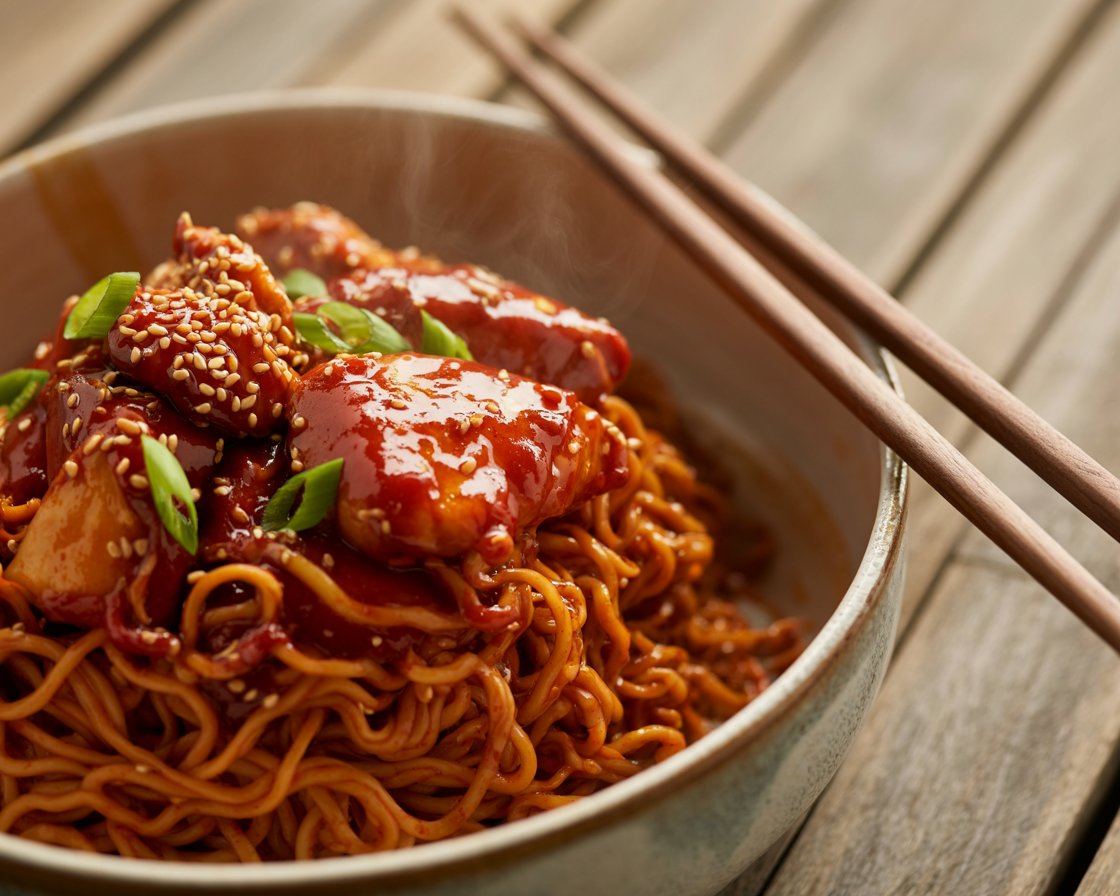
Think of this as choreography rather than a strict script. Begin with a cohesive base and a properly heated pan. Cook noodles just under final tenderness so they can finish absorbing flavor during the last minute without crossing into mushy territory. Quickly sear the chicken so it remains juicy, then fold it into the glaze after the noodles are coated. The transitions are smooth: loosen, thicken, toss, finish. The rhythm is recognizable after the first run, and Saucy Gochujang Noodles with Chicken becomes second nature.
The last minute matters most. When the base hits hot metal, it loosens and then tightens—this is the cue to introduce noodles and start tossing. Add micro-splashes of hot water as needed to keep things moving, then reduce briefly to set the sheen. Kill the heat a touch early so carryover finishes the job, then taste for balance. A citrus squeeze and a handful of something fresh can be the difference between good and “please make this again.”
| Step | Visual Cue | Sensory Check | Action |
|---|---|---|---|
| Base meets pan | Loose to syrupy quickly | Lively sizzle, no harsh sputter | Toss within 30–60 seconds |
| Noodles in | Even stain; flexible strands | Springy, not sticky | Use micro-splashes to prevent clumps |
| Protein returns | Glaze develops and holds | Moist, lightly browned | Toss to integrate; avoid overcooking |
| Finish | Sheen over shine | Balanced heat/salt/sweet | Remove from heat; garnish with lift |
Texture First Mindset
Texture is the soul of Saucy Gochujang Noodles with Chicken. Aim for a glossy coat that adheres to the noodles rather than slides off. If the sauce looks slick, it needs agitation and a touch of water to re-bind; if it looks dull and thirsty, loosen and toss until it regains its sheen. Protect noodle integrity with tongs and confidence—fewer, better movements beat frantic stirring every time.
Chicken texture follows similar logic. Thin slices or small pieces cook quickly and distribute flavor evenly. Integrate them when the sauce is already cohesive so they absorb flavor without turning stringy. Let the glaze be the star; protein should support, not steal, the spotlight.
Finishing Like a Pro
Finishes complete the story. Brightness from citrus, freshness from herbs, and a touch of crunch create contrast that keeps bites interesting and the palate refreshed. A drizzle of heat at the table allows spice lovers to level up without pushing the whole pan too far. Serve Saucy Gochujang Noodles with Chicken in a shallow bowl so strands don’t steam and the glaze remains intact, visually inviting and satisfyingly sticky or silky depending on the night’s target.
Consider the dining context. For a quiet evening, lean creamy and soothing with a lively garnish. For an energetic gathering, go brighter and bolder, with optional heat add-ons for those who want an extra hum. The same pan carries many moods; the last minute sets the tone.
Flavor Dials and Variations of Saucy Gochujang Noodles
Variations are less about swapping the identity of Saucy Gochujang Noodles with Chicken and more about tuning the vibe. Bold heat pairs beautifully with crunchy toppings and crisp greens; a creamy approach loves chewy noodles and a gentle reduction; a bright, zippy bowl thrives with tender noodles and a lighter glaze. Rather than re-engineering the base, adjust the finish and let each serving find its sweet spot at the table.
Noodle choice is the easiest dial. Springy ramen keeps things energetic and fast. Chewy udon turns the dish into something plush and embracing. Rice noodles offer a tender, gluten-free route that plays especially well with bright finishes. Across all options, undercook by a beat and finish in the pan to lock in that balanced, glossy coat that defines Saucy Gochujang Noodles with Chicken.
| Noodle | Texture | Cook Time | Best For |
|---|---|---|---|
| Ramen | Springy | 3–4 min | Quick, bright, saucy tosses |
| Udon | Chewy | 7–9 min | Creamier glazes and extra cling |
| Rice noodles | Tender | 5–7 min | Gluten-free, lighter finishes |
Heat, Sweet, and Cream
Think modular. Keep a steady baseline of spice within the pan and empower guests to add more at the table. Sweetness should never feel forward; it’s a supporting player that reveals savory depth rather than hiding it. For creaminess, focus on emulsification and reduction so body increases while brightness stays intact. Adjust the last minute rather than the first—that’s where finesse lives for Saucy Gochujang Noodles with Chicken.
When aiming for a sticky, lacquered finish, extend the reduction slightly while tossing to distribute the glaze evenly. For a silkier, slurpable bowl, hold back a touch of moisture and let strands glide. Neither is “better”—they’re simply different pleasures. Choose based on appetite and occasion.
Vegetables and Greens
Greens and vegetables add color, freshness, and crunch that keep Saucy Gochujang Noodles with Chicken feeling composed rather than monotone. Leafy greens love the residual heat of the final toss and stay vibrant when they aren’t overhandled. Crisp vegetables benefit from a quick kiss of heat before the base arrives, preserving their snap so they contrast with the gloss of the noodles.
With garnishes, lead with purpose. If the bowl leans creamy, reach for sharper and brighter toppers. If the bowl leans bright, consider a toasted, nutty garnish to deepen the storyline. Each addition is a tool to balance the plate rather than a checkbox to tick.
Make-Ahead, Leftovers, Meal Prep
Prepared elements turn Saucy Gochujang Noodles with Chicken into a midweek lifesaver. The base holds well in the fridge, often improving as flavors settle; give it a whisk to re-unify. Sauced noodles don’t love long storage but can spring back with a gentle reheat and a splash of water. For the best quality lunches, store components separately and combine with heat right before serving, then finish with fresh garnishes for lift and crunch.
Freezing fully composed bowls is not ideal because noodles suffer texturally, but the base and cooked protein freeze well and reheat gracefully. Cook fresh noodles on the day and bring it all together fast. Label portions thoughtfully—creamy vs bright—so weeknight decisions are easy and satisfying.
| Part | Fridge | Freezer | Reheat |
|---|---|---|---|
| Sauced noodles | 2–3 days | Not ideal | Splash water; toss over medium heat |
| Base only | 5–7 days | Up to 2 months | Whisk to re-emulsify; thin if needed |
| Cooked chicken | 3–4 days | Up to 2 months | Warm gently, then integrate |
Batching for the Week
Batch once, vary twice. Prepare a generous amount of base to use on different nights, then change the noodle and finish to create truly distinct experiences with minimal effort. One night, go bright and silky; another night, go plush and creamy. Keep citrus and herbs on hand to refresh leftovers; these finishing touches make Saucy Gochujang Noodles with Chicken feel newly made even on day two.
For portable meals, pack noodles and chicken together but keep crunch and acidity separate. Add a micro-splash of water before reheating, then garnish. This small, consistent ritual rescues texture and reactivates the glossy sheen that makes the dish so appealing.
Freezer Strategy
Freeze selectively for quality. Save the base and cooked protein in labeled portions and cook noodles fresh to order. This strategy preserves texture where it counts and reduces weeknight friction to almost nothing. On busy days, the path to Saucy Gochujang Noodles with Chicken becomes heat, boil, toss, finish—dinner without drama.
Consider organizing freezer portions by mood. A “bright” label suggests a lighter finish with citrus, herbs, and a silkier coat; a “creamy” label cues a slightly longer reduction and more body. Planning the vibe is as powerful as planning the components.
Troubleshooting & Pro Tips of Saucy Gochujang Noodles
Most problems resolve quickly when you know what to adjust. Clumpy noodles usually mean overcooking or insufficient lubrication; restore glide with a hot splash of water and mindful tossing. Flat flavor typically needs a lift of acidity or a small hint of sweetness. When heat feels overwhelming, use a creamy nudge and a touch of sweetness rather than drowning the pan. A greasy look usually means the emulsion needs help; add water, toss, and reduce to a sheen instead of adding more fat.
Protein dryness is a slicing and timing issue as much as anything else. Even, thin pieces cook quickly and carry flavor better. Let them meet the cohesive sauce at the right moment so they absorb flavor without overcooking. Small, consistent habits—preheating, undercooking noodles by a beat, reserving hot water, finishing with intention—turn Saucy Gochujang Noodles with Chicken from a good idea into a beloved ritual.
| Issue | Likely Cause | Fast Fix |
|---|---|---|
| Clumpy noodles | Overcooked or too dry | Add hot water; toss actively; re-reduce |
| Flat flavor | Low acid or low sweetness | Small, late additions to lift balance |
| Too spicy | Concentrated heat | Introduce creaminess + a touch of sweetness |
| Oily finish | Broken emulsion | Water + agitation, then brief reduction |
| Dry chicken | Overcooked, uneven slices | Slice thinner; cook hot and fast; integrate late |
Consistency Habits
Repetition builds instinct. Under-cook noodles slightly so they can finish in the pan; preheat the cookware so sauce behavior is predictable; keep a ladle handy for micro-adjustments; and taste at the end before reacting. These habits eliminate the guesswork and make Saucy Gochujang Noodles with Chicken reliably glossy, balanced, and satisfying. Over time, the dish becomes less a recipe and more a repertoire—a skill set that transfers to other noodle nights with ease.
Control portions with tools, not guesses. Tongs let strands move as a unit and deliver intuitive serving sizes. A broad bowl keeps the sheen intact and the texture alive, avoiding the common trap of a steaming pile that dulls flavors. The little rituals reward the eater as much as the cook.
Speed Without Hurry
Speed pays off when it feels calm. Set the stage, work in phases, and let heat do the heavy lifting in the last minute. The flow eliminates panic and replaced it with ease, which translates directly to better texture and balance. The result is a bowl that looks like a special occasion and cooks like a Tuesday.
Above all, stay playful. Saucy Gochujang Noodles with Chicken is a forgiving canvas; it welcomes bold nights and cozy nights, bright finishes and creamy glazes. That adaptability—and the joy of the final toss—keeps the dish in rotation long after the novelty fades.
FAQs – Saucy Gochujang Noodles
Readers often have practical questions after their first couple of runs, and answering them cleanly makes Saucy Gochujang Noodles with Chicken more approachable. The following are concise, technique-focused clarifications meant to support confidence and reduce friction. They emphasize outcomes over directives and help cooks fine-tune without reworking the entire approach.
Can this be made gluten-free or dairy-free?
Absolutely. Choose rice noodles to make Saucy Gochujang Noodles with Chicken gluten-free and keep a small amount of hot water on hand during the final toss to preserve glide. For a dairy-free creamy vibe, rely on emulsification rather than heavy additions; bind water, starch, and fat with agitation so the sauce coats rather than pools. Finish with bright garnishes—herbs, scallions, and citrus—to keep the bowl lively and balanced.
What’s the best noodle type for this style of sauce?
Let the desired texture guide the choice. Springy noodles excel at quick, bright coats and energetic finishes. Chewy noodles love a creamier or clingier glaze and reward a momentary reduction. Tender rice noodles favor lighter, brighter bowls and make an easy path to gluten-free Saucy Gochujang Noodles with Chicken. In every case, undercook slightly, finish in the pan, and toss actively to land that signature sheen.
How can the dish be made extra creamy without feeling heavy?
Build body through emulsification and timing. Integrate small additions of liquid with agitation so the sauce binds to the noodles, then reduce briefly to set the sheen. This approach creates a velvety coat that clings without weighing down the palate. Balance richness with freshness at the end—crisp garnishes and a citrus spark keep Saucy Gochujang Noodles with Chicken bright even when creamy.
