
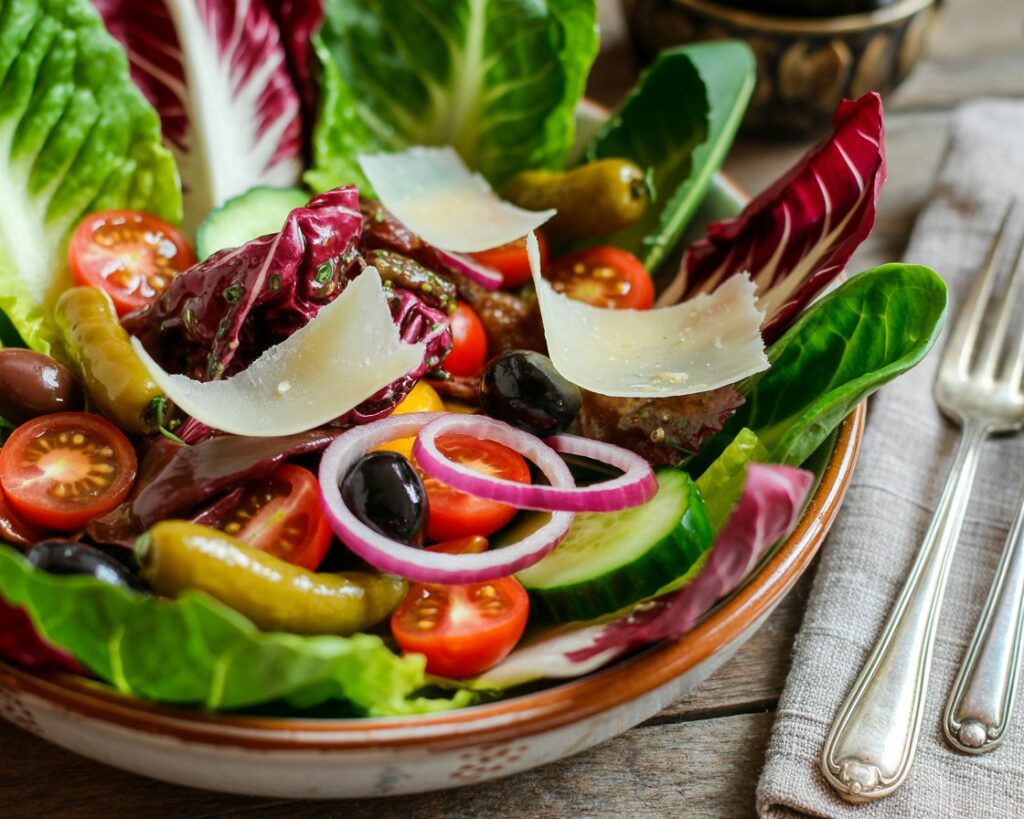
An Italian Salad that leaves a lasting impression isn’t accidental; it’s the thoughtful result of balancing crisp texture, bright acidity, briny punctuation, and savory depth so that every bite feels composed and satisfying. This complete guide focuses on the ideas, methods, and refinements that bring a bowl from ordinary to unforgettable, while keeping ingredients and instructions elsewhere for clarity. Expect practical frameworks, rich explanations, strategy-first tips, and handy tables to guide decisions in real time as the Italian Salad comes together.
Each section embraces a principle that makes an Italian Salad shine: choosing a strong base of greens that will carry flavor, distributing briny elements for energy and contrast, calibrating a dressing that’s bright yet controlled, and managing moisture and timing so the bowl stays lively from the first serving to the last. The result is a repeatable, flexible approach that welcomes seasonality and occasion without losing the distinct personality that defines a classic Italian Salad.
What Makes It “Italian”
The essence of an Italian Salad lives in balance and clarity: crisp leaves that stay poised under a glossy vinaigrette; bright acidity that organizes flavors and lifts aromas; briny notes that cut through richness; and a measured savory undertone that gives the finish a pleasant length. It’s a style anchored in contrast and restraint rather than maximalism, which is why it adapts effortlessly to weeknights, gatherings, and polished dinner menus alike.
Rather than relying on a rigid list, the Italian Salad uses a reliable structure to produce consistent results. The base offers crunch and stability, the dressing links flavors with a focused brightness, and bold accents are dispersed to pop up frequently without clustering. When these elements are tuned—cut size, dryness, dressing texture, and toss timing—the salad gains a coherent voice that feels purposeful and complete.
How the Framework Guides Every Decision
Think of the Italian Salad as an elegant framework: a sturdy base, a lively dressing, carefully dispersed briny sparks, and a subtle savory thread. Every decision flows from that structure. If the base is robust, the dressing can be a touch brighter; if the base is delicate, the dressing relaxes and the toss becomes gentler. Briny accents are scattered for rhythm, not stacked for volume. The savory line never drowns freshness—it supports it. Using this lens, it becomes simple to pivot the Italian Salad toward light and lemony or hearty and briny while preserving balance.
Core Components, Demystified

An Italian Salad earns its poise from the interplay of three component groups: foundational greens, briny and peppery sparks, and a quiet umami presence that adds depth without heaviness. This section explains how each group contributes to flavor, mouthfeel, and longevity in the bowl, with a focus on practical choices that lead to predictable, repeatable success. By understanding roles and relationships, it’s easy to tailor the Italian Salad to the season, the menu, and the desired intensity.
Greens That Stand Up
The greens act as both architecture and instrument—holding structure while carrying seasoning across every bite of the Italian Salad. Resilient leaves allow a brighter vinaigrette and more robust tossing, while tender leaves invite a lighter touch and restrained acidity. Cut size is strategic: bites that spear easily and mix well encourage even coverage and prevent the sog-inducing clumps that come from oversized shreds. When the base is chosen and cut with intention, the Italian Salad feels buoyant and balanced before anything else is added.
Briny Heat and Bite
Briny elements and a gentle push of heat create definition and lift. Their role is to refine, not dominate—tightening the flavor picture and cutting through oil so that freshness stays front and center. Thinly sliced alliums can add crunch and aromatic snap, while briny sparks keep the palate awake. Distribution is paramount: the goal is frequent, small highlights across the bowl, keeping the Italian Salad energetic and engaging without any one bite feeling overloaded.
Umami and Body
Without a hint of umami, the salad can feel fleeting; with too much, it becomes heavy. The sweet spot is a subtle savory hum that lengthens the finish and turns the Italian Salad into a satisfying experience from start to finish. This layer supports the brightness and crunch without overshadowing them, making every forkful feel complete. It’s the quiet confidence in the background that transforms a simple bowl into something worthy of serving on repeat.
| Role | Effect on Flavor/Texture | When to Use | When to Skip |
|---|---|---|---|
| Sturdy base | Holds dressing, keeps crunch | Long services, shared platters | Ultra-minimal, delicate bowls |
| Briny sparks | Brightens, cleanses richness | Oil-forward dressings | Extremely mellow profiles |
| Umami thread | Depth and lingering finish | Main-course salads | Very light, citrus-only bowls |
| Crunch finish | Contrast and punctuation | Tableside final touch | Make-ahead buffets |
Dressing Fundamentals
The dressing is the engine of the Italian Salad, translating aroma and seasoning into a cohesive, lively whole. It must be bright but civilized, cling without clumping, and remain stable enough to coat leaves rather than pooling at the bowl’s bottom. The path to that outcome is simple: season the acidic phase first, build the emulsion gradually, and calibrate to context—menu, season, and the greens’ resilience. Treat the dressing as a tool for clarity, not a mask for the salad beneath it.
Acidity–Fat Balance
The classic oil-and-vinegar profile works because it’s easy to tune: acid provides structure and sparkle; oil carries perfume and softens edges. Small, incremental adjustments are the secret to harmony. Calibrate brightness to the moment—lean brighter alongside rich mains, go gentler for delicate menus. Season salt into the acidic phase so it dissolves cleanly and spreads evenly, then add oil until the texture lightly clings to glass and the back of a spoon, signaling a balanced emulsion that will coat leaves beautifully.
Emulsifying Without Fuss
A consistent emulsion keeps flavors integrated and prevents watery, slicked leaves. The most reliable method is straightforward: season the acid, then whisk or shake in oil until glossy and cohesive. Separation over time is natural and not a failure—vigor brings it back. Aim for a repeatable texture by paying attention to cues like drip speed and cling on glassware. Recognizing these markers makes it easy to recreate a preferred dressing for any Italian Salad with near-automatic precision.
Flavor Dials
Think in dials, not dogma. Want a brighter Italian Salad? Gently nudge the acidity up and add a thread of citrus to amplify aroma. Craving a more herbaceous frame? Increase dried or fresh herbs incrementally to avoid muddling. Seeking a bolder, more savory echo? Introduce a measured splash of brine and a firm crack of pepper. Adjust one dial at a time, tasting between moves, so the dressing stays articulate and doesn’t drift into noise.
| Flavor Goal | Ratio Tweak | Herb/Aroma Add-On | Expected Outcome |
|---|---|---|---|
| Brighter | Increase acid slightly | Citrus zest or juice | Sharper snap, vivid finish |
| Herbier | Hold ratio steady | Oregano, basil, parsley | Garden-forward aroma |
| Softer | Increase oil slightly | Pinch of salt, light sweetness | Rounder edges, gentler bite |
| Bolder | Maintain base ratio | Brine splash, extra pepper | Deeper, savory resonance |
Texture, Contrast, and Crunch
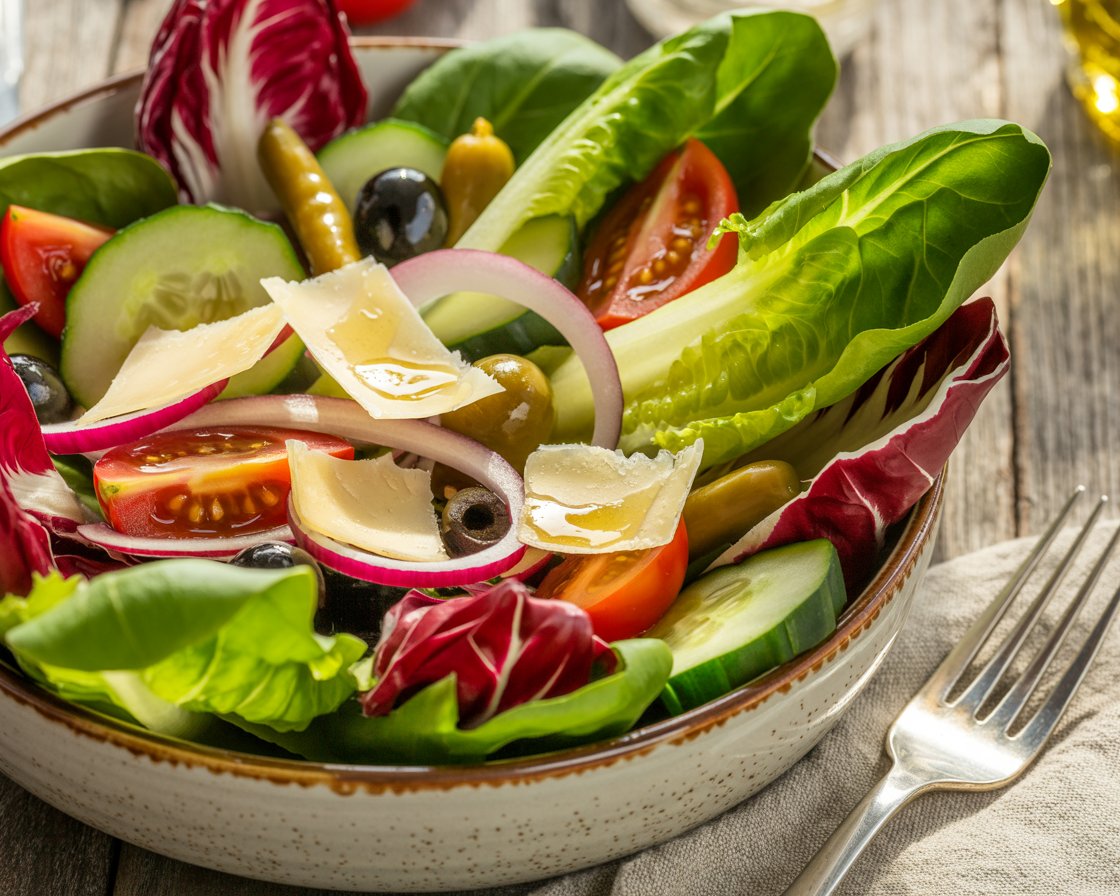
Texture is the unsung hero of an Italian Salad. A great bowl reveals itself in a sequence: crisp leaf, juicy accent, briny spark, savory finish. To achieve that, size cuts for easy spearing and mixing so each forkful naturally collects a representative sample of elements. Contrast should be deliberate but not chaotic—rhythmic, recurring, and balanced. When texture is designed with care, the salad remains compelling bite after bite instead of fading into monotony.
Building the Bite
Imagine the path of each mouthful before the first toss. The base supplies clean crunch; juicy notes keep the experience refreshing; briny accents trim oil and heighten perception; a quiet savory thread adds length. The key is distribution and proportion—too much of any one sensation will crowd the palate, too little will leave the Italian Salad feeling incomplete. Aim for even coverage, balanced intensity, and cuts that gather easily so the bowl eats gracefully.
Managing Wateriness
Moisture management underpins lasting crunch. Dry greens thoroughly, bring high-moisture elements in at the end, and favor a slightly thicker emulsion that clings instead of pooling. Toss gently so delicate components stay intact, and time the final combination close to service. These habits keep the Italian Salad glossy and crisp across the meal, preventing the slide from bright and structured to soggy and muted.
Strategic Finishes
Finishes are functional, not ornamental. A restrained crunch element, a fresh pepper crack, or a delicate shaving added at the last moment protects texture and signals freshness. These finishing touches give the Italian Salad its opening spark and its closing memory, turning a well-constructed bowl into a complete experience that feels confident and composed.
| Texture Element | Examples | Balancing Partner | Pitfalls to Avoid |
|---|---|---|---|
| Crisp base | Resilient, well-dried leaves | Glossy vinaigrette | Oversized, sog-prone shreds |
| Juicy accents | High-moisture produce | Briny sparks | Pooling at bowl bottom |
| Briny sparks | Pickled heat, olives | Natural sweetness | Clustering in pockets |
| Crunch finish | Dry, crisp garnish | Added right at service | Premixing far ahead |
Variations and Styles
The Italian Salad’s structure invites distinct expressions without losing its identity. By adjusting cut size, the density of accents, and the behavior of the dressing, the bowl can read as hearty and briny-forward, streamlined and elegant, or grab-and-go practical. Choose the style that suits the occasion and menu, and then use the same principles—balance, dispersion, and texture—to deliver a consistent, craveable experience every time.
Italian Chopped
This approach maximizes convenience and flavor density. Small, even cuts are easy to fork, reduce mess, and offer more surface for a clingy dressing to adhere to, which means every bite tastes like the Italian Salad’s thesis statement. It’s ideal for lunches, travel, and any situation where tidy eating and consistent bites are a priority. Even distribution also helps briny and savory notes appear frequently without overshadowing freshness.
Antipasto‑Inspired
When the menu leans rich, or the mood calls for bold character, turn the briny spectrum up a notch and sharpen the dressing slightly to keep the bowl lively. This expression thrives on contrast and composure: robust accents meet a crisp base under a dressing that means business. Serve close to the final toss and add delicate finishes at the last second so the Italian Salad lands with energy rather than weight.
Tricolore Side
Minimalist and refined, the tricolore expression highlights the interplay of crisp, peppery, and slightly bitter notes under a lemon-leaning finish. The result is refreshing and palate-cleansing, well suited to elegant first courses and menus where subtlety matters. This style rewards precision in cut, tossing, and dressing texture, delivering a clean, architectural read on the Italian Salad.
| Style | What Changes | When It Shines | Dressing Note |
|---|---|---|---|
| Italian chopped | Small, even pieces; dense distribution | Lunches, travel, meal-prep | Clingy, herb-forward emulsion |
| Antipasto-inspired | Brinier, bolder accents | Buffets, rich mains | Firm acidity, savory finish |
| Tricolore side | Minimalist, lemon-leaning | Elegant first courses | Light and bright |
Seasonality and Smart Swaps
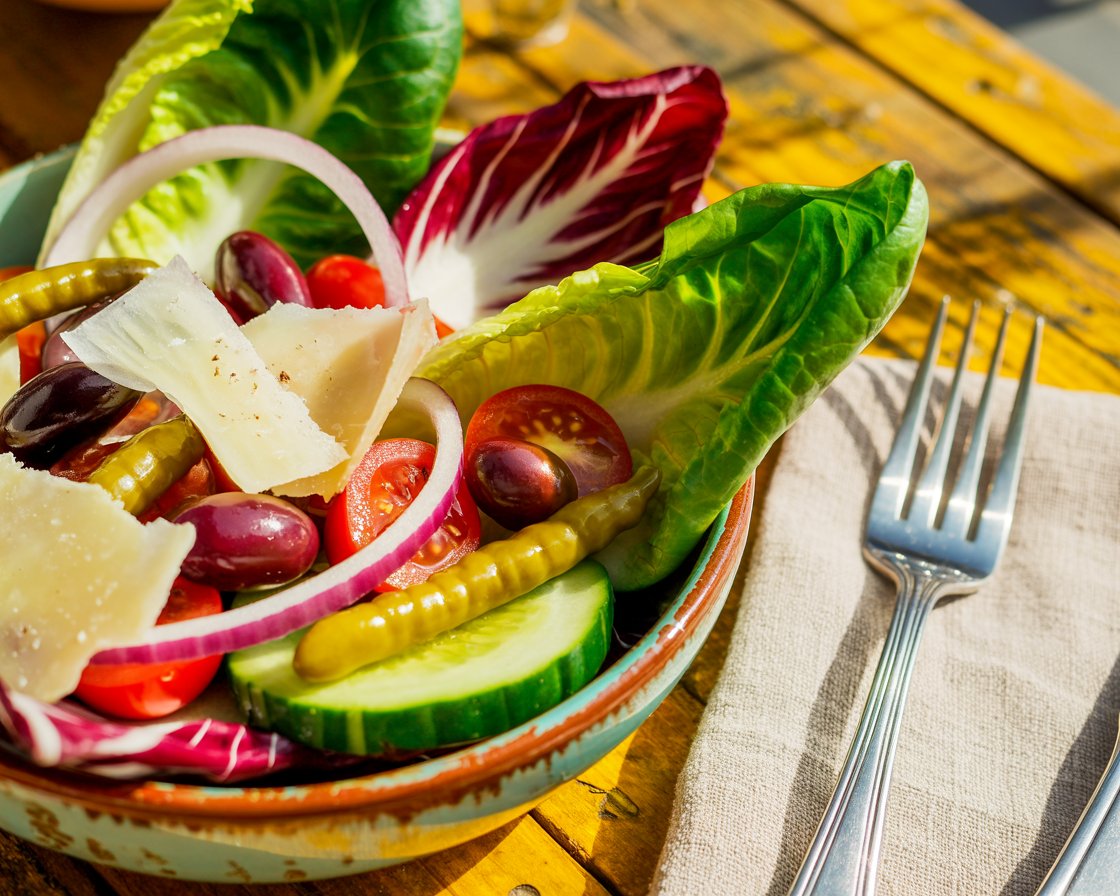
Seasonality is a creative advantage, not a hurdle. In warm months, let juicier accents breathe and brighten the dressing; in cooler months, lean on cut precision, a modest umami line, and a touch of roundness to keep presence and balance. Smart substitutions protect structure and flavor even when the market shifts, ensuring the Italian Salad reads clearly year‑round without chasing exact matches for every component.
Seasonal Tweaks
When produce is ultra-ripe and naturally sweet, welcome higher brightness and a lighter touch with aromatics. When flavors mellow in the shoulder seasons, counter with a slightly rounder dressing, tighter cuts, and considered textural additions that keep the bowl lively without heaviness. Adjusting cut size, brightness level, and accent density preserves the Italian Salad’s identity while honoring what the season offers.
Pantry‑First Approaches
A pantry-aware mindset keeps the Italian Salad dependable. Mixed vinegars can reproduce the desired brightness profile; dried herbs, when bloomed in the acid phase, give a stable herbal thread; and a small hint of sweetness can soften an over‑eager acidity when produce runs subdued. Change one lever at a time—acidity, salinity, or sweetness—so the outcome is predictable and lessons carry forward to the next bowl.
| Swap | Why It Works | Adjustment Needed | Flavor Impact |
|---|---|---|---|
| Alternate greens | Maintains crunch and structure | Match dressing intensity | Similar bite, new nuance |
| Mixed vinegars | Recreates brightness | Test small batch ratios | Subtle acid character shift |
| Dried herb blend | Consistent herbal backbone | Bloom in acid first | Rounded, steady aroma |
| Brine splash | Deepens savory complexity | Trim salt elsewhere | Longer, savory finish |
Make‑Ahead, Storage, Leftovers
Planning transforms the Italian Salad from a last‑minute afterthought into a reliable highlight. Keep components dry and separate, store the dressing in a sealed container for easy re‑emulsifying, and assemble close to the moment of service. Lightly toss and finish at the table when possible for maximum gloss and crunch. With these habits, the Italian Salad carries beautifully through everyday meals and special occasions.
Mise en Place Like a Pro
Preparation is flavor insurance. Dry and cut the base with intention, stage moist elements separately, and label containers by order of assembly so the final toss is smooth and focused. A sealed jar of dressing is a portable, shake‑ready solution for even coverage. Add crisp finishing elements at the end to preserve texture and visual appeal so the Italian Salad arrives looking—and eating—like it was made for the moment.
Day‑Two Strategy
Leftovers are surprisingly resilient with smart handling. Hearty bases revive with a gentle toss and a pinpointed hint of brightness, while portions should be lifted from the top when moisture collects below to protect remaining crunch. If components are stored separately, combine only what’s needed and keep the rest staged for the next serving, ensuring each Italian Salad feels intentional rather than leftover.
| Component | Prep Window | Storage Method | Day‑Of Step |
|---|---|---|---|
| Greens | Up to 24 hours | Dry, chilled container | Fluff and re‑dry if needed |
| Moist accents | Same day or 24 hours | Separate, sealed | Add at the end |
| Dressing | 2–4 days | Sealed jar | Shake to re‑emulsify |
| Crunch elements | 1–2 days | Dry, airtight | Add right before serving |
Serving and Pairings
The same Italian Salad can be tuned to play different roles depending on the menu. As a side, it should be nimble and refreshing, resetting the palate between richer bites. As a main, it thrives on tighter cuts, a slightly clingier dressing, and a steadier savory undertone for satisfaction without heaviness. By aligning salad profile to its role, pairings become intuitive and the meal reads as coherent and considered.
Side vs. Main
For a side, favor a light, lemon‑leaning finish with a crisp base and a short, clean aftertaste that supports rather than competes. For a main, increase density and distribution so every forkful pays off with brightness, briny moments, and a gentle savory line. Neither approach is more authentic; each is a valid reading of the Italian Salad’s structure shaped to purpose.
Menu Planning
Pairing hinges on contrast and complement. A lemon‑forward Italian Salad plays beautifully beside delicate mains, adding definition without overshadowing. A herb‑forward, briny expression cuts through richer, cheese‑or butter‑leaning dishes, tightening the meal’s rhythm and bringing a sense of lift. With a bit of forethought, the salad becomes the hinge that makes an entire menu feel intentionally composed.
| Salad Profile | Ideal Mains | Dressing Notes |
|---|---|---|
| Light, lemon‑leaning | Delicate mains, simple bakes | Higher brightness, restrained oil |
| Herb‑forward, briny | Rich, cheesy, or slow‑cooked dishes | Firm acidity, savory echo |
| Hearty, chopped | Casual spreads, lunch bowls | Clingy emulsion, balanced salt |
FAQs and Troubleshooting
Most Italian Salad hiccups come down to water, ratio, or distribution. Fortunately, each has simple fixes that preserve texture and restore clarity. Dryness, gentle tossing, and last‑minute assembly fight sog; tiny tweaks to oil and acid refine the dressing’s feel; and even cut sizes keep bold elements from clumping. With a calm, incremental approach, the bowl returns to balance quickly—no drastic measures required.
Soggy Bowls and Fixes
Sogginess is a battle won with prep and timing. Dry thoroughly, bring juicy components in late, and use an emulsion that clings. If a bowl sits, lift servings from the top rather than scraping pooled moisture from the bottom, and refresh lightly with brightness rather than dumping more dressing. These habits keep the Italian Salad crisp and glossy, protecting the tactile pleasure that defines a great bowl.
Too Tart or Too Flat
When the salad shouts, add a little more oil and a mild sweetness to round edges while preserving clarity. When it mumbles, introduce a measured pinch of salt or a small bump in acidity to sharpen focus. If both issues appear, first soften the roughness, then reintroduce brightness incrementally. Track small changes and visual cues so the preferred Italian Salad profile becomes effortless to reproduce.
Serving a Crowd
Scale by structure, not guesswork. Prepare components separately and label for assembly order. Toss in batches with wide bowls for gentle, even coverage, and finish tableside with a light hand. For buffets, layer on a platter and serve dressing on the side so each guest can calibrate brightness without compromising the communal bowl, keeping the Italian Salad fresh from the first plate to the last.
| Problem | Likely Cause | Quick Fix | Prevention Next Time |
|---|---|---|---|
| Sogginess | Wet base, pooling at bottom | Lift from top, refresh lightly | Meticulous drying, late assembly |
| Harsh acidity | Over-bright ratio | Add oil, hint of sweetness | Tiny tweaks and taste checks |
| Flat flavor | Under-seasoned, low brightness | Pinch of salt, small acid bump | Season acid first, then build |
| Clumpy accents | Poor distribution | Gentle retoss, redistribute | Even cuts, layered assembly |
Conclusion
The most rewarding Italian Salad comes from intention: a sturdy, well‑cut base; briny sparks that enliven; a bright, calibrated dressing; and textural discipline that preserves crunch while welcoming juiciness. With small, deliberate adjustments—dryness, dispersion, emulsion, and timing—the bowl reads as confident and complete, ready to flex from side to main and from summer brightness to cool‑weather poise. Treat these principles as a friendly toolkit, consult the tables as quick checkpoints, and let repetition craft a signature approach that makes every Italian Salad unmistakably yours.
For more structured cooking frameworks, pairing ideas, and make‑ahead strategies that complement this Italian Salad, explore related guides at feastrecipe.com. For trustworthy fundamentals on safe handling and storage practices that support fresh salad preparation, consult the evidence-based resources at EatRight.org. With practice, the path from crisp leaf to perfectly balanced Italian Salad becomes second nature—season after season, table after table.