
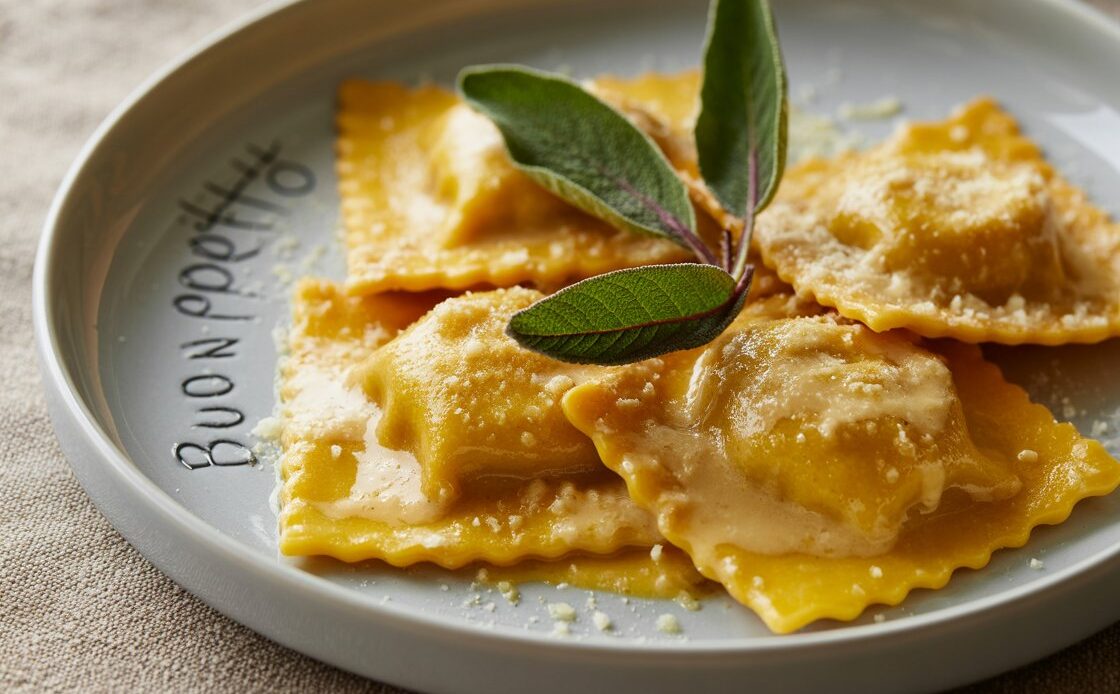
Butternut squash ravioli sauce is a rich, creamy delight that elevates any pasta dish, offering a perfect balance of sweetness from the squash and savory depth from aromatic seasonings. This versatile sauce is the ideal companion for ravioli, but it also pairs beautifully with other pasta varieties like fettuccine or tortellini. Whether you’re preparing a comforting weeknight dinner or a festive fall meal, butternut squash ravioli sauce brings warmth and flavor to the table. In this guide, we’ll explore everything you need to know about making the best butternut squash ravioli sauce, from the essential ingredients to creative variations that will make your dish truly stand out.
Key Ingredients in Butternut Squash Ravioli Sauce
The Star Ingredient: Butternut Squash
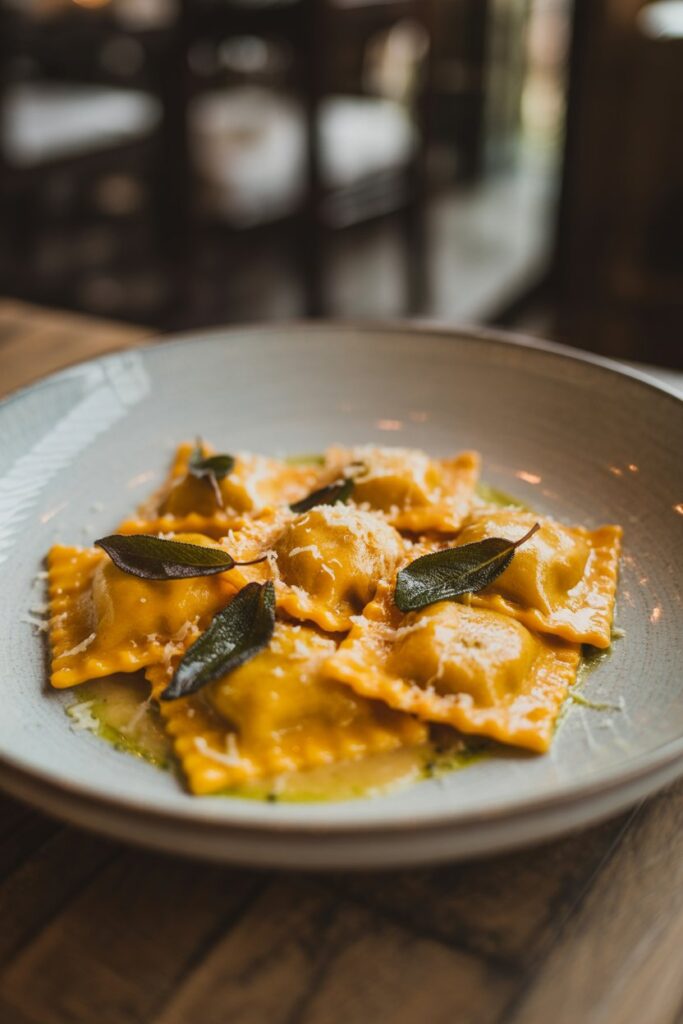
Butternut squash is the heart of this creamy sauce. It offers a natural sweetness and subtle earthiness, making it a perfect match for pasta. When roasted, its flavor intensifies, creating a rich base for the sauce. The texture of butternut squash becomes velvety and smooth once pureed, giving the sauce its creamy consistency without the need for excess dairy. This sweetness pairs beautifully with savory ingredients like garlic, sage, and Parmesan, creating a balanced and flavorful dish.
In addition to its taste, butternut squash is packed with health benefits. It is high in vitamins A and C, which are essential for maintaining healthy skin and boosting the immune system. It also provides a good amount of fiber, which helps with digestion. With its low calorie content, butternut squash makes a nutritious addition to any meal, especially when paired with wholesome pasta dishes.
Table: Nutritional Breakdown of Butternut Squash vs. Other Common Pasta Sauces
| Ingredient | Calories (per 100g) | Fiber (g) | Vitamin A (%) | Vitamin C (%) |
|---|---|---|---|---|
| Butternut Squash | 45 | 2.0 | 250% | 35% |
| Marinara Sauce | 40 | 1.5 | 20% | 20% |
| Alfredo Sauce | 200 | 0.5 | 10% | 0% |
Cream: Adding That Velvety Texture
Cream is essential for achieving the smooth, velvety texture of butternut squash ravioli sauce. The richness of cream creates a luxurious mouthfeel that complements the sweet and savory elements of the squash. It helps bind the ingredients together, resulting in a cohesive sauce that coats the ravioli perfectly.
If you’re looking for alternatives to cream, options like coconut milk or cashew cream work beautifully in vegan or dairy-free versions of the sauce. Coconut milk adds a subtle tropical flavor while maintaining the creamy consistency. Cashew cream, made by blending soaked cashews with water, offers a neutral taste and smooth texture, making it a great substitute for traditional cream.
Aromatics and Seasonings: Sage, Garlic, Nutmeg
The fall-inspired flavors in butternut squash ravioli sauce come alive with the addition of sage, garlic, and nutmeg. Sage is a key ingredient that enhances the sauce’s earthy tones, adding a fragrant, savory depth. It pairs wonderfully with butternut squash, which can sometimes lean towards sweetness. The slight bitterness of sage helps to balance the richness of the sauce.
Garlic plays a crucial role in building flavor, giving the sauce a warm, aromatic foundation. When sautéed, garlic releases its natural oils, contributing to the savory profile of the sauce. Nutmeg adds a subtle warmth that ties everything together, elevating the overall flavor.
Lastly, brown butter is often used to finish the sauce, adding a nutty, caramelized flavor. When browned, butter takes on a golden color and a richer taste, which complements the sweetness of the squash beautifully. This final touch brings an extra layer of depth to the sauce, making it even more indulgent.
How to Make Butternut Squash Ravioli Sauce from Scratch
Step 1 – Roasting the Butternut Squash
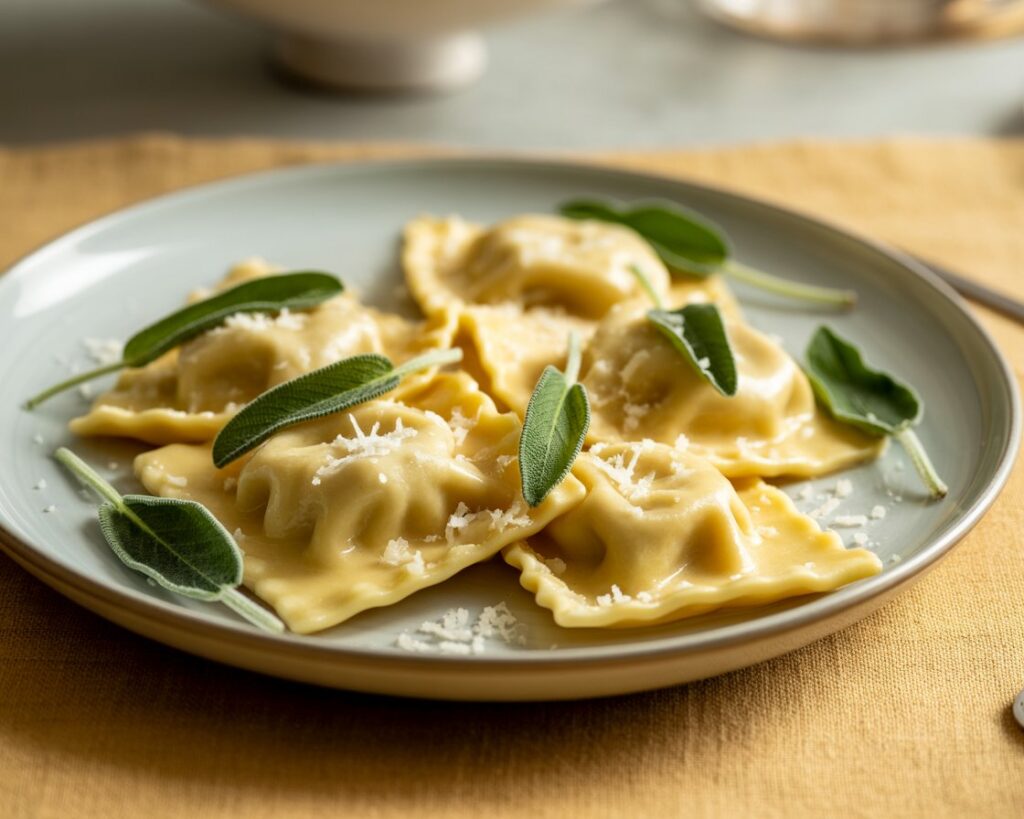
Roasting butternut squash is the key to unlocking its full flavor potential. The high heat caramelizes the natural sugars, deepening its sweetness and adding a slightly nutty taste. This extra layer of flavor makes your sauce richer and more complex, compared to using boiled or steamed squash.
To achieve the perfect texture, cut the squash into even cubes and toss them with a little olive oil. Spread them out in a single layer on a baking sheet, ensuring they’re not overcrowded. Roast at 400°F (200°C) for about 25-30 minutes until they’re golden and tender. For even better results, flip the pieces halfway through roasting.
Table: Comparison of Roasting vs. Sautéing Butternut Squash
| Method | Flavor Profile | Texture | Best For |
|---|---|---|---|
| Roasting | Sweet, caramelized, deep | Soft inside, slightly crisp outside | Rich, bold sauces |
| Sautéing | Lightly sweet, mild | Softer, uniform | Quick meals, lighter sauces |
Step 2 – Preparing the Sauce Base (Butter, Cream, and Seasonings)
Start by melting butter in a large skillet over medium heat. Let it turn golden to develop a rich, nutty aroma, known as brown butter. This will give your sauce an extra dimension of flavor. Next, add minced garlic and fresh sage leaves, allowing them to infuse the butter for a minute until fragrant.
Pour in the cream and stir gently to combine. Season with a pinch of salt, black pepper, and a dash of nutmeg to bring out the warmth of the squash. Simmer the mixture for a few minutes to allow the flavors to meld together. This creamy base is what gives butternut squash ravioli sauce its signature velvety texture and deep, comforting flavor.
Step 3 – Combining the Squash with the Cream Sauce
Once your squash is roasted and your sauce base is ready, it’s time to bring them together. Blend the roasted squash until smooth using a blender or food processor. Slowly add the cream sauce while blending, until you reach a silky, cohesive texture.
To get the perfect consistency, add small amounts of reserved pasta water or vegetable broth as needed. This not only thins the sauce but also helps it cling beautifully to the ravioli. The goal is a sauce that’s creamy but not too thick, enveloping each pasta piece in rich, golden goodness.
Optional Step – Adding Parmesan or Vegan Cheese
For an extra burst of umami and a salty finish, stir in freshly grated Parmesan cheese at the end. It melts into the sauce, adding richness and balancing the natural sweetness of the squash.
If you prefer a vegan version, opt for nutritional yeast or vegan Parmesan alternatives. These options provide a cheesy, savory flavor without dairy, making the sauce just as indulgent and satisfying for plant-based diets.
Variations of Butternut Squash Ravioli Sauce
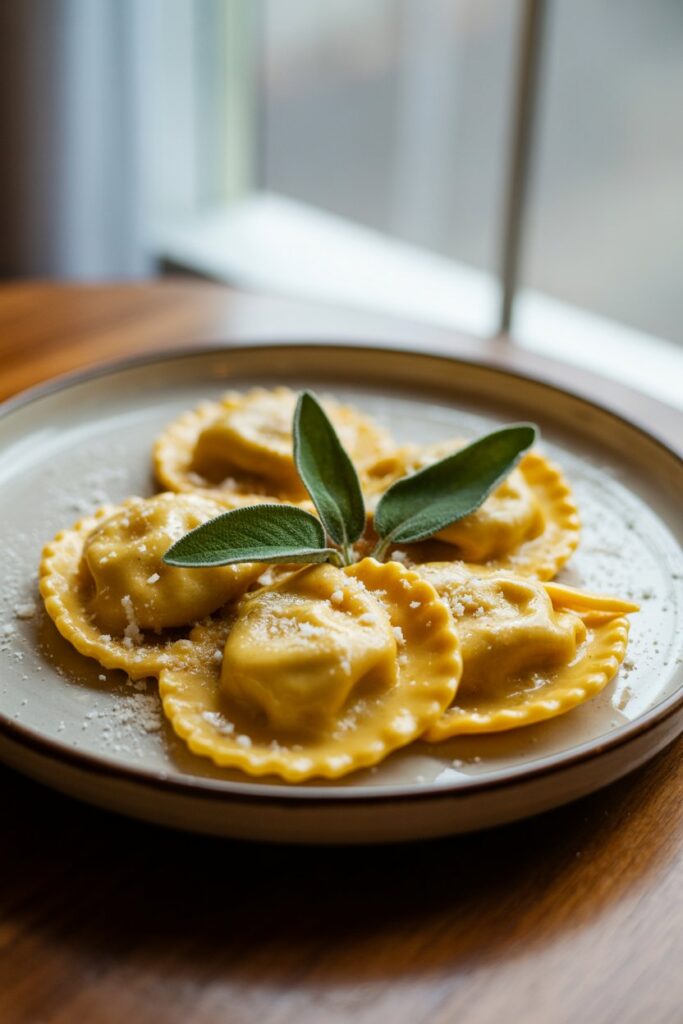
Brown Butter Sage Butternut Squash Sauce
The brown butter sage butternut squash sauce is a classic variation that brings out deep, nutty flavors. To make this version, start by melting unsalted butter in a pan over medium heat. Let it cook until it turns golden brown and releases a rich, nutty aroma. Quickly add fresh sage leaves and let them crisp up in the butter. This infusion gives the sauce a fragrant, earthy note that pairs perfectly with the sweetness of the roasted squash.
Once your brown butter is ready, blend it with the roasted butternut squash and a splash of cream or broth to achieve a smooth sauce. The balance comes from using just enough brown butter to enhance the flavor without overpowering the squash’s natural sweetness. A squeeze of lemon juice can also help to brighten the sauce and cut through the richness, creating a more balanced and harmonious flavor.
Vegan Butternut Squash Ravioli Sauce
For a dairy-free option, the vegan butternut squash ravioli sauce is just as creamy and flavorful. Begin by roasting the squash as usual. For the sauce base, skip the butter and use a little olive oil instead. Sauté garlic and sage in the oil to build flavor.
To replace cream, blend the roasted squash with cashew cream or full-fat coconut milk. Cashew cream provides a neutral, velvety texture, while coconut milk adds a hint of sweetness that complements the squash. To achieve a cheesy flavor without dairy, stir in nutritional yeast. This ingredient is essential in vegan cooking, offering a rich, umami taste that mimics Parmesan cheese.
Finish the sauce with salt, pepper, and a touch of nutmeg. Adjust the consistency with vegetable broth or pasta water until it’s smooth and creamy. This version is comforting, satisfying, and completely plant-based, making it perfect for vegan or lactose-intolerant diners.
Pairing Your Butternut Squash Ravioli Sauce with Pasta
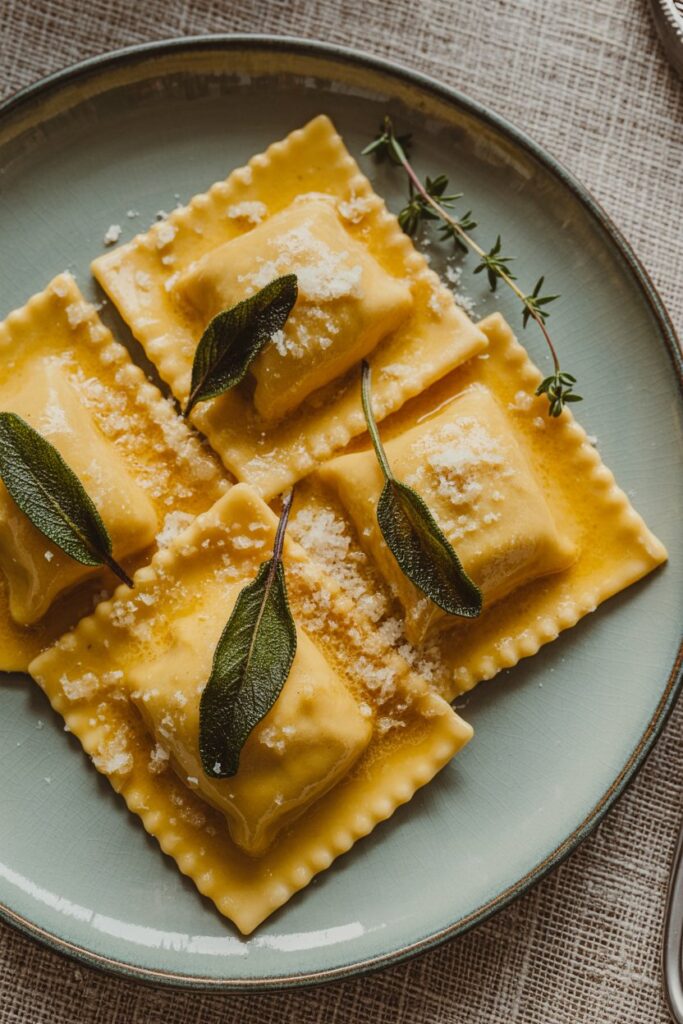
Best Ravioli to Pair with Butternut Squash Sauce
Choosing the right ravioli can take your butternut squash ravioli sauce to the next level. Naturally, butternut squash-filled ravioli is a perfect match, creating a harmonious, sweet, and savory combination. However, other fillings work beautifully too. Spinach and ricotta ravioli, for example, balance the sauce’s sweetness with earthy greens and creamy cheese.
Mushroom-filled ravioli offers an umami punch that contrasts with the smooth, mild sauce, creating depth in every bite. Even goat cheese ravioli adds a tangy twist that cuts through the richness and enhances the overall flavor.
Table: Quick Pairing Guide for Different Ravioli Fillings
| Ravioli Filling | Best Sauce Pairing |
|---|---|
| Butternut Squash | Brown butter sage sauce, creamy squash sauce |
| Spinach & Ricotta | Butternut squash sauce, light cream sauce |
| Mushroom | Butternut squash sauce, truffle cream sauce |
| Goat Cheese | Squash sauce with lemon zest, walnut pesto |
| Pumpkin | Squash sauce with extra nutmeg, browned butter |
Pasta Types that Work Well with This Sauce
While butternut squash ravioli sauce shines with stuffed pasta, it’s far more versatile than you might think. This sauce coats wide noodles like fettuccine beautifully, making for a creamy and indulgent dish. It also pairs well with gnocchi, where the pillowy texture of the potato dumplings soaks up the rich, velvety sauce.
Tortellini, especially those stuffed with cheese or spinach, are another excellent match. Even short pastas like penne or rigatoni work if you want the sauce to pool inside the tubes, creating little bursts of flavor with every bite. This flexibility means you can enjoy the sauce beyond just ravioli, turning it into a staple for various comforting pasta dinners.
Storing and Reheating Butternut Squash Ravioli Sauce

How to Store Leftover Sauce
Proper storage is essential to keep your butternut squash ravioli sauce tasting fresh. If you plan to use it within a few days, let the sauce cool completely before transferring it to an airtight container. Store it in the refrigerator, where it will stay good for up to 4 days.
For longer storage, freezing works well. Pour the cooled sauce into a freezer-safe container or resealable bag, leaving a little space at the top for expansion. It can be frozen for up to 2 months. When you’re ready to use it, thaw it overnight in the refrigerator for best results. Avoid storing the sauce with pasta already mixed in, as it can affect the texture when reheated.
Reheating Tips to Maintain Flavor and Texture
Reheating butternut squash ravioli sauce the right way ensures it stays creamy and delicious. Start by placing the sauce in a saucepan over low heat. Gently warm it, stirring frequently to prevent sticking or separation.
If the sauce looks too thick after chilling, adjust the consistency by adding a splash of cream, milk, or reserved pasta water. Stir well as it warms, allowing the liquid to blend smoothly back into the sauce. Avoid high heat, as this can cause the cream to break and ruin the texture.
For frozen sauce, let it thaw fully before reheating. If needed, blend it again after reheating to restore its silky smoothness. Following these steps will keep your sauce as rich and velvety as when it was first made.
Why This Butternut Squash Ravioli Sauce is Perfect for Fall

Seasonal Flavor Appeal
The butternut squash ravioli sauce captures everything we love about fall. With ingredients like sweet butternut squash, fragrant sage, and rich brown butter, it brings warm, comforting flavors that feel just right for the season. These classic autumn ingredients come together to create a sauce that tastes like fall in every bite.
This sauce is more than just delicious — it’s perfect for cozy dinners as the weather cools. It’s a wonderful centerpiece for a relaxed family meal or an elegant option for entertaining guests. In fact, many people love serving this sauce during Thanksgiving, as it offers a seasonal twist on traditional pasta dishes and pairs beautifully with roasted meats and vegetables.
Comforting, Versatile, and Easy to Make
One of the best things about butternut squash ravioli sauce is how easy it is to prepare, even if you’re new to cooking. With just a few simple steps — roasting, blending, and seasoning — you can create a dish that feels restaurant-quality at home.
But the sauce isn’t limited to ravioli. It’s versatile enough to coat fettuccine, gnocchi, or tortellini, giving you plenty of options for cozy weeknight dinners. You can even drizzle it over roasted fall vegetables like Brussels sprouts or sweet potatoes for an extra layer of flavor. Whether you’re cooking for one or feeding a crowd, this sauce is your go-to for an easy, comforting, and satisfying fall meal.
FAQ: Common Questions About Butternut Squash Ravioli Sauce
Can I Make Butternut Squash Ravioli Sauce Ahead of Time?
Yes, you can definitely make butternut squash ravioli sauce ahead of time. In fact, the flavors often improve after sitting for a few hours or overnight, making it a great option for meal prep. Simply prepare the sauce as you normally would, then let it cool to room temperature before storing it in an airtight container.
For refrigeration, it will last up to 4 days. If you want to store it for longer, freezing is also an option. Just make sure to let it cool completely before freezing it in a freezer-safe container. When reheating, you might need to add a little cream or pasta water to adjust the consistency.
Is This Sauce Gluten-Free?
Butternut squash ravioli sauce itself is naturally gluten-free as it contains no wheat or gluten-based ingredients. However, the ravioli you pair it with may not be gluten-free, as most store-bought ravioli contain wheat flour.
If you need a gluten-free option, look for gluten-free ravioli made with rice flour or other gluten-free alternatives. You can also try gluten-free pasta varieties like fettuccine, gnocchi, or tortellini, all of which pair beautifully with this sauce.
Can I Make This Sauce Spicy?
Absolutely! If you like a bit of heat in your butternut squash ravioli sauce, there are several ways to spice it up. Start by adding red chili flakes to the brown butter or infusing them with the sage and garlic for a more intense flavor.
You can also increase the black pepper or add a dash of cayenne pepper for a subtle kick. For a bolder heat, try incorporating fresh chopped chili peppers, such as jalapeños or serrano peppers, into the sauce. Just be sure to taste as you go, adjusting the level of spice to suit your preference.
Why Butternut Squash Ravioli Sauce is a Fall Favorite
In conclusion, butternut squash ravioli sauce is the perfect fall dish, combining seasonal flavors like roasted squash, sage, and brown butter into a creamy, comforting sauce. Whether you’re making it for a cozy dinner or a special Thanksgiving meal, its versatility and easy preparation make it an ideal choice for any fall gathering.
If you’re looking for a great pairing to serve with this sauce, try our avocado bread, a delicious side that complements the rich flavors of the sauce beautifully. For more pasta inspiration, check out our other fall recipes to complete your meal.
