
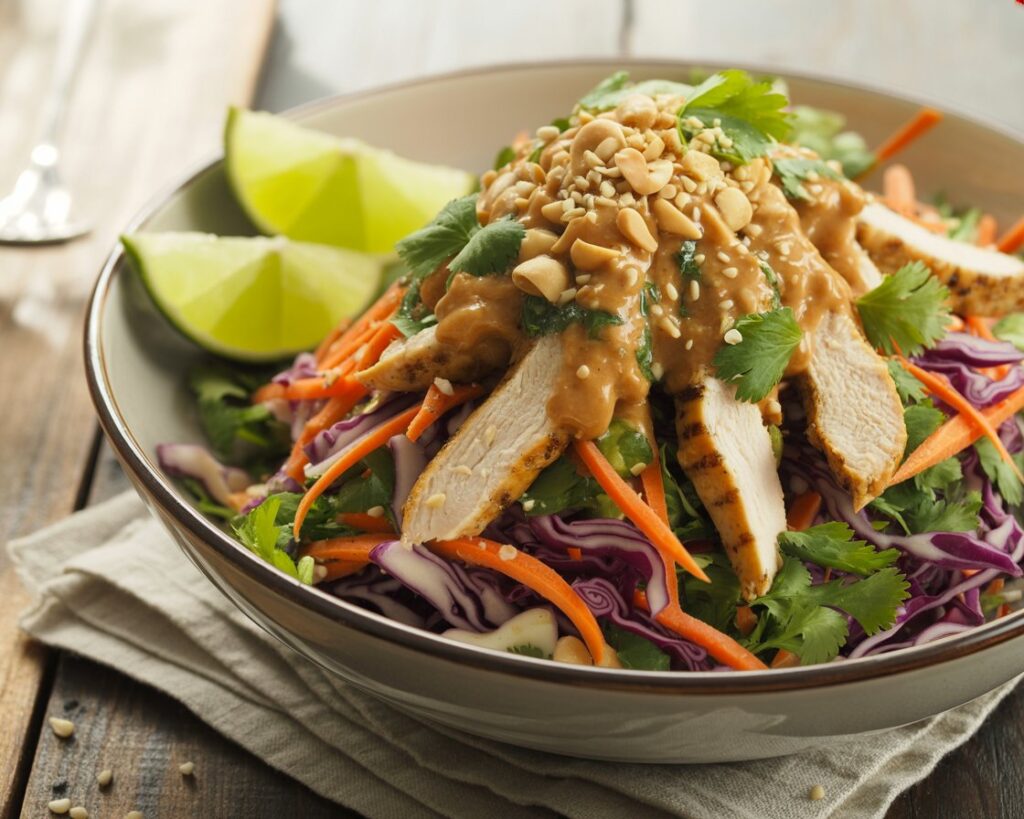
Thai peanut chicken salad is a vibrant and flavorful dish that perfectly blends the bold, savory taste of peanut sauce with fresh, crunchy vegetables and tender chicken. Whether you’re looking for a quick lunch, a healthy dinner, or a meal prep favorite, this salad delivers satisfying textures and balanced nutrition in every bite. In this post, we’ll explore what makes this salad so special, share expert tips to master the peanut dressing, and offer creative ideas to customize your bowl for any occasion.
Why Thai Peanut Chicken Salad Is More Than Just a Meal
This Thai peanut chicken salad is more than just a simple dish; it is a celebration of vibrant flavors and nutritious ingredients that reflect the rich culinary heritage of Thailand. Combining the unique taste of peanut sauce with fresh vegetables and tender chicken, this salad offers an experience that goes beyond eating—it connects you to a culture known for balancing sweet, salty, sour, and spicy elements in perfect harmony. Whether you are seeking a wholesome meal or a quick, satisfying lunch, this salad ticks all the boxes.
The Thai Flavors Behind the Salad

Thai cuisine is famous worldwide for its complex and bold flavors, and the peanut sauce used in this salad is a perfect example. This sauce blends roasted peanuts, lime juice, soy sauce, and a touch of chili to create a creamy, tangy dressing that enhances every bite. Ingredients like lime, cilantro, and chili are staples in Thai cooking because they provide freshness, brightness, and heat, respectively. Fun fact: Thai food often aims to balance multiple taste sensations in a single dish, making this salad an ideal introduction to the cuisine’s depth and diversity.
Health Benefits of This Protein-Packed Salad
This salad is not only delicious but also packed with nutritional benefits. The chicken provides a rich source of lean protein, essential for muscle repair and sustained energy. The healthy fats come mainly from the peanuts in the dressing, offering heart-healthy nutrients and a satisfying richness. Fresh vegetables like cabbage, carrots, and bell peppers add fiber, vitamins, and antioxidants, contributing to overall health and digestion.
| Nutrient | Thai Peanut Chicken Salad | Typical Fast Food Salad |
|---|---|---|
| Calories | 350 | 450 |
| Protein (g) | 30 | 15 |
| Fat (g) | 18 | 25 |
| Fiber (g) | 5 | 2 |
This comparison clearly shows how this salad offers a more balanced and nourishing option compared to many fast food alternatives.
Perfect for Meal Prep and Busy Lifestyles
One of the greatest advantages of this Thai peanut chicken salad is how well it fits into a busy schedule. It can be prepared in advance and stored for several days without losing its flavor or texture, making it an excellent choice for meal prep. To keep the salad fresh and prevent sogginess, it’s best to store the peanut dressing separately and combine it just before serving. This simple step ensures that every bite stays crisp and vibrant, ready to fuel your day whether at work, home, or on the go.
Mastering the Art of the Thai Peanut Dressing

The Thai peanut dressing is the heart and soul of the Thai peanut chicken salad. Getting this sauce right transforms the salad from ordinary to extraordinary by delivering a harmonious blend of flavors that excite the palate. Understanding what makes a great peanut sauce and how to customize it can elevate your cooking and allow you to tailor the salad perfectly to your taste.
What Makes a Great Peanut Sauce?
A truly exceptional peanut sauce achieves a delicate balance between sweet, salty, sour, and spicy elements. Each ingredient plays a specific role in creating this complexity.
- Peanut butter provides the creamy, nutty base that gives the sauce its signature richness.
- Soy sauce adds the necessary saltiness and umami depth.
- Lime juice brings a bright, tangy sourness that lightens the sauce and balances the richness of the peanuts.
- Garlic and ginger contribute aromatic warmth and subtle spice, enhancing the sauce’s complexity.
- Sweeteners such as honey or brown sugar round out the flavor by adding a hint of sweetness that ties everything together.
- Finally, chili flakes or fresh chili introduce a controlled heat that can be adjusted according to your preference.
Together, these ingredients create a well-rounded sauce that complements the freshness of the salad’s vegetables and the tenderness of the chicken.
Quick Dressing Variations to Suit Your Taste
While the classic peanut dressing is delicious on its own, simple variations can adapt it to different dietary needs and flavor preferences.
- For a spicy version, add sriracha sauce or extra chili flakes to give the dressing a vibrant kick.
- To make a gluten-free dressing, substitute regular soy sauce with tamari, which is naturally gluten-free.
- If you prefer a low-sodium option, use low-sodium tamari and reduce added salt or soy sauce.
- For those avoiding refined sugars, alternative sweeteners like maple syrup or agave nectar work well to maintain sweetness without overpowering the sauce.
These adjustments ensure everyone can enjoy the salad without compromising flavor or dietary restrictions.
DIY vs. Store-Bought: Pros and Cons
Making your own peanut dressing allows for full control over the ingredients and flavor intensity. However, store-bought versions offer convenience and quick preparation, which can be helpful on busy days. Below is a comparison of homemade versus popular store-bought peanut dressings:
| Feature | Homemade Peanut Dressing | Store-Bought Peanut Dressing |
|---|---|---|
| Ingredient Control | Full control over quality and freshness | Often contains preservatives and added sugars |
| Flavor Customization | Easily adjusted to taste (spicy, sweet, sour) | Fixed flavor profile |
| Nutritional Content | Typically lower in sodium and sugar | May contain higher sodium and artificial additives |
| Preparation Time | Requires 5-10 minutes of prep | Ready to use |
| Cost | More economical when made in bulk | Can be more expensive per serving |
Choosing between the two depends on your priorities—whether you value flavor customization and health or convenience and time-saving.
Building Your Ultimate Thai Peanut Chicken Salad Bowl
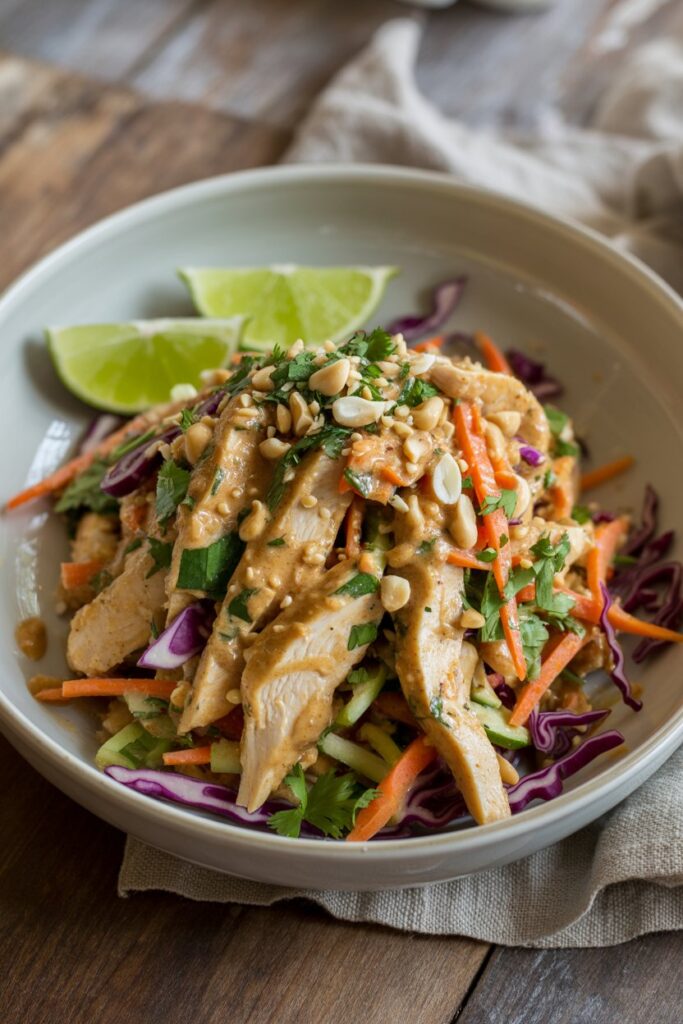
Creating the perfect Thai peanut chicken salad is all about customization. This dish is incredibly versatile, allowing you to adjust it based on your taste preferences, dietary needs, or what you have on hand. From choosing the right type of chicken to picking the freshest vegetables and garnishes, you can craft a salad that is uniquely yours and always satisfying.
Choosing the Right Chicken for Your Salad
The chicken is the main protein that anchors this salad. Selecting the right cooking method impacts both flavor and texture.
- Grilled chicken adds a smoky char that pairs beautifully with the creamy peanut dressing.
- Shredded chicken works well for a more casual, easy-to-eat salad and soaks up the dressing evenly.
- Baked chicken offers a simple, hands-off method while keeping the meat juicy and tender.
- Rotisserie chicken is a convenient shortcut when you need a fast, flavorful protein.
Tips for juicy, flavorful chicken every time
- Marinate chicken in lime juice, garlic, and a splash of soy sauce before cooking to boost flavor.
- Avoid overcooking by monitoring internal temperature with a meat thermometer (165°F/75°C is ideal).
- Let the cooked chicken rest before slicing or shredding to retain moisture.
Crunch and Color: Veggie Variations and Add-Ins
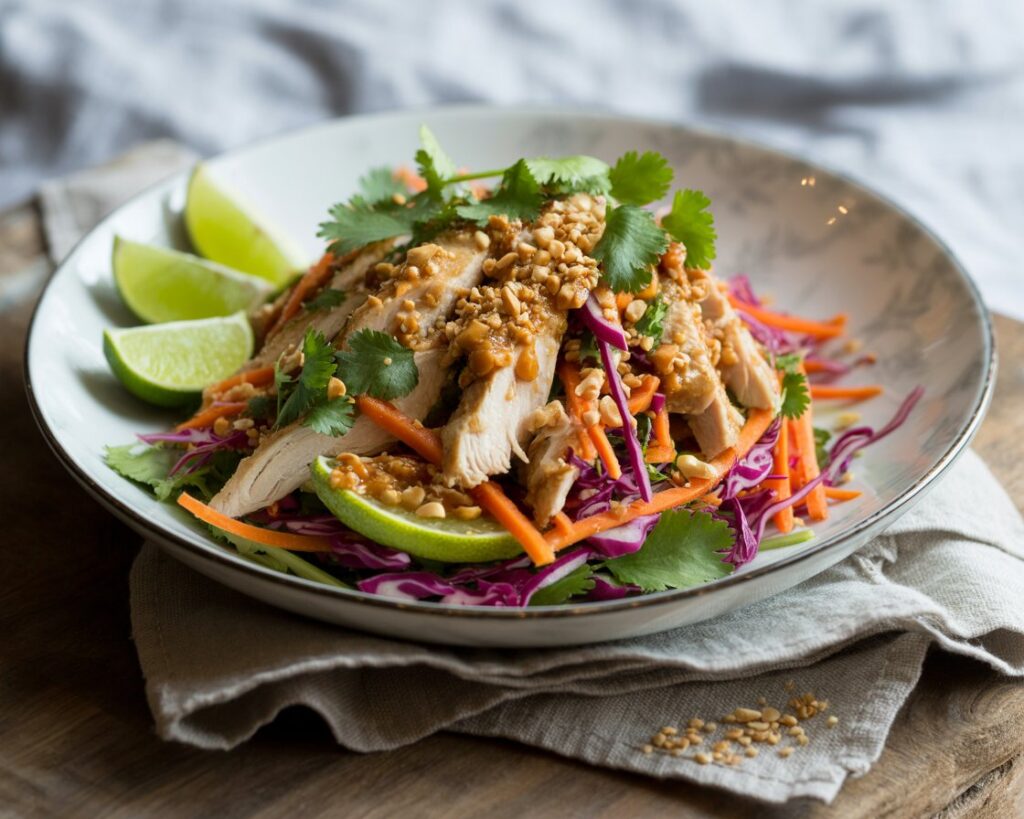
The fresh vegetables provide the salad’s satisfying crunch and vibrant color. Here are some popular options that bring texture and flavor:
- Shredded cabbage gives a crisp, mild base.
- Julienne carrots add sweetness and color.
- Sliced bell peppers introduce a juicy crunch and bright hues.
- Snap peas offer a fresh, slightly sweet snap.
- Fresh cilantro brings a fragrant, citrusy note.
| Vegetable | Crunch Factor | Flavor Profile |
|---|---|---|
| Cabbage | High | Mild, slightly sweet |
| Carrots | Medium | Sweet |
| Bell Peppers | High | Juicy, slightly bitter |
| Snap Peas | High | Sweet, crisp |
| Cilantro | Low | Fresh, citrusy |
This variety not only enhances the taste but also makes your salad visually appealing.
Nuts, Seeds, and Garnishes to Elevate Your Salad
To finish your salad, consider adding crunchy and aromatic garnishes that complement the peanut dressing and fresh ingredients.
- Peanuts are the classic choice, providing extra crunch and a boost of nuttiness.
- Cashews offer a softer, buttery texture for a subtle variation.
- Toasted sesame seeds add a delicate crunch and a hint of smokiness.
- Fresh herbs such as mint or Thai basil contribute an aromatic complexity that brightens the dish.
Using a combination of these toppings can add layers of flavor and texture, making each bite more exciting.
Serving Suggestions and Pairings for Every Occasion
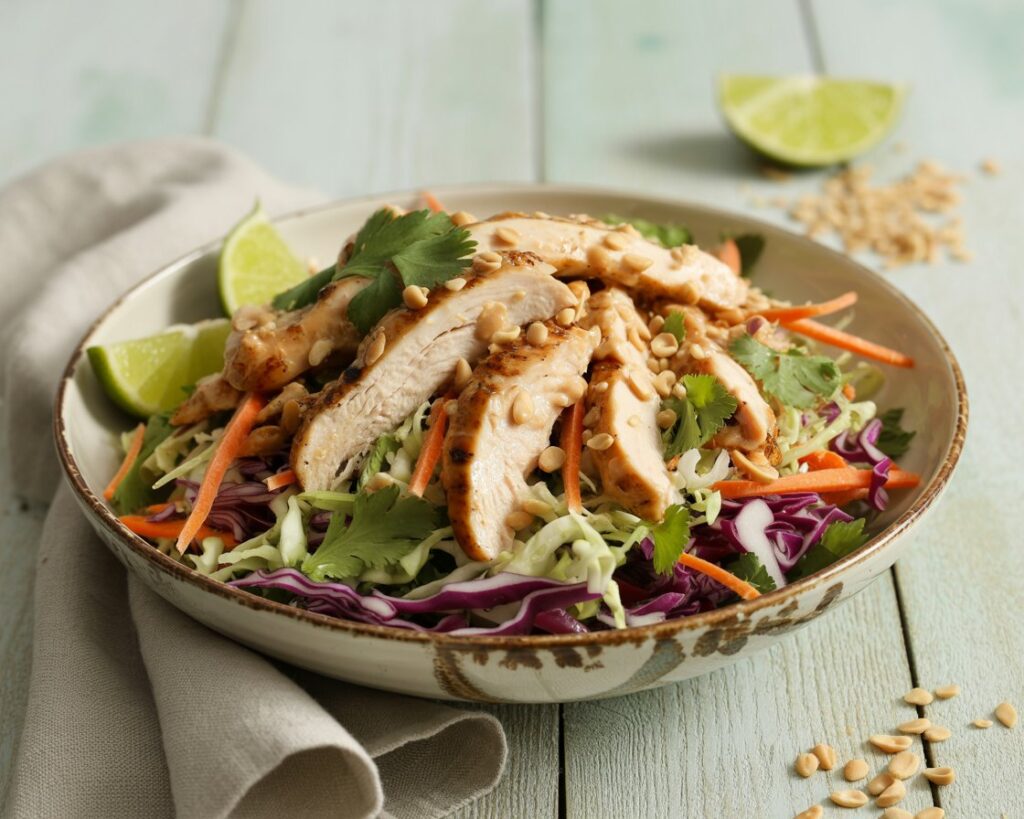
The beauty of Thai peanut chicken salad lies in its versatility—not only can it stand alone as a satisfying dish, but it also pairs wonderfully with a variety of sides and drinks. Whether you’re serving a casual lunch or hosting a dinner party, these creative ideas will help you elevate your meal and impress your guests.
How to Turn It Into a Full Meal
To make your salad more substantial, consider pairing it with complementary staples that enhance its flavors and provide additional satisfaction.
- Jasmine rice is a classic choice that adds a fragrant, fluffy base, soaking up any extra dressing or sauce.
- Rice noodles offer a light, chewy texture that pairs well with the crunchy salad components for a balanced mouthfeel.
- Light, clear soups, such as a simple broth with lemongrass or chicken, make a refreshing accompaniment that won’t overwhelm the palate.
These pairings can easily transform your salad into a complete, nourishing meal suitable for any time of day.
Presentation Tips to Impress Your Guests
Serving your salad with style can make a big difference, especially if you’re entertaining.
- Layered salads in jars are an excellent way to prepare individual portions ahead of time. Layer the dressing at the bottom, followed by denser vegetables, chicken, and lighter greens on top to keep everything fresh until serving.
- For a visually appealing plate, garnish with chopped peanuts, fresh herbs, and a wedge of lime.
- Use colorful bowls and arrange ingredients artfully to create an Instagram-worthy presentation that invites compliments and second helpings.
Drinks and Sides That Complement Thai Peanut Chicken Salad
The right beverages and sides can enhance the dining experience by balancing the salad’s flavors.
- Thai iced tea is a sweet, creamy drink that pairs perfectly with the spicy and tangy notes of the peanut dressing.
- Cucumber water or infused water with mint provides a refreshing, hydrating contrast.
- For those who enjoy alcoholic options, a light beer or a crisp white wine like Riesling complements the salad’s flavors without overpowering them.
These thoughtful pairings complete the meal, making it satisfying and well-rounded for any occasion.
Troubleshooting Common Thai Peanut Chicken Salad Issues
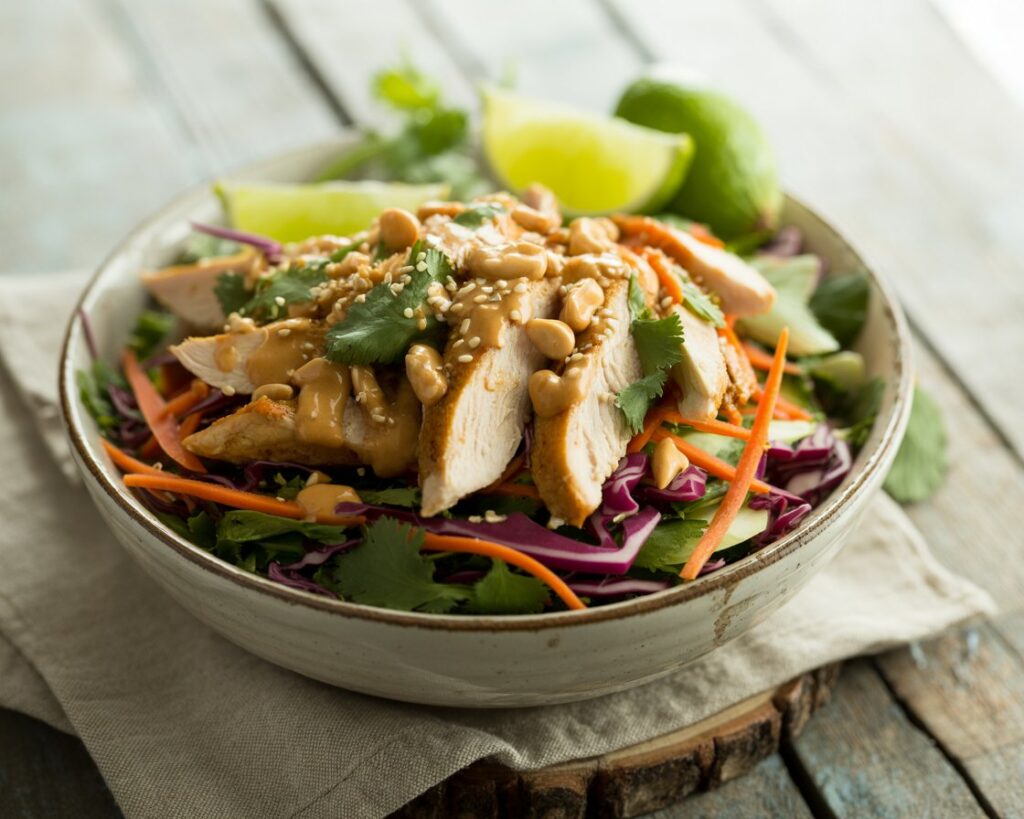
Even the best recipes can come with a few challenges, especially when balancing textures and flavors like those in a Thai peanut chicken salad. This section offers practical solutions to common problems, ensuring your salad turns out perfectly every time.
How to Fix a Too-Thick or Too-Thin Dressing
Achieving the right dressing consistency is key to a great salad experience. If your peanut dressing is too thick, simply whisk in small amounts of warm water, lime juice, or soy sauce until it reaches a smooth, pourable texture. Conversely, if the dressing is too thin, gradually add more peanut butter or ground peanuts to thicken it without diluting the flavor. Adding a small pinch of cornstarch dissolved in cold water and heating the sauce briefly can also help achieve the desired thickness.
Avoiding Soggy Salad: Freshness Hacks
One common issue with salads is sogginess, especially when mixed too early. To keep your Thai peanut chicken salad fresh and crisp:
- Store the peanut dressing separately from the salad ingredients.
- Combine the dressing with the salad just before serving to maintain crunch.
- Use sturdy vegetables like cabbage and carrots that hold up well over time.
- If preparing ahead, keep the salad refrigerated and avoid adding delicate herbs or nuts until the last moment.
Allergy-Friendly Swaps and Alternatives
For those with nut allergies or dietary restrictions, there are simple substitutions that retain flavor without compromising safety:
- Replace traditional peanut sauce with sunflower seed butter or soy nut butter as a nut-free alternative.
- Use tahini (sesame seed paste) blended with lime juice, garlic, and a touch of sweetener for a creamy dressing option.
- For vegetarian or vegan versions, ensure the chicken is swapped for tofu, tempeh, or additional crunchy vegetables, and use tamari or coconut aminos instead of soy sauce if preferred.
These alternatives ensure everyone can enjoy this flavorful salad regardless of dietary needs.
Why You’ll Love This Thai Peanut Chicken Salad
In summary, this Thai peanut chicken salad is a delicious and versatile dish that combines vibrant flavors, nutritious ingredients, and easy customization. Whether you’re preparing it for a quick meal, meal prep, or entertaining guests, it offers a perfect balance of taste and health. With the right dressing, fresh veggies, and protein-packed chicken, this salad is sure to become a favorite in your recipe collection. Give it a try and enjoy a fresh twist on Thai-inspired cuisine anytime.