
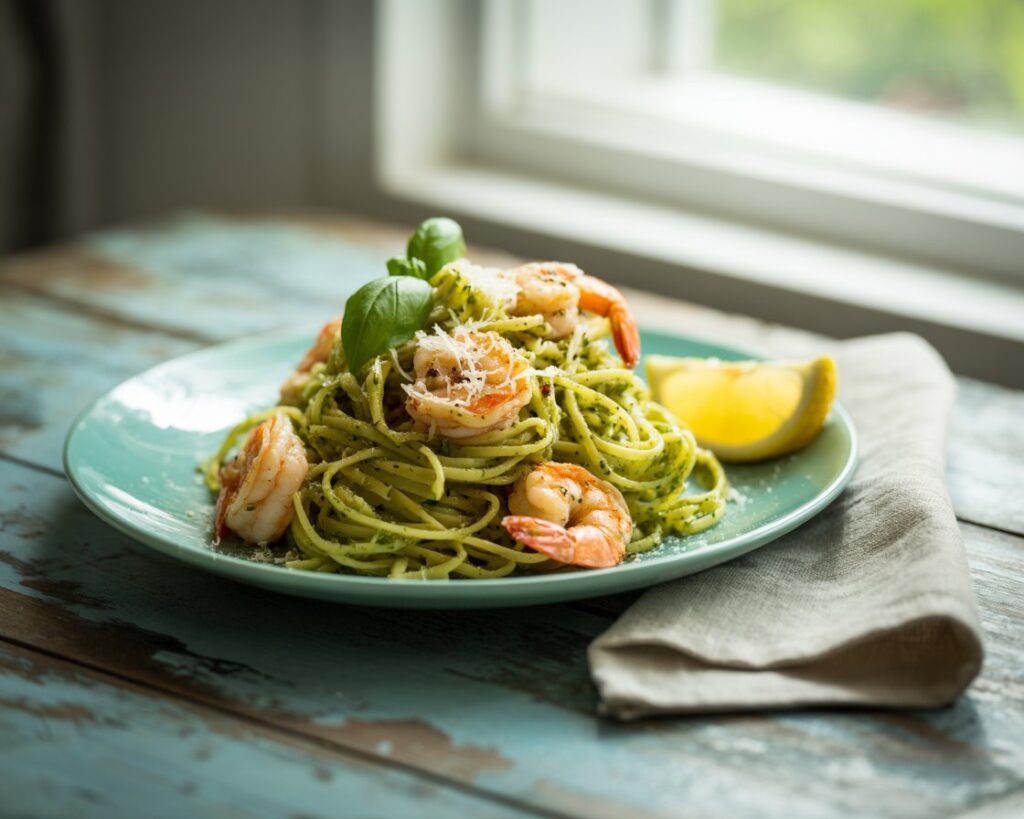
Pesto shrimp pasta is a quick and delicious weeknight dinner that combines fresh, vibrant flavors with ease of preparation. This dish brings together succulent shrimp, aromatic basil pesto, and perfectly cooked pasta for a satisfying meal that’s both wholesome and flavorful. Whether you’re new to cooking or looking for a reliable recipe to whip up after a busy day, this easy pesto pasta recipe is designed to save time without compromising taste. Get ready to enjoy a balanced dish full of protein, healthy fats, and carbs that’s sure to become a family favorite.
Why Pesto Shrimp Pasta Is Perfect for Weeknights
When time is tight and hunger hits hard, pesto shrimp pasta offers a winning solution. It’s not only fast and simple to prepare, but it also delivers a flavorful, nourishing meal with minimal cleanup. Whether you’re cooking for yourself or the whole family, this dish fits seamlessly into busy schedules without sacrificing quality or satisfaction.
Quick and Easy to Prepare
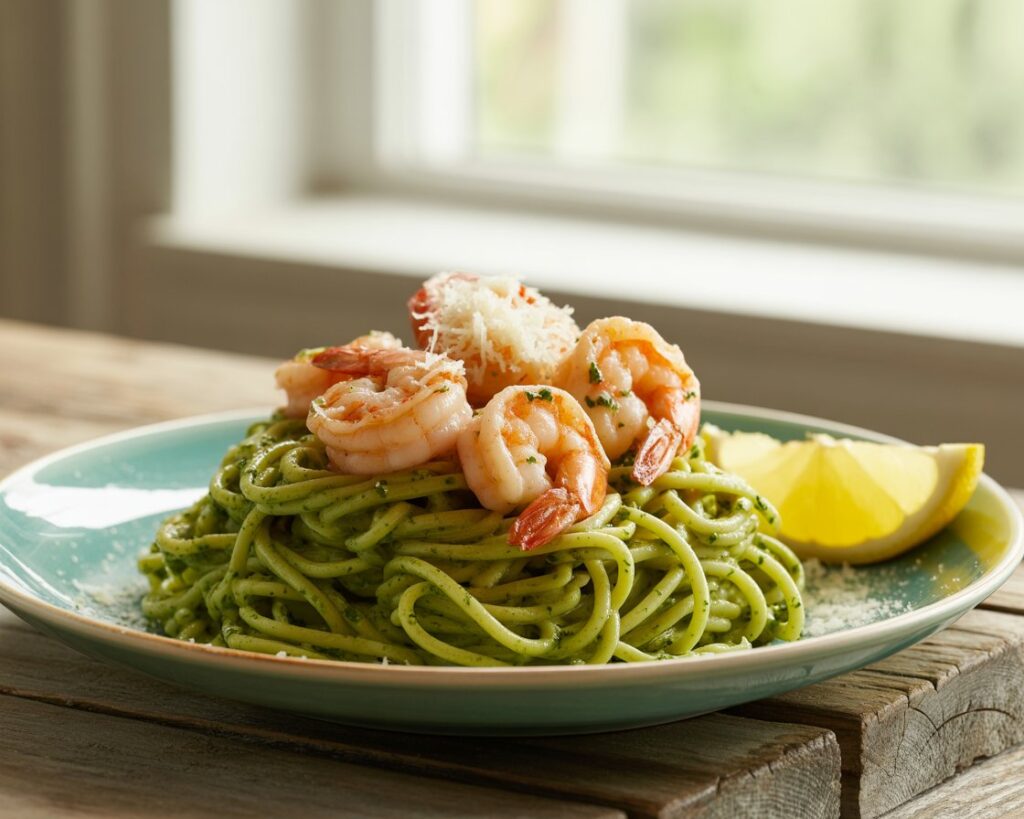
One of the best parts of pesto shrimp pasta is its speed. You can have dinner on the table in under 30 minutes with just a few basic steps: boil the pasta, sauté the shrimp, and toss everything with pesto sauce. There’s no need for complicated prep or long cooking times, which makes it ideal for weeknights when you want something homemade but hassle-free. To save even more time, you can use pre-cleaned shrimp and prepare your pesto ahead or use a quality store-bought version.
Balanced Flavors and Nutrition
This dish doesn’t just taste great—it’s good for you, too. Shrimp provides lean protein, pesto brings in healthy fats from olive oil and pine nuts, and pasta adds a satisfying dose of carbohydrates. Together, these elements create a balanced plate that fuels your body while pleasing your taste buds. The basil in pesto adds antioxidants and a fresh herbal flavor, making each bite both comforting and energizing.
Versatility in Ingredients
What makes pesto shrimp pasta especially appealing is its flexibility. You can swap out the type of pasta (try whole wheat, gluten-free, or even zoodles), adjust the heat with a dash of chili flakes, or add vegetables like cherry tomatoes, spinach, or zucchini. The basic recipe is a solid foundation, but it welcomes your personal touches—perfect for using up what’s in the fridge or tailoring the dish to your dietary needs.
Ingredients Breakdown: What Makes This Dish Special
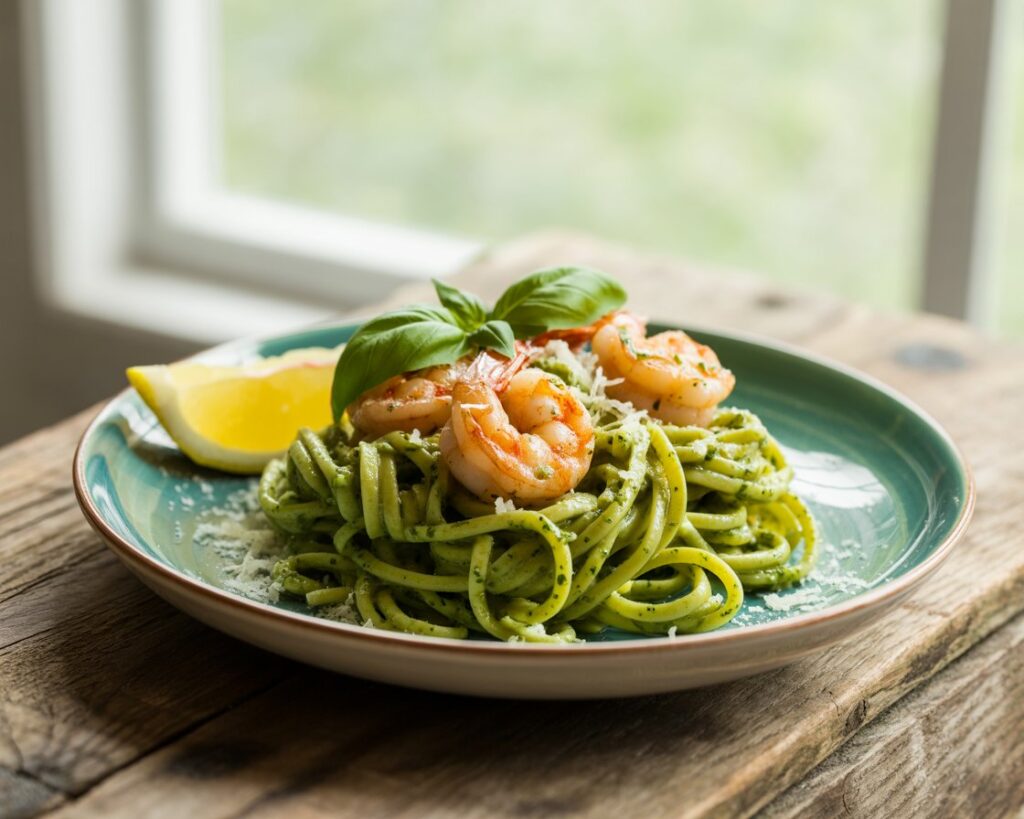
Understanding the ingredients in pesto shrimp pasta helps highlight why this dish is both flavorful and satisfying. Each component plays a distinct role, contributing to the overall taste, texture, and nutritional value. Knowing what goes into the dish also opens the door for customization to suit your preferences.
Key Ingredients and Their Roles
Shrimp serves as the protein powerhouse of this recipe. It cooks quickly and adds a tender, slightly sweet flavor that pairs perfectly with the vibrant pesto.
Fresh basil pesto is the flavor star, bringing a rich combination of herbs, nuts, garlic, and olive oil. Its aromatic freshness elevates the entire dish without overpowering the shrimp or pasta.
Pasta acts as the perfect base, providing a satisfying, comforting texture that absorbs the flavors of the shrimp and pesto sauce. Choosing the right pasta type, like linguine or fettuccine, helps balance the dish’s elements.
Optional Ingredients That Elevate the Dish
Adding cherry tomatoes introduces a burst of sweetness and juiciness, while lemon zest adds a bright, citrusy note that cuts through the richness of the pesto. For those who enjoy a little heat, a sprinkle of red pepper flakes adds a subtle kick that complements the flavors beautifully.
Ingredient Table for Easy Reference
| Ingredient | Purpose | Tips for Selection |
|---|---|---|
| Shrimp | Protein | Use peeled and deveined for ease |
| Fresh basil pesto | Flavor | Homemade or store-bought both work |
| Pasta | Carb base | Linguine or fettuccine are ideal |
| Parmesan cheese | Adds richness | Freshly grated preferred |
| Garlic | Aromatic flavor | Minced finely for best taste |
Step-by-Step Cooking Process
Mastering the cooking process is key to making pesto shrimp pasta both delicious and visually appealing. Breaking down the steps ensures each element is cooked to perfection and the flavors meld harmoniously.
Preparing the Shrimp Perfectly
Start by cleaning your shrimp thoroughly—peeling and deveining if necessary. Pat them dry to ensure they sear well. Season lightly with salt, pepper, and a touch of garlic powder or paprika for extra depth. Cook the shrimp in a hot skillet with a bit of olive oil for just 2-3 minutes per side until they turn pink and opaque. Avoid overcooking, as shrimp become tough and rubbery quickly. Removing them from heat promptly preserves their tender texture and natural sweetness.
Making or Using Pesto Sauce
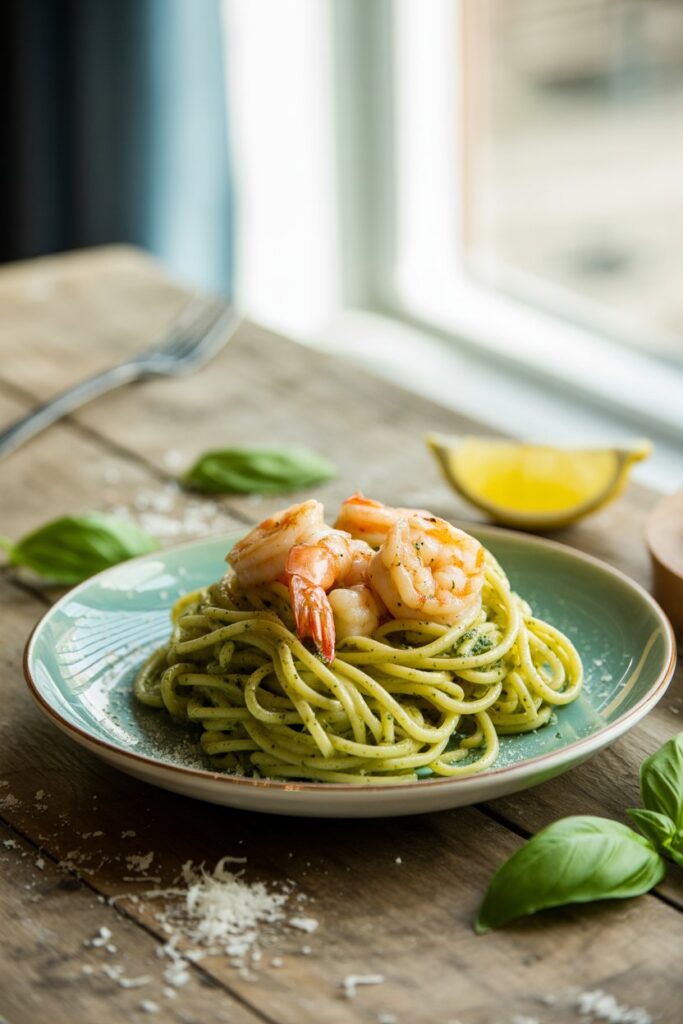
If you’re making pesto from scratch, blend fresh basil leaves, garlic, pine nuts, Parmesan cheese, olive oil, and a pinch of salt until smooth. For a quicker option, a good-quality store-bought pesto works well without sacrificing flavor. To enhance the sauce, add a squeeze of lemon juice or a splash of pasta water when combining with the other ingredients—this helps balance richness and improves texture.
Combining Pasta and Sauce Like a Pro
Cook the pasta in salted boiling water until al dente, meaning it should be tender but still have a slight bite. Reserve a cup of pasta water before draining; this starchy water is a secret weapon to loosen the sauce if needed. Toss the drained pasta with the cooked shrimp and pesto sauce over low heat, adding small amounts of pasta water to achieve a silky, well-coated finish. This step ensures every strand of pasta is infused with vibrant flavor without being overly saucy.
Flavor Boosters and Customization Ideas
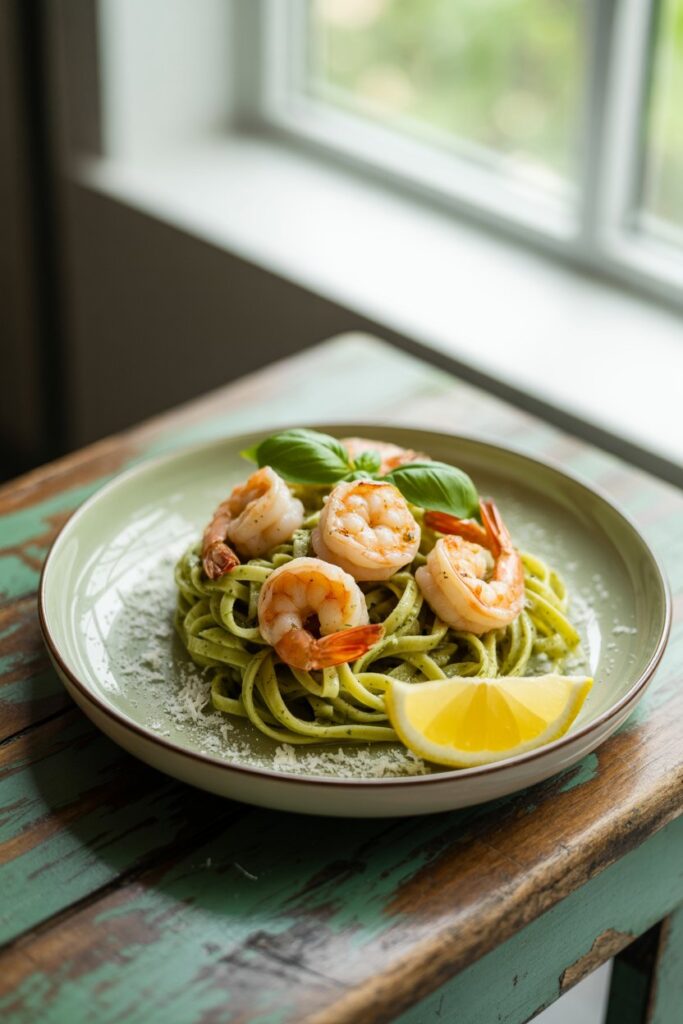
One of the joys of making pesto shrimp pasta is how easily it can be tailored to fit different tastes and dietary needs. Whether you prefer bold flavors or subtle enhancements, there are simple ways to personalize this dish without complicating the cooking process.
Spice It Up or Keep It Mild
For those who enjoy a little heat, adding red pepper flakes during the shrimp cooking stage brings a gentle but noticeable spice that complements the richness of the pesto. If you prefer a fresher, brighter note, a sprinkle of lemon zest just before serving adds a vibrant citrus aroma that lifts the entire dish. Both options allow you to adjust the flavor profile to your liking with minimal effort.
Add Veggies for Color and Nutrition
Incorporating vegetables not only enhances the dish visually but also boosts its nutritional value. Tossing in fresh spinach with the pasta adds a pop of green and a mild, pleasant flavor. Sun-dried tomatoes bring concentrated sweetness and chewy texture, while peas offer subtle sweetness and a satisfying bite. These additions are quick to prepare and can easily be included during the last few minutes of cooking.
Customization Guide for Every Taste
| Customization | Flavor Impact | Best Added When |
|---|---|---|
| Red pepper flakes | Adds heat | During shrimp cooking |
| Lemon zest | Adds freshness | Just before serving |
| Spinach | Adds nutrients/color | Toss in with pasta |
| Cherry tomatoes | Sweetness & texture | Mixed in last 2 minutes |
Nutritional Benefits of Pesto Shrimp Pasta
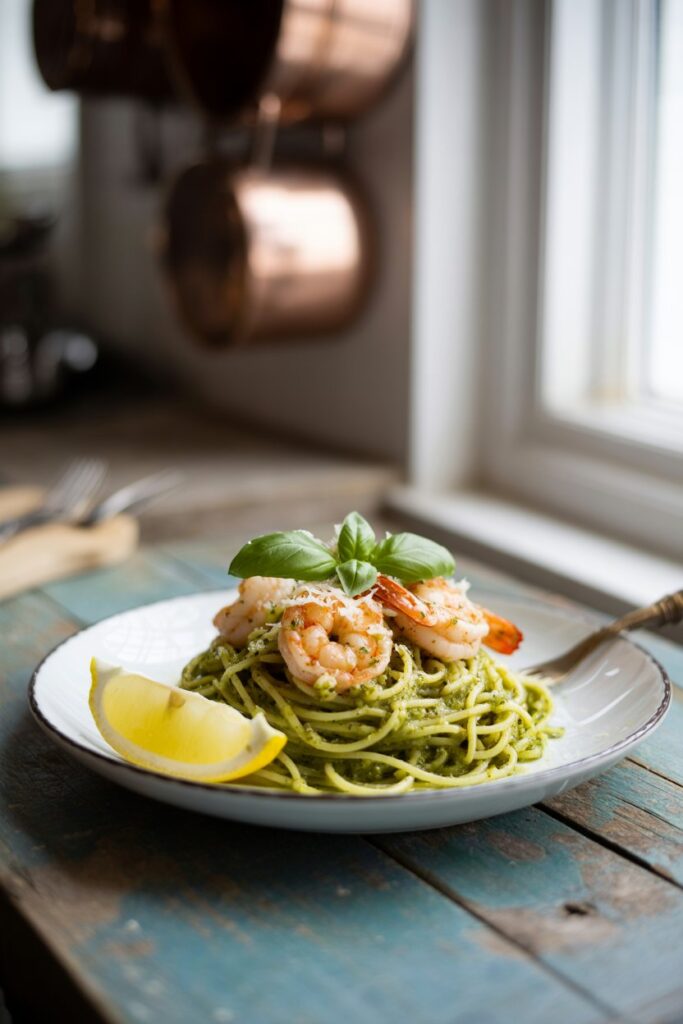
Besides being flavorful and easy to prepare, pesto shrimp pasta offers a well-rounded nutritional profile that supports a healthy diet. Understanding the balance of nutrients in this dish can help you appreciate how it fuels your body while satisfying your appetite.
Protein, Healthy Fats, and Carbs in Balance
This meal provides an excellent balance of macronutrients. The shrimp contributes a lean source of protein, essential for muscle repair and overall body function. The pesto brings healthy fats mainly from olive oil and pine nuts, which support heart health and provide sustained energy. Meanwhile, the pasta serves as a carbohydrate source, delivering the energy needed for daily activities. This combination helps keep you full and energized without excess calories.
Why Shrimp and Basil Pesto Are Health Boosters
Shrimp is rich in omega-3 fatty acids, which have been linked to reduced inflammation and improved cardiovascular health. It also contains important vitamins and minerals such as vitamin B12, iodine, and selenium. Basil pesto adds antioxidants from fresh herbs, as well as vitamins A and C, supporting immune function and skin health. The olive oil in pesto offers monounsaturated fats, known to promote healthy cholesterol levels.
Estimated Nutrition per Serving
| Nutrient | Amount | Health Benefit |
|---|---|---|
| Calories | ~450 kcal | Moderate calorie meal |
| Protein | 30g | Supports muscle & repair |
| Healthy fats | 15g | From olive oil & pine nuts |
| Carbohydrates | 40g | Provides energy |
| Fiber | 3g | Aids digestion |
Meal Prep Tips and Storage Advice
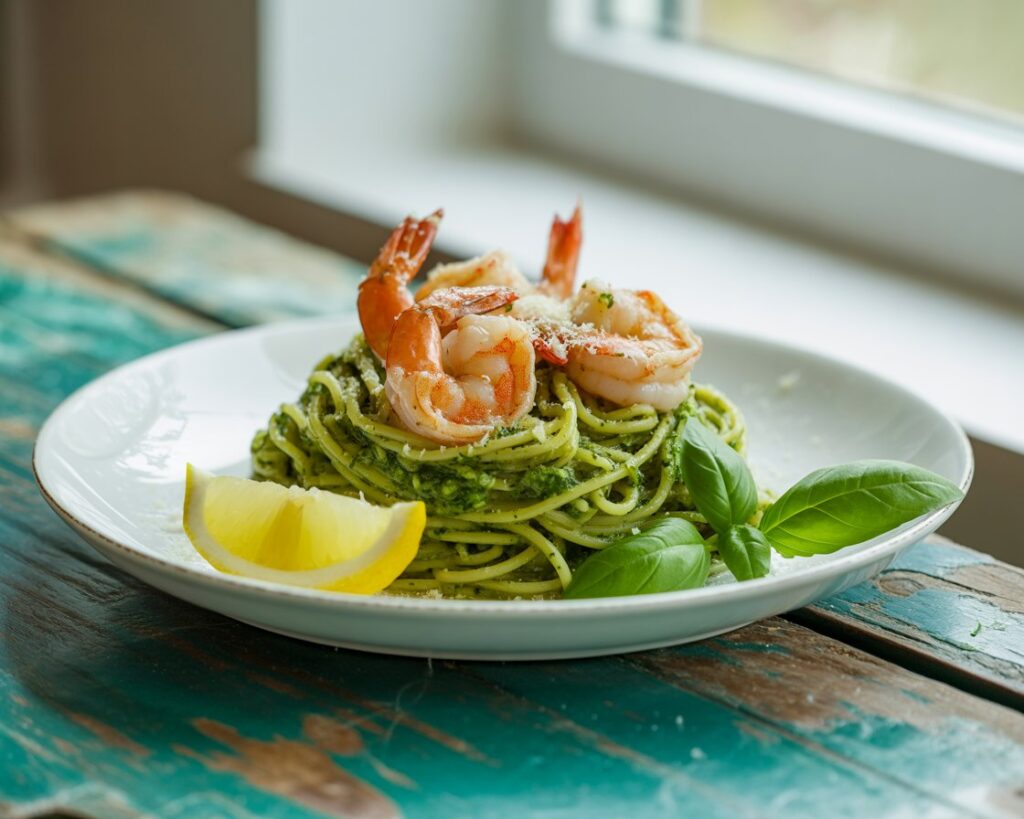
Preparing pesto shrimp pasta ahead of time can save you valuable time during busy days, but proper handling is key to maintaining its fresh flavors and textures. With the right approach, you can enjoy this dish throughout the week without compromising quality.
Making Ahead Without Losing Flavor
To keep your shrimp tender and flavorful, it’s best to cook it fresh or prepare it separately from the pasta and sauce. Store the pesto sauce in an airtight container to preserve its vibrant color and taste—adding a thin layer of olive oil on top can help prevent oxidation. When ready to eat, gently reheat the components and combine them just before serving for the best texture and flavor.
Best Storage Methods
Proper storage extends the shelf life of your ingredients while minimizing waste. Keep cooked shrimp and pasta refrigerated in separate containers to avoid sogginess. Avoid mixing pesto with pasta too early, as the sauce can lose its bright flavor and the pasta may become mushy. For longer storage, freezing pesto sauce separately is recommended, while cooked shrimp and pasta freeze less well due to changes in texture after thawing.
Storage Duration and Tips
| Storage Method | Duration | Tips for Best Results |
|---|---|---|
| Refrigerator | Up to 3 days | Store shrimp and pasta separately |
| Freezer | Up to 1 month | Freeze pesto sauce separately |
Pairing Suggestions: What Goes Well with Pesto Shrimp Pasta?
To create a well-rounded meal, pairing pesto shrimp pasta with complementary sides and beverages can enhance the dining experience. Thoughtful pairings bring balance to the plate, adding texture, flavor, and refreshing contrasts.
Side Dishes That Complement the Meal
Simple side salads made with mixed greens and a light lemon vinaigrette provide a crisp, fresh counterpoint to the richness of the pasta. For bread options, whole grain or lightly toasted garlic bread alternatives offer satisfying texture and a bit of savory depth without overpowering the main dish. These sides keep the meal balanced and enjoyable.
Beverage Pairings
Non-alcoholic options like sparkling water with a twist of lemon cleanse the palate and refresh the senses, making each bite feel vibrant. For those who prefer light alcoholic beverages, a chilled white wine or a crisp rosé complements the herbal notes of the pesto and the sweetness of the shrimp without overwhelming the flavors.
Quick Pairings for Your Dinner
| Pairing Type | Options | Why It Works |
|---|---|---|
| Side salad | Mixed greens with lemon vinaigrette | Adds freshness and crunch |
| Bread | Whole grain or garlic bread | Adds texture and richness |
| Drink | Sparkling water with lemon | Cleanses palate |
Troubleshooting and FAQ for Pesto Shrimp Pasta
Even the simplest recipes can present small challenges. This section helps you troubleshoot common issues and offers practical solutions, ensuring your pesto shrimp pasta turns out perfect every time.
Common Issues and Easy Fixes
If your pasta turns out too mushy, it’s likely overcooked. To avoid this, cook the pasta just until al dente—firm to the bite—and drain immediately. Overcooked shrimp become tough and rubbery; watch closely and cook shrimp only 2-3 minutes per side until they turn pink and opaque. Removing shrimp from heat promptly will keep them tender.
Ingredient Substitutions
If fresh pesto isn’t available, a high-quality store-bought version works well and saves time. For different pasta options, linguine or fettuccine are ideal, but you can substitute with penne, spaghetti, or gluten-free pasta to suit preferences or dietary needs.
FAQ Quick Answers
| Question | Answer |
|---|---|
| Can I use frozen shrimp? | Yes, thaw completely before cooking |
| What pasta works best? | Linguine or fettuccine preferred |
| How to make it gluten-free? | Use gluten-free pasta |
Why Pesto Shrimp Pasta Is the Ultimate Quick and Delicious Weeknight Dinner
Pesto shrimp pasta perfectly combines speed, flavor, and nutrition, making it an ideal choice for busy weeknights. With simple ingredients and easy steps, this dish delivers a satisfying balance of protein, healthy fats, and carbs that will keep you energized and satisfied. Its versatility allows for endless customization, so you can tailor it to your taste and pantry. Whether you’re cooking for yourself or family, this quick and delicious recipe is sure to become a regular favorite.