
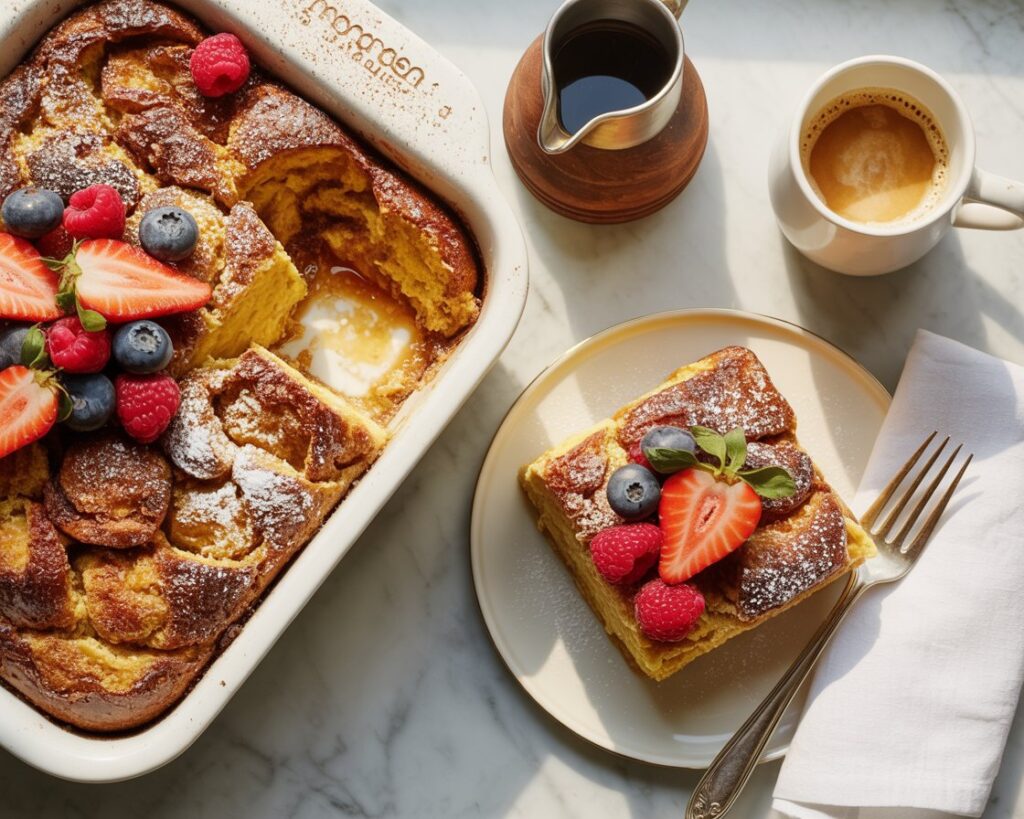
Overnight French toast casserole is the ultimate solution for busy mornings and special occasions alike. Imagine waking up to a warm, golden-baked breakfast that’s been perfectly soaking overnight, ready to impress without the morning rush. This make-ahead dish combines the comforting flavors of cinnamon, vanilla, and maple syrup with the rich texture of custardy bread, making it a crowd-pleaser for holidays, brunches, or any lazy weekend. In this guide, you’ll discover creative tips, ingredient secrets, and expert tricks to help you make the best overnight French toast casserole every time — no stress, just delicious results.
Why Overnight French Toast Casserole Is the Ultimate Make-Ahead Breakfast
Overnight French toast casserole isn’t just convenient—it transforms your morning routine by combining ease with rich, comforting flavors. Understanding what makes this dish special helps you appreciate why it’s become a breakfast favorite.
The Magic of Soaking Bread Overnight
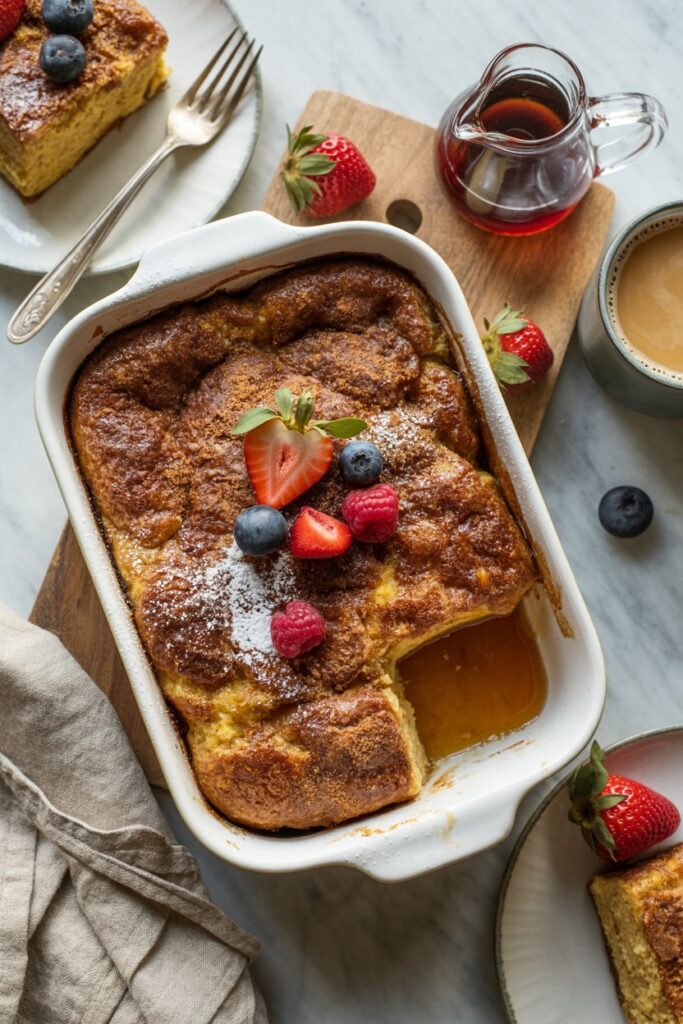
Soaking brioche or challah bread in a creamy egg mixture is the secret to achieving the perfect texture in an overnight French toast casserole. The bread absorbs the custard-like mixture slowly, allowing the flavors of cinnamon, vanilla, and spices to fully penetrate each slice. This process softens the bread so that it becomes tender and moist inside, while still maintaining a slightly crispy, caramelized crust after baking. The science behind this soaking lies in the starches and sugars in the bread absorbing the liquid, which then sets during baking to create that rich, custardy interior with a satisfying contrast of textures.
Benefits of Preparing Breakfast the Night Before
Preparing your breakfast ahead of time is a game changer, especially when mornings are hectic. By assembling your casserole the night before, you free up your morning for more enjoyable activities without sacrificing a homemade meal.
Preparing breakfast the night before offers a significant advantage, especially for busy families and holiday gatherings. It saves valuable time in the morning, eliminating the need to rush through multiple steps. Simply assemble the casserole, let it soak overnight, and pop it in the oven the next day. This make-ahead approach reduces stress by allowing you to focus on enjoying the moment rather than cooking. Additionally, an overnight French toast casserole is a crowd-pleaser, making it ideal for entertaining guests without spending all morning in the kitchen.
Ideal Occasions for Serving French Toast Casserole
While delicious any day of the week, overnight French toast casserole truly shines during special occasions. Its rich, comforting nature makes it a standout dish to share with family and friends.
This versatile dish fits perfectly into many occasions. It’s a classic choice for holidays like Christmas morning and Easter brunch, where easy yet impressive meals are appreciated. The rich flavors and comforting texture also make it a favorite for weekend family breakfasts and casual brunch parties, providing a warm and satisfying start to any special day. Because it can be prepared ahead and customized with various toppings and flavor additions, it’s a reliable recipe to have on hand for entertaining or simply elevating your everyday breakfast routine.
Choosing the Best Ingredients for Flavor and Texture
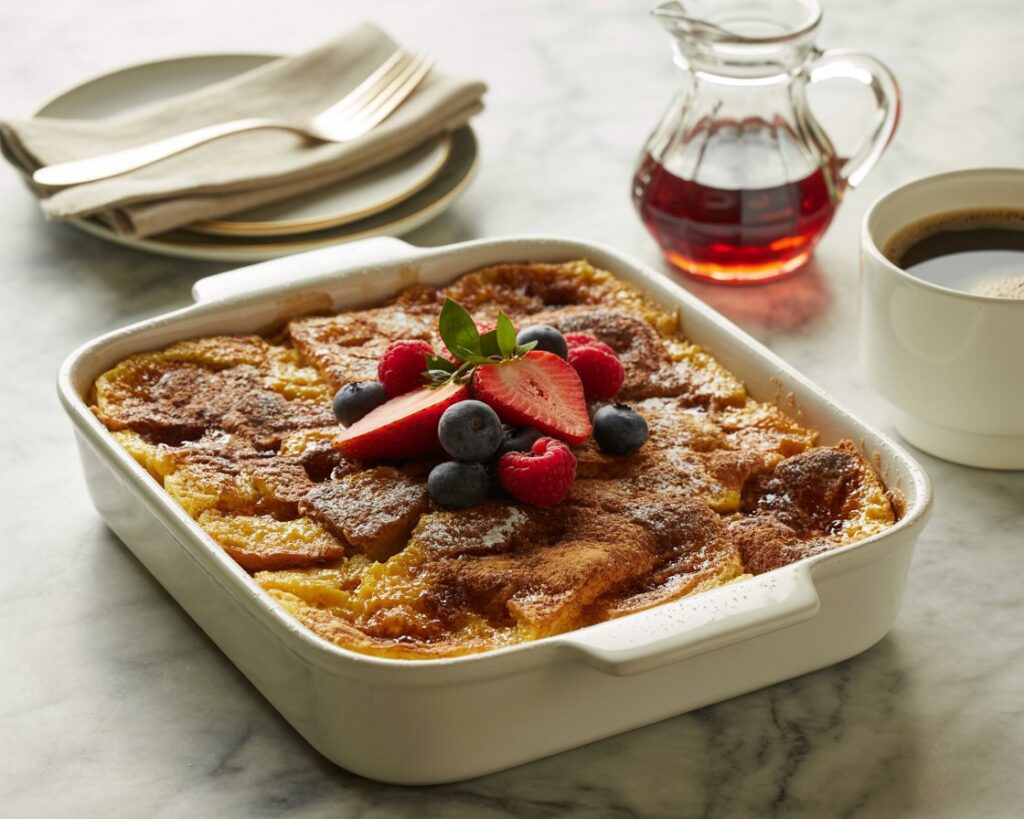
The secret to an unforgettable overnight French toast casserole lies not only in the preparation but also in selecting the right ingredients. Choosing the perfect bread and flavor enhancers can elevate your casserole from good to exceptional. Let’s explore what makes certain ingredients stand out.
Why Brioche and Challah Are Game-Changers
When it comes to bread, not all types soak up the custard mixture equally or deliver the same texture after baking. Brioche and challah are preferred for their rich, tender crumb and ability to absorb liquid without falling apart. Below is a simple comparison to help you decide which bread suits your casserole best:
| Bread Type | Texture | Flavor Profile | Soak-Ability | Best For |
|---|---|---|---|---|
| Brioche | Soft, buttery | Slightly sweet | Excellent | Rich custardy interior, decadent taste |
| Challah | Light, airy | Mildly sweet | Very good | Balanced texture, classic flavor |
| Regular Bread | Dense, firm | Neutral | Moderate to low | Budget-friendly, less rich |
Flavor Boosters to Elevate Your Casserole
Beyond the bread, incorporating warm spices and flavor enhancers makes a big difference. Adding cinnamon, nutmeg, vanilla extract, and a touch of brown sugar creates layers of comforting sweetness and aroma. For an extra indulgence, consider swirling in cream cheese or topping with fresh fruit before baking. These additions provide creamy richness and a fresh burst of flavor that surprise and delight.
Sweeteners and Toppings: What Works Best?
Choosing the right sweetener and topping depends on your taste preferences and the texture you want to achieve. Maple syrup offers a classic, natural sweetness with deep flavor, while honey adds floral notes but can be heavier. Powdered sugar is perfect for a light dusting after baking for visual appeal without added moisture.
For texture contrast, try a crunchy brown sugar topping or a streusel made with butter, flour, and nuts. These options add a satisfying crispness that balances the casserole’s soft interior, making each bite more interesting.
Tips for Perfect Baking and Presentation
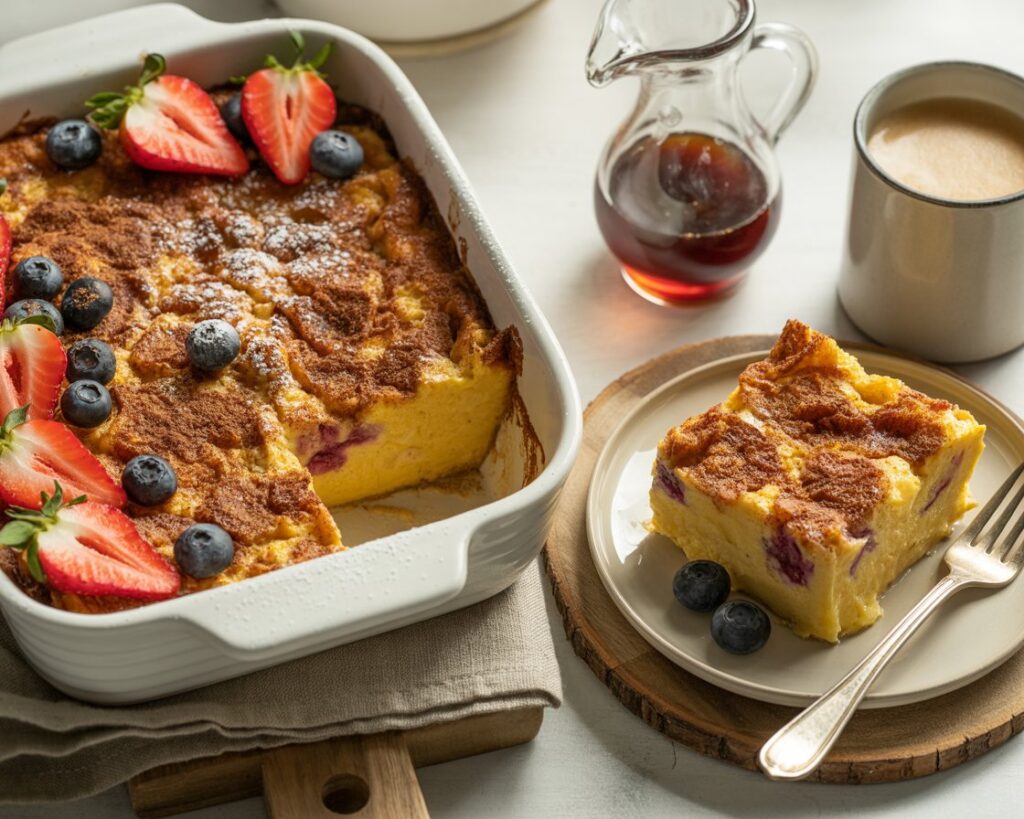
Mastering the baking process and presentation can turn your overnight French toast casserole into a showstopper. These tips will help you achieve the ideal texture and make your dish look as good as it tastes.
Oven Settings and Baking Time Explained
Getting that golden brown crispy top while keeping the custard inside moist and creamy is all about the right oven temperature and timing. Bake your casserole at a moderate temperature, typically around 350°F (175°C), to allow the custard to set evenly without drying out. Check for a lightly browned, slightly firm top—this indicates the perfect balance of a crisp crust and a soft interior. Tent the casserole loosely with foil if it browns too quickly, ensuring it doesn’t burn while the inside finishes baking.
Presentation Ideas That Impress
How you present your casserole can elevate the entire meal experience. Garnish with whipped cream, fresh berries, or chopped nuts for bursts of color and added texture. Arrange the casserole slices neatly on plates, and drizzle with maple syrup or a dusting of powdered sugar. These simple touches make your dish visually appealing and perfect for sharing on social media. Consider lighting and plating styles that emphasize the casserole’s golden crust and creamy layers to create an Instagram-worthy brunch.
Storage and Reheating Guide
If you have leftovers, proper storage and reheating are key to maintaining flavor and texture. Store your casserole in airtight containers in the refrigerator for up to 3 days or freeze portions for longer preservation. To reheat, use a low oven temperature or microwave with a cover to prevent drying out. Reheating gently ensures the custard stays creamy and the top retains some crispness. Glass or BPA-free plastic containers with tight-fitting lids work best for storage and ease of reheating.
Customize Your Overnight French Toast Casserole

One of the best things about overnight French toast casserole is its versatility. Whether you prefer traditional sweet flavors or want to experiment with savory options, there’s a version for every palate. Plus, you can easily adapt the recipe to fit various dietary needs without sacrificing taste or texture.
Savory Variations for Non-Sweet Lovers
If sweet breakfasts aren’t your thing, try transforming this dish with herbs, cheese, and bacon for a savory twist. Fresh herbs like thyme or rosemary paired with sharp cheddar or Gruyère cheese add depth, while crispy bacon brings a satisfying crunch. These ingredients work together to create a comforting casserole that’s perfect for brunch or even dinner.
Here’s a simple comparison of popular sweet vs. savory casserole flavor combos:
| Flavor Type | Key Ingredients | Flavor Profile | Best Occasion |
|---|---|---|---|
| Sweet | Cinnamon, vanilla, brown sugar, cream cheese, berries | Warm, aromatic, indulgent | Holiday brunch, weekend treat |
| Savory | Thyme, cheddar cheese, bacon, black pepper | Rich, smoky, herbaceous | Brunch, casual dinner |
Dietary Adjustments and Alternatives
Overnight French toast casserole can be easily modified for special diets. For those needing gluten-free options, breads made from almond flour, rice flour, or gluten-free blends soak well and maintain good texture. Dairy-free substitutes like coconut or almond milk work great in the custard mixture to keep it creamy without lactose.
For vegan adaptations, egg replacers such as flaxseed “eggs” or commercial vegan egg substitutes soak into bread similarly to traditional eggs, allowing you to enjoy a delicious casserole that fits your lifestyle.
Fun Breakfast Brunch Ideas to Pair with Your French Toast Casserole
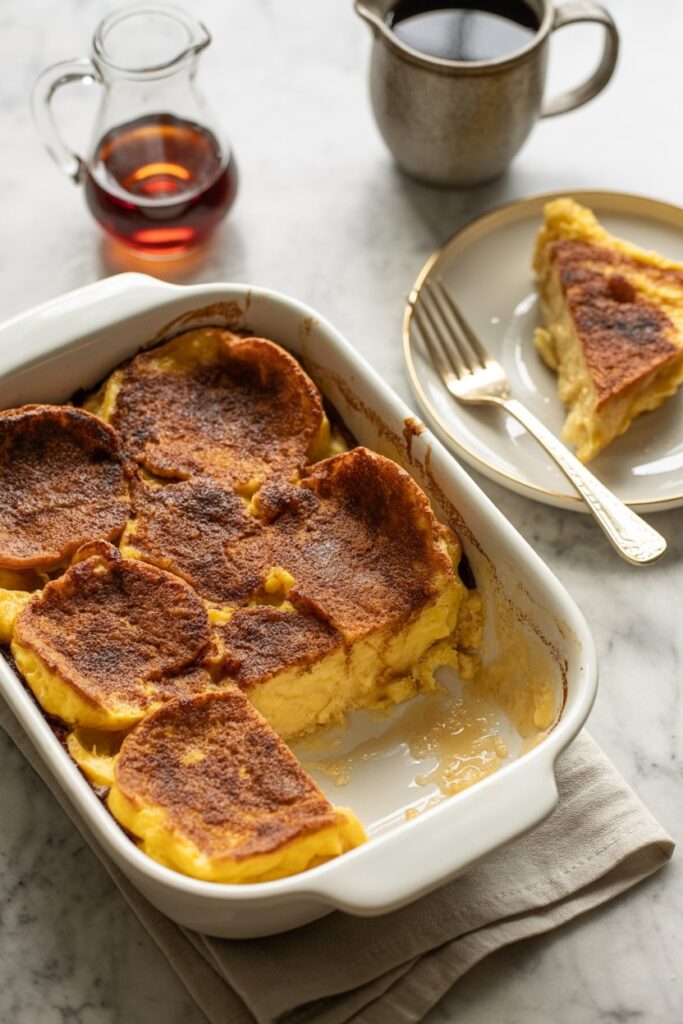
Serving an overnight French toast casserole opens up many possibilities for creating a memorable brunch experience. Pairing it with complementary sides, drinks, and a fun setup can turn a simple meal into a festive occasion that your guests will love.
Easy Sides That Complement the Dish
Balance the rich and creamy texture of the casserole with fresh, light sides. Quick fruit salads featuring seasonal berries or citrus add a refreshing contrast, while yogurt parfaits layered with granola and honey bring a creamy yet crunchy element. For those who prefer something savory, breakfast sausages or crispy bacon provide a satisfying protein boost and flavor variety.
Drinks to Serve Alongside
No brunch is complete without the right beverages. Classic coffee pairs perfectly with the sweet spices of French toast casserole, while freshly squeezed juices—like orange or grapefruit—offer bright, citrusy notes that refresh the palate. For a celebratory touch, consider serving a brunch cocktail like a mimosa, combining sparkling wine with orange juice for a light and bubbly companion.
Hosting Tips: Setting Up a Self-Serve Breakfast Bar
Make your brunch interactive and fun by setting up a self-serve breakfast bar. This allows guests to customize their own casserole toppings and sides according to their preferences. Provide bowls of options like chopped nuts, fresh fruit, whipped cream, maple syrup, and various sweet or savory toppings.
To make it easy for your guests, include a printable checklist or table outlining all available toppings and side dishes. This not only adds an organized touch but also encourages guests to try different flavor combinations, making the meal more enjoyable and personalized.
Why Overnight French Toast Casserole Should Be Your Go-To Breakfast Recipe
Overnight French toast casserole offers the perfect blend of convenience, flavor, and versatility. Whether you’re looking to save time on busy mornings, impress guests at a holiday brunch, or simply enjoy a comforting homemade meal, this recipe delivers every time. By choosing the right ingredients, mastering the soaking and baking process, and customizing it to your taste, you can create a dish that everyone will love. Make overnight French toast casserole a staple in your kitchen and enjoy effortless, delicious breakfasts any day of the week.