
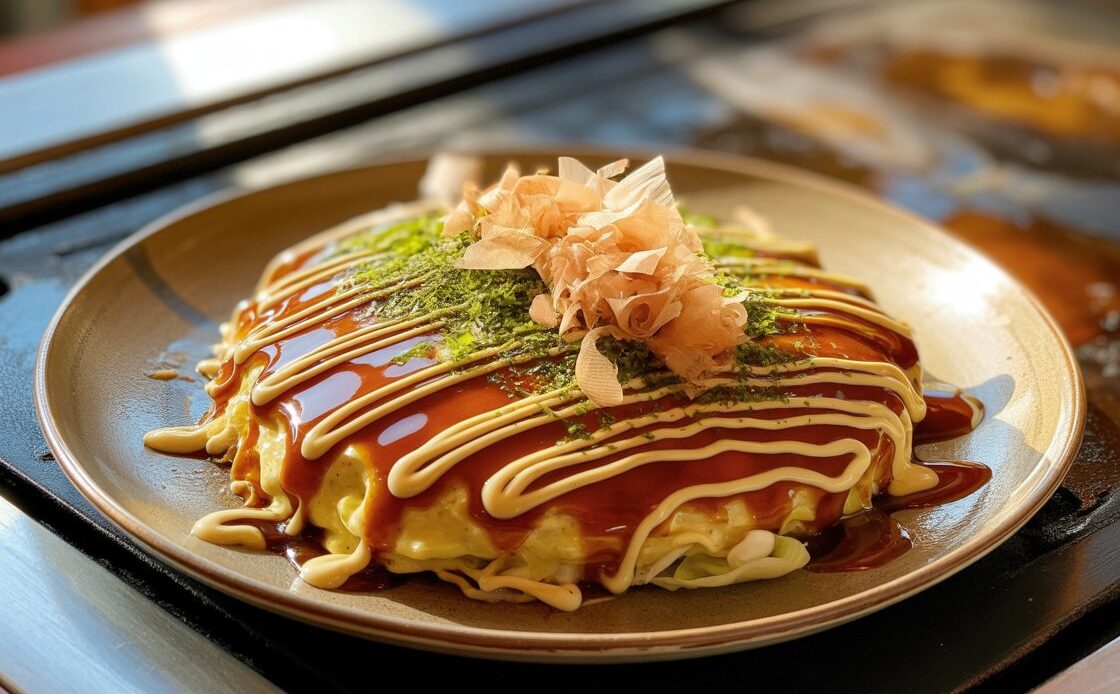
Okonomiyaki recipe is a delicious Japanese savory pancake that has captured the hearts of food lovers worldwide. Packed with cabbage, flavorful toppings, and a perfectly balanced dashi batter, this dish is both comforting and customizable. Whether you’re trying an Osaka-style okonomiyaki, experimenting with creative toppings, or mastering the teppan cooking technique, this guide will help you make a pancake that’s not only tasty but also a feast for the eyes. Get ready to explore the flavors, history, and tips that make this Japanese classic truly unforgettable!
The Story Behind Okonomiyaki – More Than Just a Pancake
Okonomiyaki is not just a dish; it is a reflection of Japanese culture, regional tastes, and culinary creativity. Every pancake tells a story—whether it’s the bustling streets of Osaka where vendors flip savory pancakes for locals or the layered delicacy served in Hiroshima. Understanding the history and ingredients behind this dish helps you appreciate it beyond just its flavor. Before diving into the specifics of regional styles, it’s important to recognize that cabbage and toppings are what give each version its character and depth.
Origins and Regional Variations
The okonomiyaki is far more than a simple Japanese pancake; it is a culinary tradition with regional variations that reflect local tastes and history. The two most famous styles are Osaka-style okonomiyaki and Hiroshima-style okonomiyaki.
Osaka-style okonomiyaki is known for mixing the batter, cabbage, and other ingredients together before cooking. In contrast, Hiroshima-style okonomiyaki layers the ingredients, often including noodles, creating a distinct texture and presentation. Both styles use a combination of flour, dashi, and eggs to achieve the perfect savory pancake, but their techniques and ingredient arrangements differ significantly.
Here’s a quick comparison to understand the differences:
| Style | Main Ingredients | Preparation Method | Cooking Style |
|---|---|---|---|
| Osaka-style | Cabbage, flour, eggs, pork/seafood, green onions | Ingredients mixed into batter | Cooked on a flat teppan, flipped once |
| Hiroshima-style | Cabbage, flour, eggs, pork/seafood, noodles | Ingredients layered on batter | Cooked on a flat teppan, layered assembly |
This table shows how subtle differences in preparation create unique flavors and textures, allowing each region to put its signature on this classic dish.
Why Cabbage is the Star
No okonomiyaki recipe is complete without cabbage. This humble vegetable contributes not only bulk and structure to the pancake but also a natural sweetness and crunch that balances savory flavors. Beyond texture and taste, cabbage adds nutritional benefits, including fiber, vitamin C, and antioxidants, making the dish satisfying and wholesome.
Fun fact: Did you know cabbage usage in okonomiyaki can weigh up to half a pancake? Its generous proportion is what gives okonomiyaki its iconic light yet hearty texture, ensuring every bite is both flavorful and filling.
Choosing the Perfect Toppings – Customizing Your Pancake

One of the most exciting parts of making okonomiyaki is customizing it with toppings that match your taste and mood. From classic Japanese flavors to bold, adventurous additions, the right toppings can transform a simple pancake into a culinary masterpiece. Understanding both traditional and creative options allows you to explore the full potential of this savory dish.
Classic Toppings You Can’t Miss
Traditional okonomiyaki toppings are essential for achieving the authentic taste. Katsuobushi (bonito flakes) adds a smoky, umami-rich flavor, while Aonori (seaweed flakes) contributes a subtle marine aroma. The combination of Kewpie mayo and okonomiyaki sauce provides the perfect balance of creaminess and tangy sweetness. These toppings are staples in most Osaka-style okonomiyaki recipes and form the foundation for a delicious, classic pancake.
Creative Toppings for Adventurous Eaters
For those looking to experiment, there’s plenty of room to get creative with okonomiyaki toppings. Ingredients like bacon, cheese, seafood, or kimchi can add exciting textures and bold flavors. Mixing traditional and modern elements allows you to personalize your pancake while keeping it fun and flavorful.
Here’s a quick guide to some fun topping combinations and their flavor profiles:
| Topping Combo | Flavor Profile |
|---|---|
| Bacon + Cheese + Katsuobushi | Savory, smoky, umami |
| Kimchi + Pork + Aonori | Spicy, tangy, aromatic |
| Shrimp + Scallions + Mayo | Light, fresh, creamy |
| Mushroom + Cheese + Okonomiyaki Sauce | Earthy, rich, slightly sweet |
| Teriyaki Chicken + Nori + Sesame Seeds | Sweet-savory, nutty, flavorful |
Pairing Ideas
Elevate your okonomiyaki experience by pairing it with complementary drinks or side dishes. A light Japanese beer or chilled green tea can balance the savory flavors, while simple sides like pickled vegetables or miso soup enhance the meal without overwhelming the palate. These pairings create a more complete and enjoyable dining experience, whether you’re serving your pancake at home or entertaining guests.
The Science of the Perfect Batter
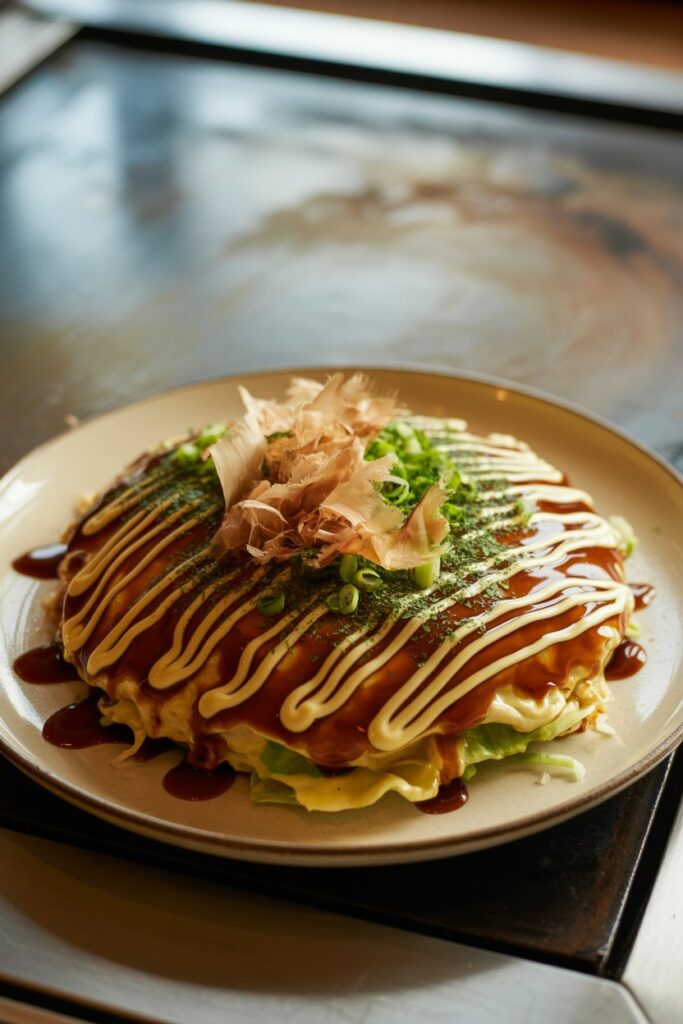
The secret to a truly delicious okonomiyaki lies in the batter. While toppings and cabbage are important, a well-balanced dashi and flour mixture forms the foundation of the pancake, determining its texture, fluffiness, and ability to hold all the ingredients together. Understanding how to mix and enhance your batter ensures that every pancake comes out perfectly, whether you prefer Osaka-style or Hiroshima-style okonomiyaki.
Understanding Dashi and Flour Ratios
A good okonomiyaki batter starts with the right ratio of dashi (Japanese soup stock) to flour. Dashi adds umami depth while keeping the pancake light and savory, and flour provides structure. Too much flour can make the pancake dense, while too much dashi can make it fragile or soggy. The ideal balance gives a batter that is easy to pour, holds the cabbage and other fillings well, and cooks evenly on a teppan.
Optional Enhancers
Certain ingredients can elevate your batter even further. Adding nagaimo (Japanese yam) creates a slightly sticky, airy texture, making the pancake softer and fluffier. Similarly, eggs enhance binding while contributing richness and flavor. By experimenting with these optional enhancers, you can fine-tune your okonomiyaki recipe to suit your preferred texture, whether light and airy or hearty and dense.
Quick Troubleshooting Table
Here’s a handy guide to solve common batter problems:
| Problem | Solution |
|---|---|
| Batter too dense | Reduce flour slightly or add more dashi |
| Batter too runny | Add a small amount of flour or beaten egg |
| Pancake falls apart | Mix ingredients gently; ensure enough binding |
| Uneven cooking | Adjust heat and spread cabbage evenly |
This table helps ensure that even beginners can achieve a smooth, balanced okonomiyaki batter, setting the stage for the perfect pancake every time.
Cooking Techniques – From Griddle to Table
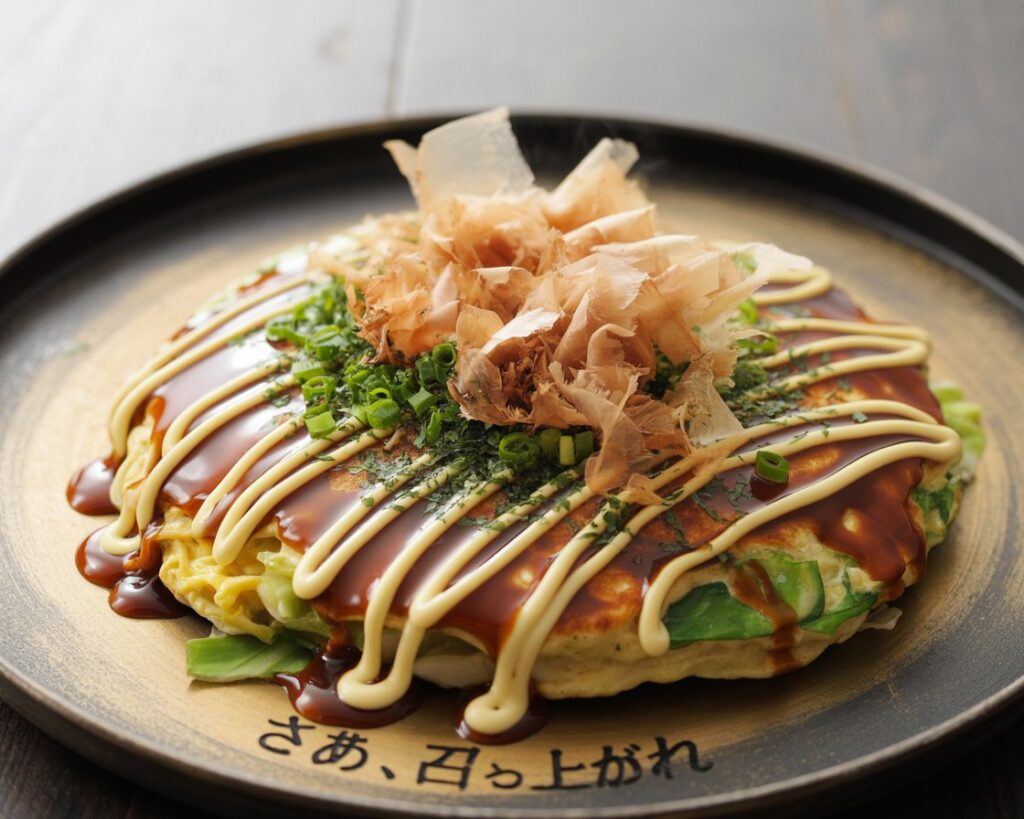
Cooking okonomiyaki is as much an art as it is a science. Even with the perfect batter and toppings, mastering the cooking process is key to achieving a pancake that is golden, flavorful, and holds its shape. From managing the teppan to flipping without collapsing, understanding these techniques ensures a restaurant-quality pancake at home.
Mastering the Teppan
The teppan, or flat griddle, is central to making authentic okonomiyaki. For even cooking, preheat the surface to medium heat and lightly oil it to prevent sticking. Spread your batter evenly and layer the cabbage and other ingredients so heat penetrates uniformly. Using a spatula, press gently to encourage even browning. Proper teppan management prevents burnt edges and undercooked centers, ensuring every bite is perfectly cooked.
Flipping and Layering Tricks
Flipping an okonomiyaki can be intimidating, but a few tips make it easier. Look for visual cues: edges should be firm, and the pancake should release easily from the teppan. Slide a spatula underneath and flip confidently in one motion. For layered styles like Hiroshima okonomiyaki, use multiple spatulas to support the pancake during flipping. Timing is critical—flip too soon, and the pancake may fall apart; wait too long, and it could dry out.
Fun Interactive Element
To make cooking more engaging, try the “Flip Challenge”: ask readers to time their first pancake flip and share a short video or GIF on Instagram or TikTok. This interactive approach encourages experimentation and adds a playful element to the cooking experience. You can also include a mini table of common flipping mistakes and solutions for readers to reference while practicing.
Serving and Presentation Tips

Serving okonomiyaki is where flavor meets visual appeal. Whether you’re aiming for a traditional Japanese experience or an Instagram-worthy presentation, the way you plate your pancake can elevate the entire meal. Thoughtful presentation helps highlight the vibrant toppings, the golden-brown batter, and the textures that make this dish so unique.
Traditional Japanese Style
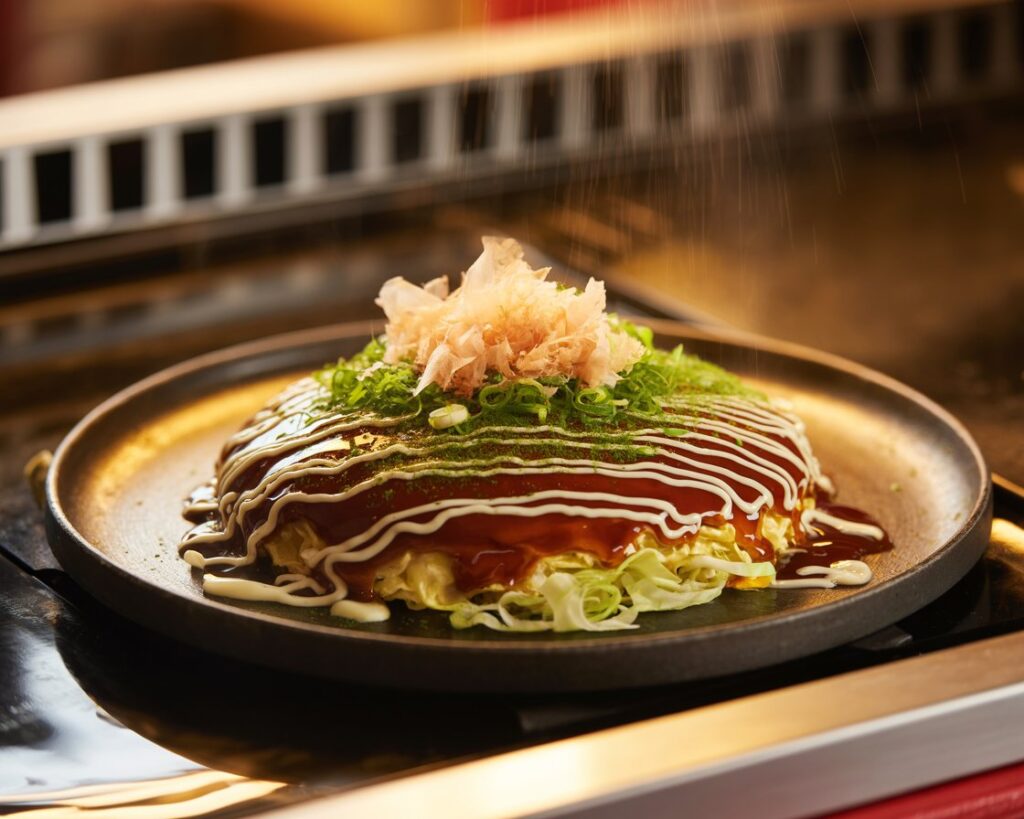
For an authentic Osaka-style okonomiyaki experience, simplicity is key. Place your pancake on a clean, flat plate and drizzle okonomiyaki sauce in a crisscross pattern. Sprinkle Aonori and scatter katsuobushi on top so the flakes gently “dance” from the heat of the pancake. Serve alongside pickled vegetables or a small bowl of miso soup to complete the traditional setup. Attention to these small details replicates the feel of a Japanese street stall right at home.
Instagrammable Presentation Ideas
For a more modern, visually striking approach, consider creative plating techniques:
- Drizzle Kewpie mayo in artistic patterns or lettering.
- Garnish with edible flowers or microgreens for color contrast.
- Serve mini okonomiyaki sliders on skewers for bite-sized fun.
- Layer toppings carefully to highlight textures and colors, ensuring each element stands out.
You can also create a photo grid or table layout for inspiration:
| Presentation Style | Topping Focus | Visual Tip |
|---|---|---|
| Traditional Osaka | Katsuobushi + Aonori | Let flakes move naturally on pancake |
| Colorful & Modern | Edible flowers + Mayo drizzle | Use contrasting plate background |
| Mini Sliders | Bacon + Cheese + Sauce | Stack pancakes on skewers for bite-sized fun |
| Layered Elegance | Seafood + Scallions + Nori | Highlight layers, drizzle sauces artistically |
These approaches make your okonomiyaki not only delicious but visually appealing, perfect for sharing on social media or impressing guests at your table.
Fun Facts and Cultural Tidbits
Beyond its delicious taste, okonomiyaki carries a rich cultural history and playful side that makes it more than just a meal. Exploring local traditions, festivals, and quirky culinary innovations allows readers to connect with the dish on a deeper level and inspires creativity in their own kitchen.
Festivals and Street Food Culture
Okonomiyaki is a staple at Japanese festivals, particularly in Osaka and Hiroshima. Street vendors line the streets during events, serving fresh pancakes hot off the teppan. Annual food festivals celebrate regional variations, with competitions for the fluffiest, crispiest, or most inventive pancakes. Experiencing okonomiyaki in this environment highlights its social and cultural significance, making it more than just a savory dish but a shared culinary tradition.
Fun Trivia
Japan is known for experimenting with unexpected okonomiyaki toppings. From cheese-stuffed pancakes to unconventional sweet and savory combinations, the possibilities are endless. Here’s a small guide to some quirky toppings you might not expect:
| Unusual Topping | Flavor Twist |
|---|---|
| Mochi | Chewy texture, slightly sweet |
| Ice cream | Hot and cold contrast |
| Cornflakes | Crunchy exterior |
| Natto (fermented soybeans) | Strong, savory flavor |
| Chocolate | Sweet-savory fusion |
These unusual ingredients showcase the playful side of okonomiyaki, encouraging readers to experiment beyond traditional recipes while still appreciating the cultural roots of this beloved Japanese pancake.
Reader’s Challenge / Interactive Section
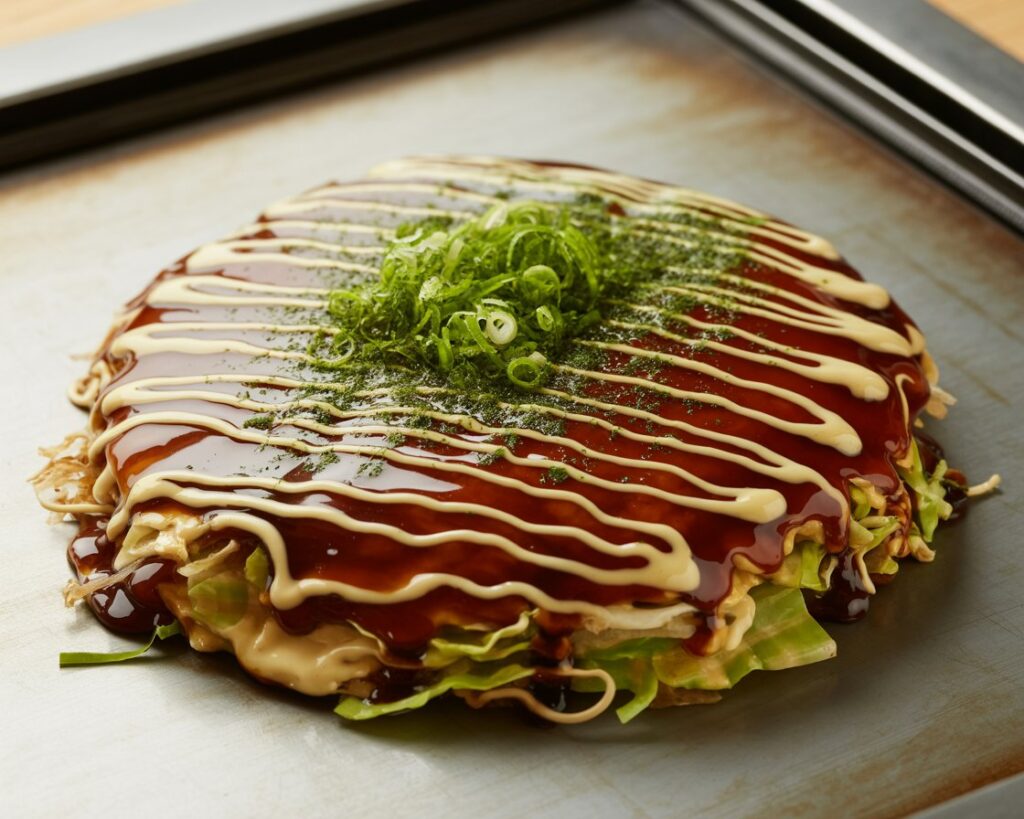
Bring your creativity to the kitchen with this “Design Your Own Okonomiyaki” challenge. Use this section to experiment with different batter tweaks and toppings, and discover your perfect flavor combination. Not only does this make cooking more interactive, but it also encourages readers to share their creations with friends, family, or on social media.
Design Your Own Okonomiyaki Template
Use the table below to plan your pancake, mixing traditional and adventurous ingredients. Fill in your choices and jot down flavor notes to remember what worked best:
| Component | Your Choice | Flavor Notes / Texture |
|---|---|---|
| Batter Base | e.g., Classic, Nagaimo, Egg-enriched | |
| Cabbage Amount | e.g., Light, Moderate, Extra | |
| Protein | e.g., Pork, Shrimp, Bacon | |
| Toppings | e.g., Katsuobushi, Cheese, Kimchi | |
| Sauce / Drizzle | e.g., Okonomiyaki sauce, Mayo | |
| Optional Creative Twist | e.g., Chocolate, Cornflakes |
Encourage readers to try multiple combinations and note which ones give the perfect balance of flavor, texture, and visual appeal. This interactive template turns a cooking guide into a playful experience, making your okonomiyaki recipe blog post not just informative but highly engaging.
Final Thoughts on Okonomiyaki Recipe
The beauty of the okonomiyaki recipe lies in its versatility—whether you stick to the traditional Osaka-style with cabbage and bonito flakes or experiment with bold toppings like kimchi and cheese, it’s a dish that celebrates creativity. From street stalls in Japan to your own kitchen, every pancake tells its own story. So grab your griddle, gather your favorite toppings, and make this Japanese classic uniquely yours.
