
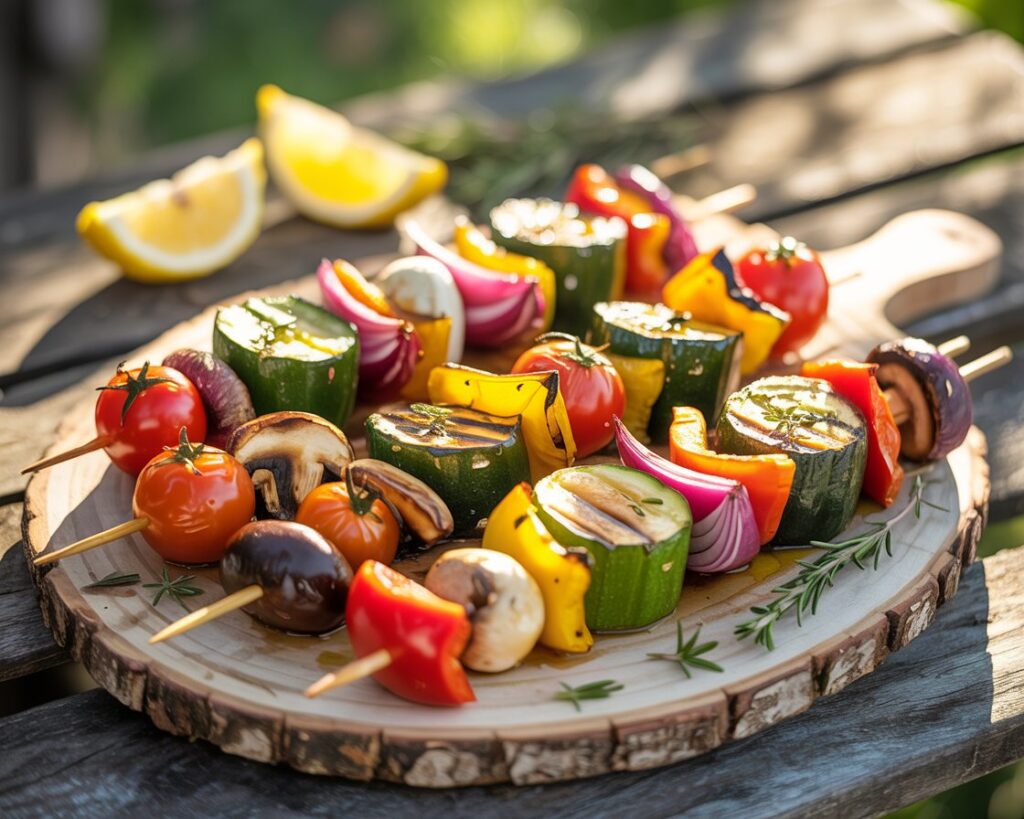
Grilled veggie skewers are the perfect addition to any BBQ lover’s menu, offering a vibrant and flavorful alternative to traditional grilled meats. Easy to prepare and endlessly customizable, these skewers bring together a colorful mix of fresh vegetables that soak up smoky flavors while retaining their natural crunch. Whether you’re a seasoned griller or just starting out, mastering grilled veggie skewers is a delicious way to impress guests and enjoy a healthy, satisfying meal outdoors.
1. Why Grilled Veggie Skewers Are the Ultimate BBQ Crowd-Pleaser
When it comes to cookouts, most people think burgers, ribs, and sausages—but grilled veggie skewers are quickly stealing the show. They’re colorful, packed with flavor, and cater to a wide range of dietary preferences without feeling like an afterthought. Whether you’re hosting a backyard gathering or contributing to a potluck, veggie skewers are a guaranteed hit that brings freshness and variety to any BBQ spread.
The Rise of Veggie Skewers in BBQ Culture
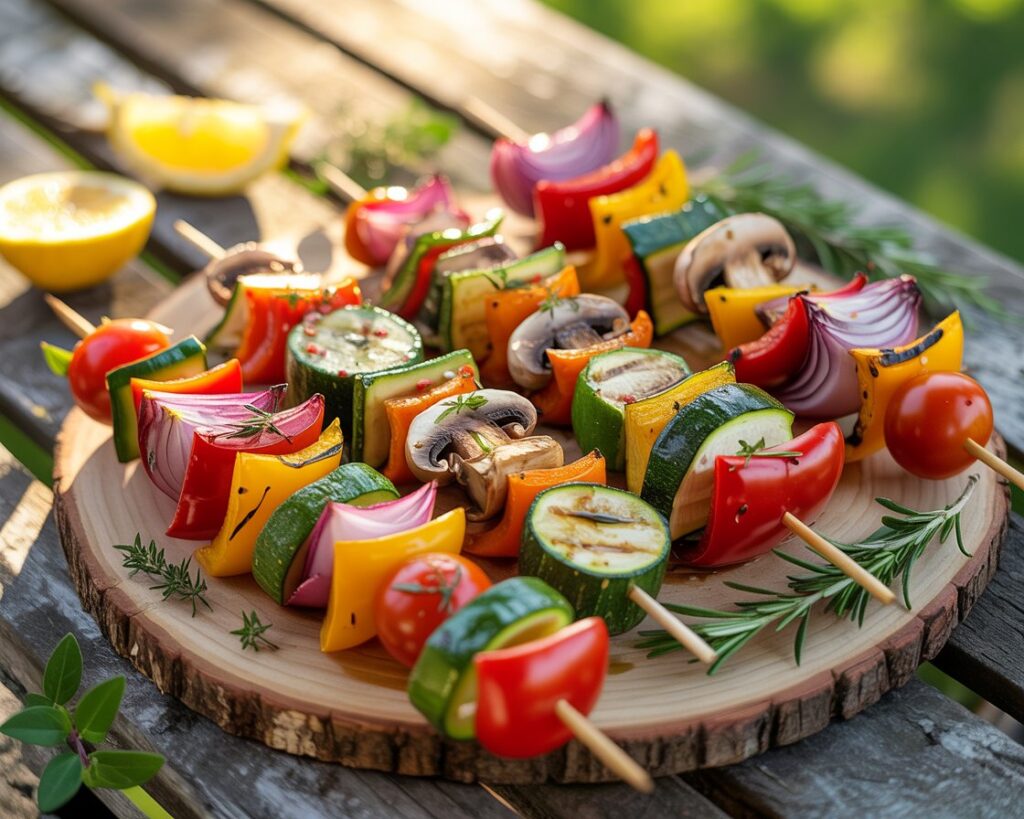
Once seen as just a side dish or an option for vegetarians, grilled veggie skewers have carved out a central spot at the barbecue table. As more people embrace plant-forward eating, veggie skewers are becoming a go-to for both health-conscious eaters and die-hard grill fans. Even meat lovers are beginning to recognize how well-seasoned, charred vegetables can deliver the smoky, satisfying flavors they crave—without the heaviness of meat. Their vibrant colors, versatility, and quick cook time make them not only delicious but also visually impressive on any grill spread. Whether served solo or alongside steak, fish, or tofu, these skewers have become a staple of modern BBQ culture.
Health and Flavor Benefits You Might Not Know
Grilled vegetables aren’t just tasty—they come packed with nutrients that many typical BBQ dishes lack. When you cook vegetables over an open flame, their natural sugars caramelize, enhancing sweetness and creating a slightly crisp texture. This method brings out deeper, more complex flavors without the need for heavy sauces or added fats.
Nutritionally, vegetables like bell peppers, zucchini, and mushrooms provide fiber, vitamin C, potassium, and antioxidants that support heart health and immunity. Unlike deep-frying or over-sautéing, grilling preserves these nutrients while cutting down on calories. Plus, when skewered with little oil and paired with fresh herbs or light marinades, veggie skewers become one of the healthiest items you can throw on the grill.
Fun Fact Table: Grilling Vegetables vs. Other Cooking Methods
| Cooking Method | Flavor Profile | Nutrient Retention | Prep Time | Oil/Fat Usage |
|---|---|---|---|---|
| Grilling | Smoky, caramelized, slightly charred | High (minimal water loss) | Fast | Low (or optional) |
| Roasting | Deep, earthy, slightly crispy | Moderate | Medium | Moderate |
| Steaming | Mild, soft, natural taste | Very High | Fast | None |
| Sautéing | Rich, slightly oily, pan-seared | Low–Moderate | Fast | High |
Grilling offers a balance between bold flavor and nutritional preservation, making it one of the best choices for BBQ vegetables.
2. Choosing the Best Veggies for Perfect Skewers Every Time
Selecting the right vegetables is key to creating grilled veggie skewers that cook evenly, taste great, and hold up well on the grill. Different veggies vary in texture, moisture, and flavor intensity, so knowing which ones perform best and how to prepare them will make your skewers stand out.
Vegetables That Shine on the Grill (And Why)
Certain vegetables naturally lend themselves to grilling because of their texture and water content. Zucchini, for example, has a firm but tender flesh that softens just enough without falling apart. Mushrooms absorb marinades well and develop a meaty texture when grilled. Bell peppers add a sweet, smoky crunch with their thick skins that hold up to heat. Cherry tomatoes provide bursts of juicy acidity that balance richer flavors. These veggies also caramelize beautifully, creating that signature grilled flavor everyone loves.
Unexpected Veggie Stars to Try
While classic veggies are reliable, experimenting with seasonal or less common options can take your skewers to the next level. Baby corn grills quickly and adds a satisfying crunch, while asparagus tips offer a tender bite with a hint of earthiness. For a touch of sweetness, grilled pineapple chunks or even peaches can bring a surprising contrast to savory vegetables. These alternatives add both color and complexity, keeping your BBQ fresh and exciting.
Table: Grill Time & Prep Tips for Popular Veggies
| Vegetable | Ideal Grill Time | Recommended Cut Size | Prep Tips |
|---|---|---|---|
| Zucchini | 8–10 minutes | ½-inch thick slices | Lightly brush with oil to prevent sticking |
| Mushrooms | 6–8 minutes | Whole or halved | Clean gently, avoid soaking to retain flavor |
| Bell Peppers | 8–10 minutes | 1–2 inch chunks | Remove seeds and membranes |
| Cherry Tomatoes | 4–6 minutes | Whole | Use skewers carefully to avoid falling off |
| Baby Corn | 5–7 minutes | Whole | No peeling needed, brush with marinade |
| Asparagus Tips | 6–8 minutes | Whole tips or halved | Trim tough ends before grilling |
| Pineapple | 6–8 minutes | 1-inch chunks | Use ripe fruit for best caramelization |
Understanding the grilling times and proper prep helps avoid common pitfalls like soggy or burnt vegetables, ensuring every bite of your veggie skewers is just right.
3. Mastering the Art of Grilling Veggie Skewers: Tips & Techniques
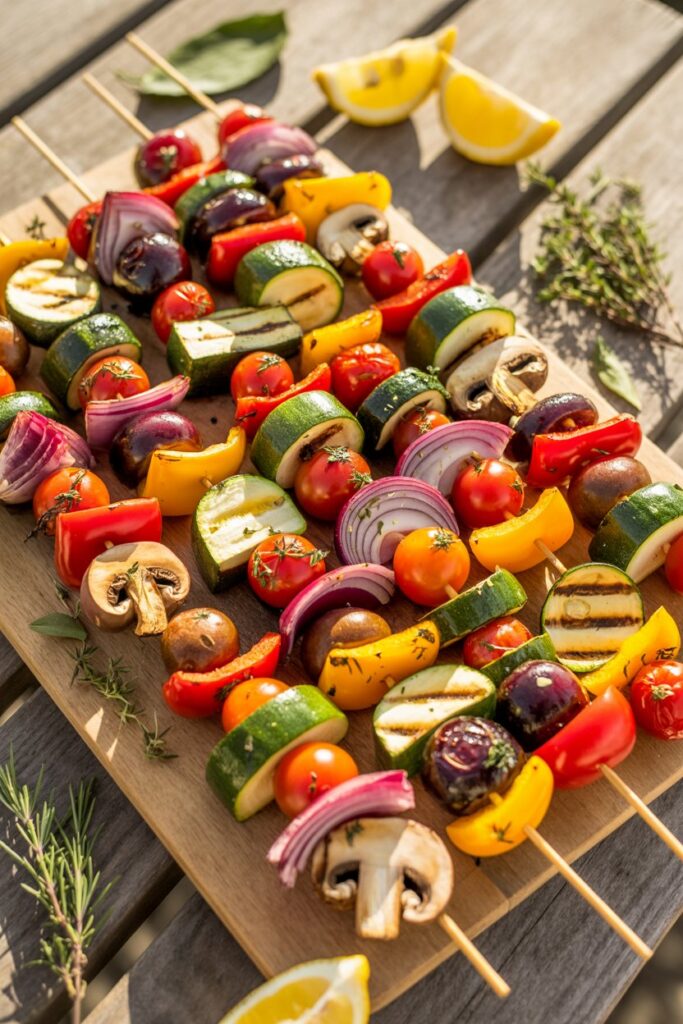
Grilling veggie skewers may seem straightforward, but a few expert tricks can elevate your results from good to unforgettable. From crafting the perfect marinade to choosing the right tools and avoiding common mistakes, these tips will help you grill with confidence and style.
Marinating and Flavor-Boosting Secrets
Marinades are your best friend when it comes to infusing vegetables with flavor and enhancing their natural taste. Instead of sticking to plain oil and salt, try blending fresh herbs like rosemary, thyme, or oregano with acidic ingredients such as lemon juice, balsamic vinegar, or apple cider vinegar. This acid-oil balance helps tenderize veggies while locking in flavor. Experiment with different oils—extra virgin olive oil offers a fruity richness, while toasted sesame oil adds a subtle nuttiness. Adding a touch of sweetness, like honey or maple syrup, can encourage caramelization on the grill. Let your vegetables marinate for at least 30 minutes but avoid soaking them too long, as too much acid can break down their texture.
Skewering Like a Pro: Tools, Safety, and Presentation
Choosing the right skewers makes a big difference. Metal skewers are reusable, conduct heat evenly, and are great for sturdier vegetables. Bamboo or wooden skewers are inexpensive and disposable but must be soaked in water for at least 30 minutes before grilling to prevent burning. When assembling your skewers, alternate textures and colors to create visual appeal and balanced cooking times. For presentation, consider serving your skewers on a wooden board or vibrant platter with fresh herbs sprinkled on top. Adding a side of dipping sauces or sprinkling with finishing salts can make your dish feel elevated and restaurant-quality.
Avoiding Common Grilling Pitfalls
Veggie skewers can be tricky if you’re not careful. To prevent vegetables from falling off, make sure to pack pieces snugly but not too tight, allowing heat to circulate. For even cooking, cut vegetables into uniform sizes and place firmer veggies (like carrots or onions) near the edges of the skewer where heat is less intense. Avoid overcooking by monitoring grill temperature and flipping skewers frequently. To keep veggies from drying out, brush them with marinade or oil during grilling and avoid direct flames that can cause charring or burning. These practical hacks ensure your skewers come out tender, juicy, and perfectly grilled every time.
4. Creative Ways to Serve and Enjoy Your Grilled Veggie Skewers

Grilled veggie skewers are incredibly versatile—not just a side dish for the grill but a foundation for creative meals. Serving them with the right accompaniments or incorporating them into other dishes can transform your BBQ experience and keep things exciting.
Pairing Ideas: Sauces, Dips, and Sides
A great sauce or dip can elevate the flavors of your skewers and add new dimensions to the meal. For a fresh and herbaceous touch, chimichurri sauce made with parsley, garlic, and vinegar pairs beautifully with charred vegetables. Creamy tzatziki, with its cooling yogurt and cucumber base, offers a refreshing contrast to smoky flavors. For a spicy kick, a peanut dip infused with chili and lime adds a bold, nutty dimension.
To complete the plate, consider sides like grilled corn on the cob, quinoa salad, or a tangy coleslaw. These pairings balance texture and flavor, making your meal both satisfying and colorful.
Incorporating Skewers into Meals Beyond BBQ
Don’t limit grilled veggie skewers to the BBQ table. Chop the grilled vegetables off the skewers and toss them into a vibrant salad with mixed greens and a light vinaigrette. Wrap them in a warm tortilla with hummus and fresh herbs for a tasty veggie wrap. They also make a great protein-packed topping for grain bowls with rice or farro. Feeling adventurous? Add skewered veggies to homemade pizzas before baking for a smoky, charred twist on traditional toppings. These ideas turn simple grilled veggies into versatile ingredients for multiple meals.
Reader Poll / Quiz (Interactive Element)
Engage your readers by inviting them to discover their ideal grilled veggie combo with a quick poll or quiz. For example:
Which grilled veggie combo matches your flavor style?
- The Classic: Zucchini, bell peppers, mushrooms — balanced and familiar.
- The Adventurer: Asparagus tips, baby corn, cherry tomatoes — for those who love surprises.
- The Sweet & Smoky: Pineapple, red onion, eggplant — a bold, flavor-packed choice.
- The Herb Lover: Zucchini, mushrooms, and peppers marinated in fresh rosemary and thyme.
This fun, interactive element adds personality to your blog and helps readers connect with your content in a memorable way.
5. Sustainability & Seasonality: Why Veggie Skewers Are a Smart BBQ Choice
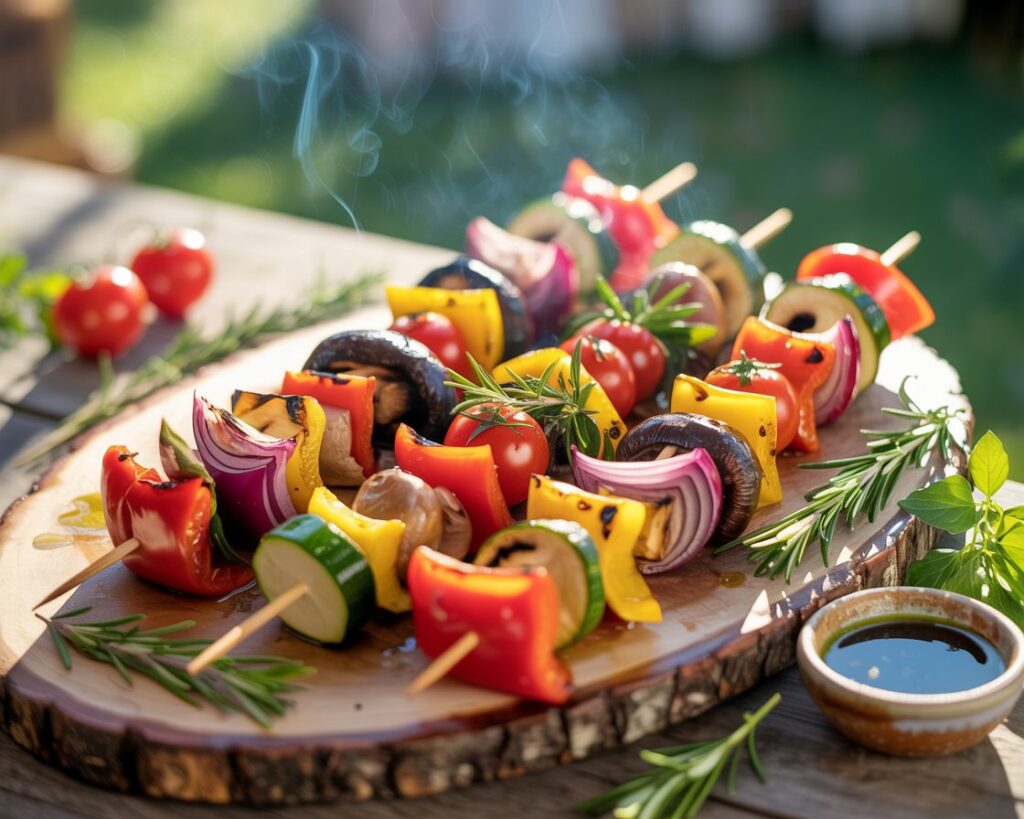
In addition to being colorful, flavorful, and healthy, grilled veggie skewers are also an environmentally conscious option for outdoor cooking. Making thoughtful choices about what we grill—and when—can significantly reduce our carbon footprint and help support more sustainable food practices.
Reducing Carbon Footprint with Plant-Based BBQ Options
Barbecue culture is often centered around meat, but swapping even a few skewers for grilled vegetables can have a measurable environmental benefit. Producing plant-based foods typically requires far less water, land, and energy than animal products. For example, growing a pound of vegetables emits significantly fewer greenhouse gases than producing a pound of beef or pork.
By embracing more plant-forward BBQ options like veggie skewers, you contribute to a lower-impact meal without sacrificing taste or satisfaction. Plus, with the right marinades and grilling techniques, these skewers can be just as crave-worthy as any steak on the grill.
Eating with the Seasons: Best Veggies for Each Season
Grilling vegetables that are in season isn’t just better for the planet—it’s better for your taste buds and your wallet. Seasonal produce is usually more affordable, more flavorful, and requires less energy to transport. In spring, tender asparagus and green onions shine on the grill. Summer brings zucchini, bell peppers, and eggplant in abundance. Fall is perfect for heartier options like mushrooms and sweet potatoes. Even winter has its stars—think carrots, Brussels sprouts, or winter squash when sliced thin.
Choosing what’s in season means fewer emissions from long-distance shipping and refrigeration, and fresher, more nutrient-rich food for your BBQ.
Quick Seasonal Veggie Skewer Guide (Mini Table)
| Season | Best Veggies to Grill | Grilling Tips |
|---|---|---|
| Spring | Asparagus, green onions, snap peas | Grill quickly over high heat to retain crunch |
| Summer | Zucchini, bell peppers, eggplant, tomatoes | Use larger chunks to prevent over-softening |
| Fall | Mushrooms, sweet potatoes, cauliflower | Parboil denser veggies like sweet potatoes first |
| Winter | Carrots, Brussels sprouts, winter squash | Slice thin and marinate longer for tenderness |
Grilling with the seasons not only improves taste and texture but also supports local agriculture and a more eco-conscious way of eating—all while keeping your BBQ menu fresh and exciting year-round.
Why Grilled Veggie Skewers Should Be Your Go-To BBQ Favorite
Grilled veggie skewers combine delicious flavor, vibrant colors, and health benefits, making them an essential addition to any BBQ menu. Beyond their taste and versatility, they offer a sustainable, seasonal option that suits a variety of diets and preferences. Whether you’re a seasoned griller or just starting out, mastering grilled veggie skewers will elevate your outdoor cooking and impress your guests every time.