
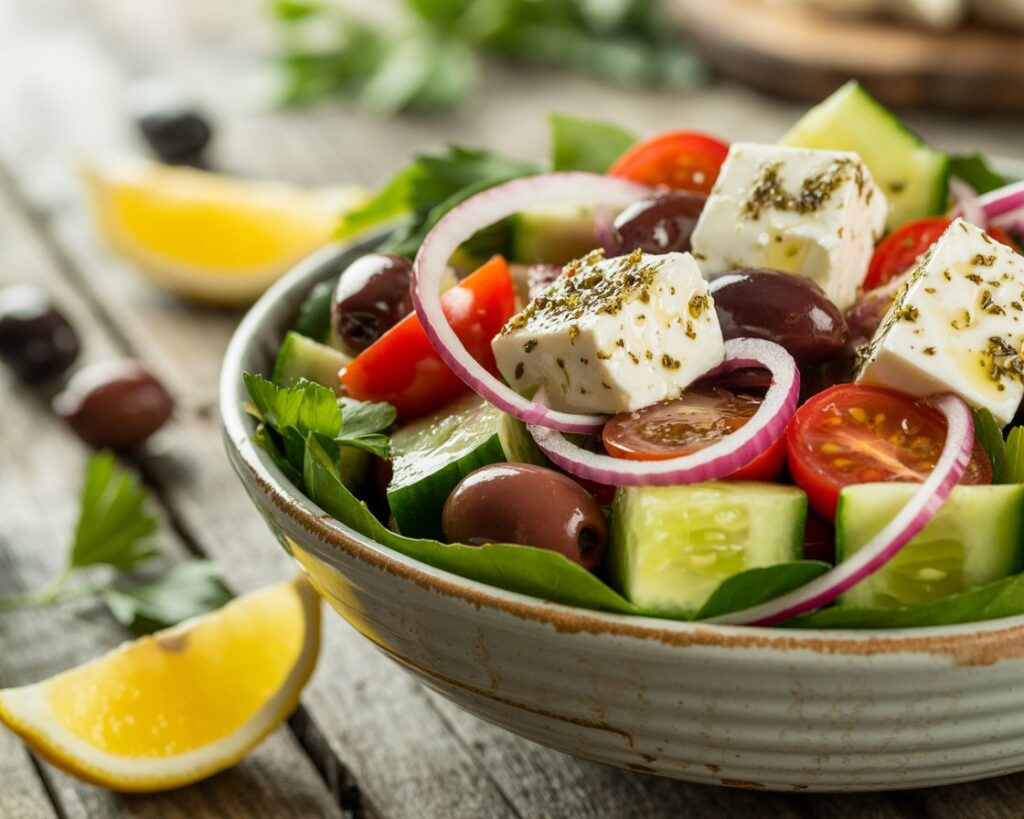
Easy Greek salad recipe—fresh, vibrant, and bursting with Mediterranean flavors—is the perfect go-to for anyone craving a healthy yet satisfying dish. Whether you’re a kitchen novice or a seasoned cook, this recipe is designed to be simple, authentic, and incredibly versatile. In this article, we’ll dive into what makes a Greek salad truly special, explore its health benefits, master the perfect dressing, and share creative serving ideas that will keep you coming back for more. Let’s bring a taste of Greece right to your table!
What Makes a Greek Salad Truly Authentic?
When we talk about a Greek salad, it’s important to understand what truly sets it apart from other salads. Authenticity goes beyond just the ingredients listed in recipes; it lies in the history, regional nuances, and culinary traditions that shape this dish. This section will uncover the roots of Greek salad and clarify common misunderstandings that often cloud its true nature.
The Story Behind Greek Salad — Origins & Tradition
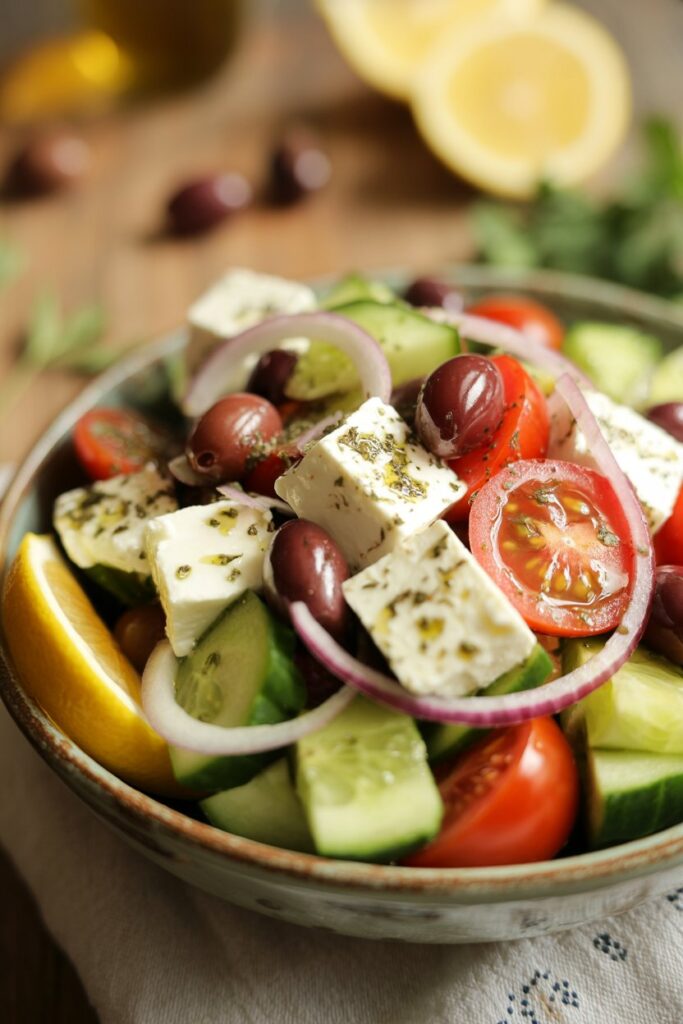
The Greek salad has a rich cultural background deeply connected to the Mediterranean lifestyle. Its origins can be traced back to rural Greece, where simple, fresh ingredients were used to create a nourishing meal. Unlike salads loaded with leafy greens common in Western cuisine, the traditional Greek salad is about celebrating the natural flavors of vegetables and local produce.
Across different regions in Greece, slight variations exist. For example, some coastal areas might add capers or use different varieties of olives, while island recipes could include local herbs that give a distinct aroma. Yet, the core idea remains the same: freshness, simplicity, and bold, natural flavors.
One widespread myth is that lettuce is a standard component of Greek salad. In reality, traditional Greek salad does not include lettuce. This misconception likely comes from adaptations outside Greece, but purists agree that the absence of lettuce is what keeps the salad’s texture and taste authentic.
Essential Ingredients That Define the Flavor Profile
To appreciate what makes a Greek salad truly authentic, it’s helpful to compare the key ingredients with common substitutions often used outside Greece. The following table highlights the essentials versus the typical stand-ins:
| Essential Ingredient | Common Substitution | Notes |
|---|---|---|
| Cucumbers | Iceberg lettuce | Lettuce alters texture and flavor balance |
| Tomatoes (ripe, firm) | Cherry tomatoes | Both work, but traditional uses larger tomatoes |
| Feta cheese (sheep/goat milk) | Processed cheese | Real feta has a tangy, crumbly texture |
| Kalamata olives | Black olives | Kalamata olives provide distinctive richness |
| Red onions | White onions | Red onions offer a milder, sweeter bite |
| Extra virgin olive oil | Regular olive oil | Quality oil adds fruity, peppery notes |
| Dried oregano | Mixed herbs | Oregano is signature and essential |
Among these, feta cheese, Kalamata olives, and oregano are the pillars of the dish’s unique flavor. Feta cheese, traditionally made from sheep or goat’s milk, brings a salty tang that contrasts perfectly with the fresh vegetables. Kalamata olives add a deep, fruity richness, while dried oregano sprinkles a fragrant, slightly bitter herbal note that ties everything together.
One cannot overstate the importance of quality olive oil in this salad. Using a robust, extra virgin olive oil enhances the flavors and gives the salad its signature silky mouthfeel. Lower-quality oils tend to lack the fruity and peppery character that elevates the dish from simple vegetables to an authentic Greek experience.
What Makes a Greek Salad Truly Authentic?
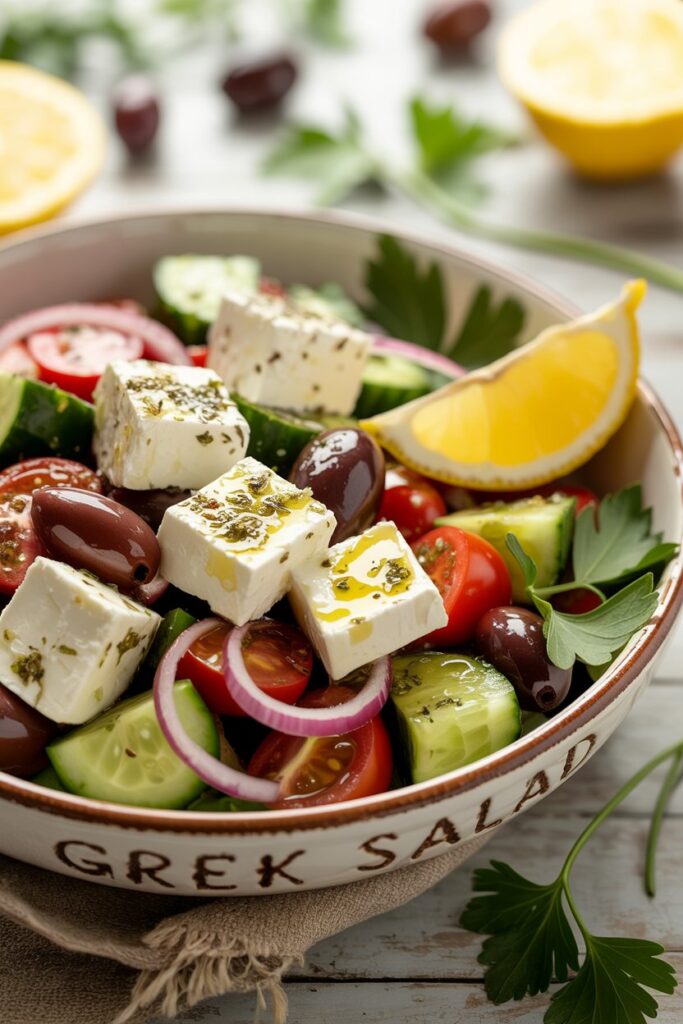
When we talk about a Greek salad, it’s important to understand what truly sets it apart from other salads. Authenticity goes beyond just the ingredients listed in recipes; it lies in the history, regional nuances, and culinary traditions that shape this dish. This section will uncover the roots of Greek salad and clarify common misunderstandings that often cloud its true nature.
The Story Behind Greek Salad — Origins & Tradition
The Greek salad has a rich cultural background deeply connected to the Mediterranean lifestyle. Its origins can be traced back to rural Greece, where simple, fresh ingredients were used to create a nourishing meal. Unlike salads loaded with leafy greens common in Western cuisine, the traditional Greek salad is about celebrating the natural flavors of vegetables and local produce.
Across different regions in Greece, slight variations exist. For example, some coastal areas might add capers or use different varieties of olives, while island recipes could include local herbs that give a distinct aroma. Yet, the core idea remains the same: freshness, simplicity, and bold, natural flavors.
One widespread myth is that lettuce is a standard component of Greek salad. In reality, traditional Greek salad does not include lettuce. This misconception likely comes from adaptations outside Greece, but purists agree that the absence of lettuce is what keeps the salad’s texture and taste authentic.
Essential Ingredients That Define the Flavor Profile
To appreciate what makes a Greek salad truly authentic, it’s helpful to compare the key ingredients with common substitutions often used outside Greece. The following table highlights the essentials versus the typical stand-ins:
| Essential Ingredient | Common Substitution | Notes |
|---|---|---|
| Cucumbers | Iceberg lettuce | Lettuce alters texture and flavor balance |
| Tomatoes (ripe, firm) | Cherry tomatoes | Both work, but traditional uses larger tomatoes |
| Feta cheese (sheep/goat milk) | Processed cheese | Real feta has a tangy, crumbly texture |
| Kalamata olives | Black olives | Kalamata olives provide distinctive richness |
| Red onions | White onions | Red onions offer a milder, sweeter bite |
| Extra virgin olive oil | Regular olive oil | Quality oil adds fruity, peppery notes |
| Dried oregano | Mixed herbs | Oregano is signature and essential |
Among these, feta cheese, Kalamata olives, and oregano are the pillars of the dish’s unique flavor. Feta cheese, traditionally made from sheep or goat’s milk, brings a salty tang that contrasts perfectly with the fresh vegetables. Kalamata olives add a deep, fruity richness, while dried oregano sprinkles a fragrant, slightly bitter herbal note that ties everything together.
One cannot overstate the importance of quality olive oil in this salad. Using a robust, extra virgin olive oil enhances the flavors and gives the salad its signature silky mouthfeel. Lower-quality oils tend to lack the fruity and peppery character that elevates the dish from simple vegetables to an authentic Greek experience.
What Makes a Greek Salad Truly Authentic?
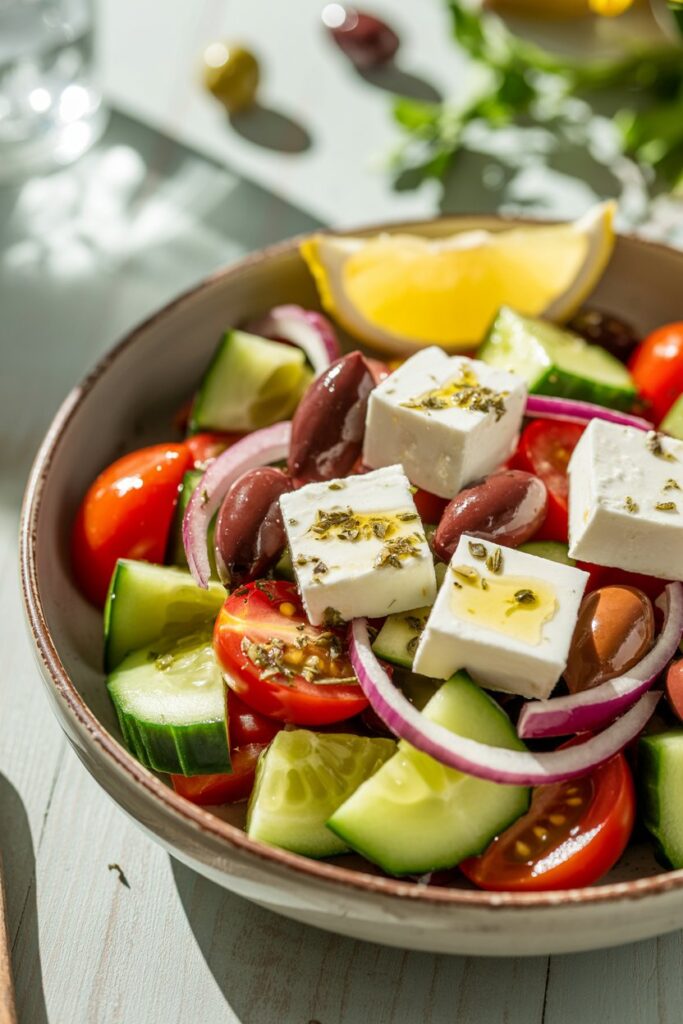
When we talk about a Greek salad, it’s important to understand what truly sets it apart from other salads. Authenticity goes beyond just the ingredients listed in recipes; it lies in the history, regional nuances, and culinary traditions that shape this dish. This section will uncover the roots of Greek salad and clarify common misunderstandings that often cloud its true nature.
The Story Behind Greek Salad — Origins & Tradition
The Greek salad has a rich cultural background deeply connected to the Mediterranean lifestyle. Its origins can be traced back to rural Greece, where simple, fresh ingredients were used to create a nourishing meal. Unlike salads loaded with leafy greens common in Western cuisine, the traditional Greek salad is about celebrating the natural flavors of vegetables and local produce.
Across different regions in Greece, slight variations exist. For example, some coastal areas might add capers or use different varieties of olives, while island recipes could include local herbs that give a distinct aroma. Yet, the core idea remains the same: freshness, simplicity, and bold, natural flavors.
One widespread myth is that lettuce is a standard component of Greek salad. In reality, traditional Greek salad does not include lettuce. This misconception likely comes from adaptations outside Greece, but purists agree that the absence of lettuce is what keeps the salad’s texture and taste authentic.
Essential Ingredients That Define the Flavor Profile
To appreciate what makes a Greek salad truly authentic, it’s helpful to compare the key ingredients with common substitutions often used outside Greece. The following table highlights the essentials versus the typical stand-ins:
| Essential Ingredient | Common Substitution | Notes |
|---|---|---|
| Cucumbers | Iceberg lettuce | Lettuce alters texture and flavor balance |
| Tomatoes (ripe, firm) | Cherry tomatoes | Both work, but traditional uses larger tomatoes |
| Feta cheese (sheep/goat milk) | Processed cheese | Real feta has a tangy, crumbly texture |
| Kalamata olives | Black olives | Kalamata olives provide distinctive richness |
| Red onions | White onions | Red onions offer a milder, sweeter bite |
| Extra virgin olive oil | Regular olive oil | Quality oil adds fruity, peppery notes |
| Dried oregano | Mixed herbs | Oregano is signature and essential |
Among these, feta cheese, Kalamata olives, and oregano are the pillars of the dish’s unique flavor. Feta cheese, traditionally made from sheep or goat’s milk, brings a salty tang that contrasts perfectly with the fresh vegetables. Kalamata olives add a deep, fruity richness, while dried oregano sprinkles a fragrant, slightly bitter herbal note that ties everything together.
One cannot overstate the importance of quality olive oil in this salad. Using a robust, extra virgin olive oil enhances the flavors and gives the salad its signature silky mouthfeel. Lower-quality oils tend to lack the fruity and peppery character that elevates the dish from simple vegetables to an authentic Greek experience.
Health Benefits of Greek Salad — More Than Just a Tasty Side
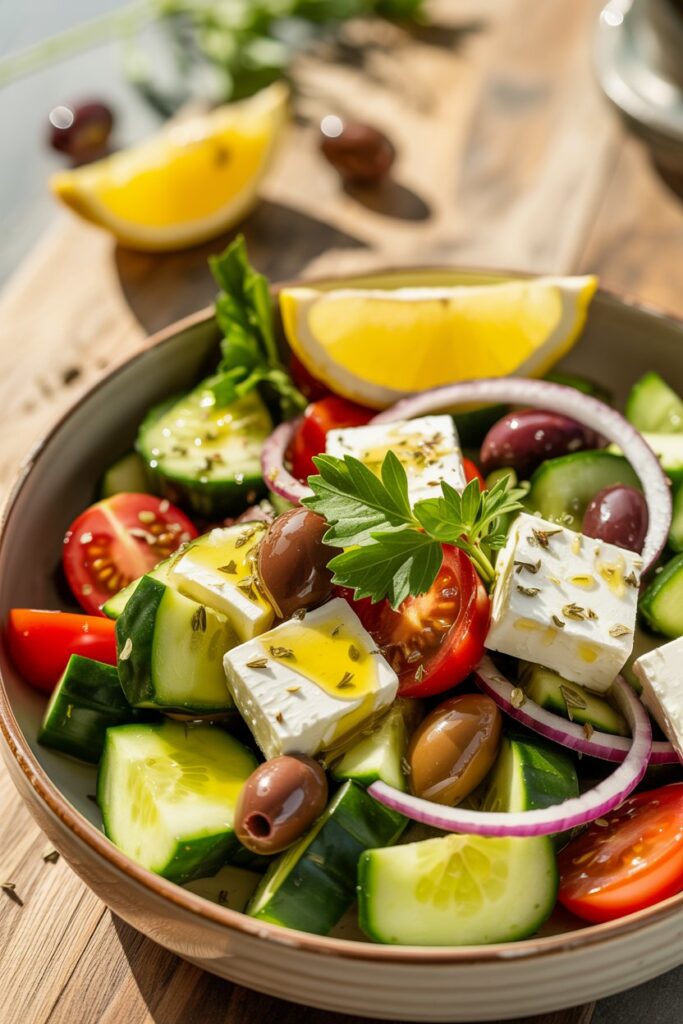
Greek salad is more than a colorful, refreshing dish—it’s a nutritional powerhouse that fits perfectly into a variety of healthy lifestyles. Rich in antioxidants, healthy fats, and fiber, this salad supports heart health, digestion, and overall wellness. Let’s explore why incorporating Greek salad into your meals can benefit your body and mind.
Mediterranean Diet & Greek Salad: A Perfect Match
The Mediterranean diet is celebrated worldwide for its health benefits, and Greek salad embodies its principles perfectly. To illustrate this, here’s a nutrient comparison table showing Greek salad alongside other popular salads:
| Nutrient | Greek Salad (per serving) | Caesar Salad (per serving) | Garden Salad (per serving) |
|---|---|---|---|
| Calories | 150 | 180 | 120 |
| Healthy fats (g) | 12 | 10 | 5 |
| Fiber (g) | 4 | 2 | 3 |
| Vitamin C (%) | 35 | 20 | 40 |
| Sodium (mg) | 420 | 600 | 200 |
Greek salad’s balance of fresh vegetables, quality olive oil, and feta cheese delivers antioxidants, heart-healthy monounsaturated fats, and dietary fiber—essential components that promote long-term health.
Tailoring Your Greek Salad for Specific Diets
One of the best things about Greek salad is its versatility. Whether you follow a keto, vegan, or gluten-free diet, this salad can be easily adapted to fit your needs:
- Keto-friendly tweaks: Skip the tomatoes to lower carbs or add avocado for extra healthy fats and creaminess.
- Vegan/vegetarian adaptations: Substitute traditional feta with plant-based cheese alternatives or marinated tofu to maintain that salty, tangy element.
- Gluten-free assurance: Naturally gluten-free, Greek salad makes a quick, safe option for those avoiding gluten. Combine with simple meal prep tips like batch-chopping veggies to save time throughout the week.
Mastering the Dressing — The Secret Sauce of Every Greek Salad
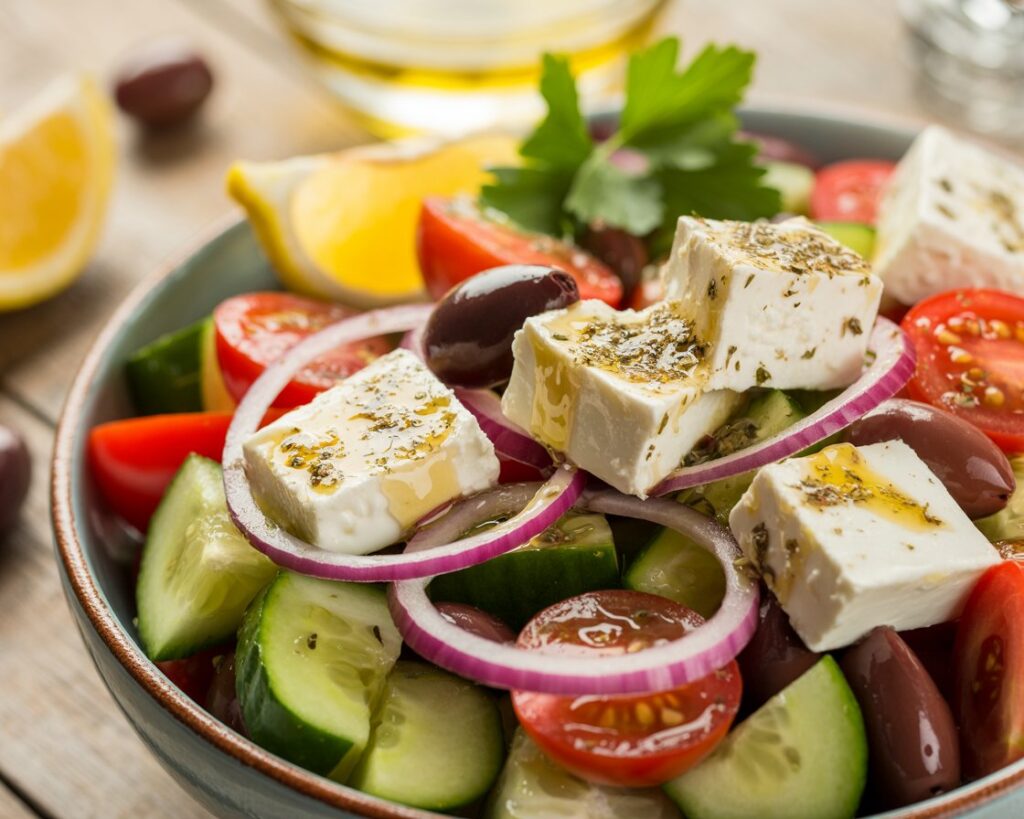
The dressing is what transforms a simple mix of vegetables into a vibrant, mouthwatering Greek salad. It’s much more than just “olive oil and vinegar”—the right balance of ingredients can elevate your salad to something truly unforgettable. Let’s explore how to master this essential component.
Classic Greek Salad Dressing Components
At its core, a classic Greek salad dressing includes high-quality extra virgin olive oil, red wine vinegar, dried oregano, and a pinch of salt and pepper. Each ingredient plays a vital role:
- Olive oil adds richness and a smooth, fruity depth.
- Red wine vinegar brings brightness and acidity to balance the oil.
- Oregano contributes that unmistakable Mediterranean herbal note.
- Salt and pepper enhance and unify all the flavors.
Pro tip: To achieve the perfect balance between acidity and richness, whisk the dressing thoroughly and taste as you go. If the vinegar is too sharp, add a touch more olive oil or a tiny bit of honey to mellow it out.
Creative Dressing Variations to Elevate Your Salad
Want to take your Greek salad dressing to the next level? Here are some creative twists that add exciting new layers of flavor:
- Citrus boost: Add freshly squeezed lemon juice or a hint of orange zest for a bright, refreshing lift that pairs beautifully with the salty feta and olives.
- Herb-infused olive oils: Infuse your olive oil with rosemary, thyme, or basil for a subtle aromatic punch.
- Quick DIY creamy Greek dressing: Mix Greek yogurt with olive oil, lemon juice, garlic, and herbs for a tangy, creamy alternative that still feels authentic and adds a luscious texture.
Serving Suggestions — How to Enjoy Greek Salad Beyond the Plate
Greek salad is often seen as a side dish, but it has so much more potential. With the right pairings and creative presentations, it can easily become the star of your meal or the highlight of any gathering. Let’s explore some ideas to enjoy Greek salad in fresh and exciting ways.
Pairings and Meal Ideas
Greek salad pairs beautifully with many Mediterranean mains, adding freshness and a burst of flavor that complements grilled meats, seafood, and more. Here’s a quick table showing some popular pairings:
| Main Dish | Why It Works |
|---|---|
| Grilled lamb chops | Rich, savory meat balanced by salad’s acidity and crunch |
| Lemon herb chicken | Citrusy chicken complements tomato and feta flavors |
| Grilled shrimp | Light seafood with fresh, crisp salad |
| Pita bread & hummus | Soft pita and creamy hummus contrast the salad’s textures |
For easy meal prep, combine a batch of Greek salad with a protein of your choice and some whole grains like quinoa or couscous to create balanced, nutrient-packed lunches or dinners.
Fun Ways to Serve Greek Salad
Want to make your Greek salad more fun and portable? Try these ideas:
- In a jar: Layer salad ingredients in a mason jar for convenient grab-and-go lunches that stay fresh and crisp.
- As a topping: Use Greek salad as a vibrant topping on flatbreads, pizzas, or grain bowls for an extra punch of flavor and texture.
- Greek salad skewers: Thread chunks of cucumber, tomato, feta, and olives onto skewers—perfect for parties and easy snacking.
Common Mistakes and How to Avoid Them
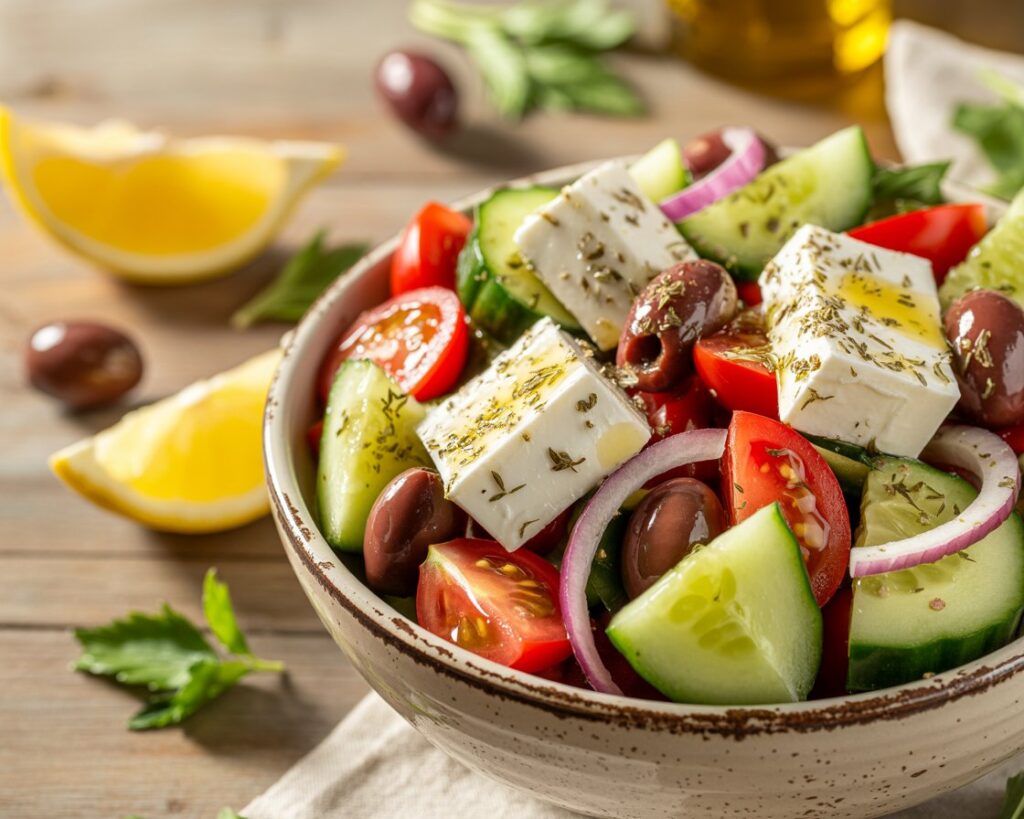
To enjoy a truly fresh and authentic Greek salad every time, it’s important to steer clear of common pitfalls. These mistakes can compromise both the flavor and texture, so knowing how to avoid them will ensure your salad shines.
Ingredient Missteps
One of the biggest mistakes is adding iceberg lettuce or using too much cucumber. Traditional Greek salad has no lettuce—lettuce dilutes the bold flavors and alters the texture. Overloading on cucumber can also water down the salad, making it less vibrant.
Another common error is overpowering the salad with too much dressing. Using excessive olive oil or vinegar can mask the natural freshness of the vegetables and feta, turning a balanced salad into something greasy or sour.
Preparation Tips for the Perfect Texture and Flavor
Chop your veggies just before serving to maintain crispness and freshness. Cutting too early can cause them to release water and become soggy.
When mixing, be gentle—toss the salad lightly to combine ingredients without bruising the delicate feta or crushing the olives. Using a large bowl and folding ingredients rather than stirring vigorously helps keep the salad looking and tasting its best.
Final Thoughts on the Easy Greek Salad Recipe
This easy Greek salad recipe is more than just a quick side—it’s a celebration of Mediterranean simplicity, flavor, and nutrition. With the right ingredients, a well-balanced dressing, and a few thoughtful tweaks, you can turn it into a versatile dish for any occasion. Whether you’re serving it alongside grilled meats, packing it for lunch, or getting creative with presentation, Greek salad always delivers a fresh and satisfying experience. Give it a try, and let it become a staple in your kitchen.