

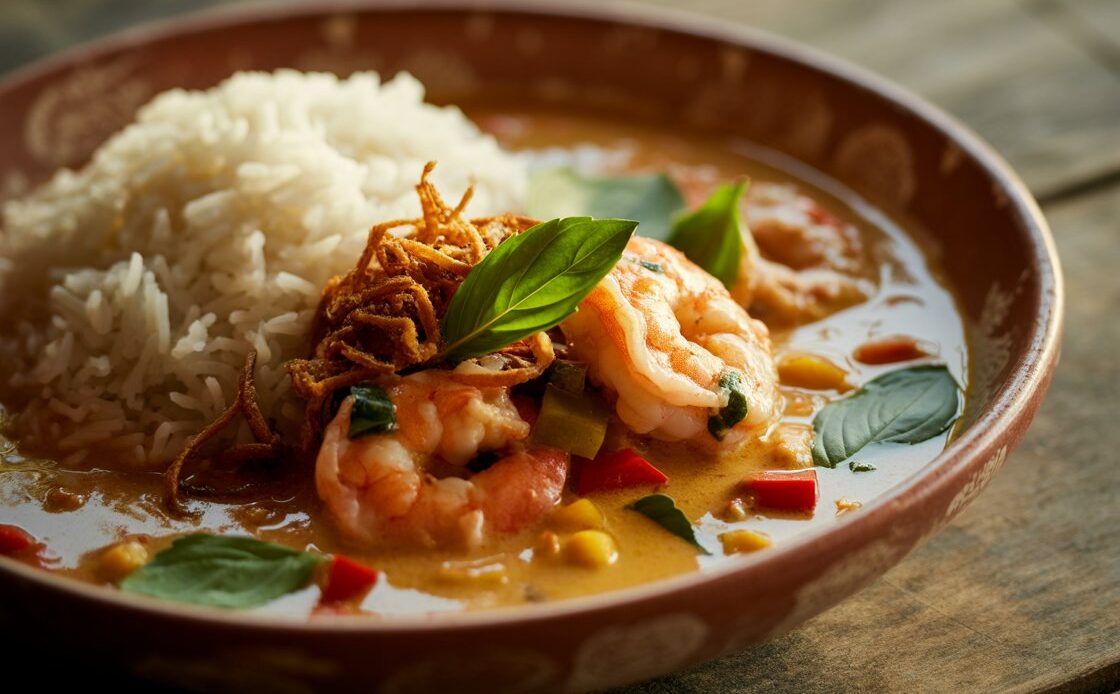
Thai Shrimp Curry with Yummy Shallot Crispies is a celebration of contrast: a silk-smooth curry that glides over the palate, a gentle hum of heat that feels lively rather than aggressive, bright accents that wake up every bite, and a crown of golden shallot crispies that provide a thrilling crackle. The dish is memorable because each element plays a role in a tightly choreographed sequence from bloom to simmer to poach to finish. What follows is a deep dive into that sequence—how to read visual cues, protect textures, time each stage for best results, and plate the bowl so it feels composed and generous. Ingredients and step-by-step instructions live elsewhere; this guide focuses on the “why” behind the method and the instincts that make Thai Shrimp Curry with Yummy Shallot Crispies taste consistently exceptional.
The goal is effortless confidence. With a few reliable markers—fragrance when the base is ready, “lazy” bubbles during the simmer, the relaxed C-shape for tender shrimp, and the subtle shine that signals a stable sauce—the cooking becomes smooth and repeatable. The finishing touch, those shallot crispies, doesn’t just add texture; it adds a second aroma that blossoms on contact with warmth, making every spoonful feel fresh from the pan. For additional kitchen strategy and related dishes, explore more ideas at feastrecipe.com. For general guidance on food handling and safety in home kitchens, an authoritative resource like the U.S. Food and Drug Administration can be helpful when planning storage and reheating routines.
What makes this curry irresistible
At the heart of Thai Shrimp Curry with Yummy Shallot Crispies is balance. The creamy body wraps the tongue without feeling heavy, the spice keeps things alert without stealing the show, and a final note of brightness lifts the entire bowl. The shallot crispies add two qualities rarely achieved in one move: audible crunch and a sweet-savory perfume that rises as they hit the warm sauce. This interplay is what keeps bites compelling from start to finish, with no dull moments along the way.
The rhythm of preparation supports this outcome. The base is awakened first to deepen flavor right from the start, then the sauce settles into a gentle simmer that builds body without harshness. Only when the environment is calm and ready do the shrimp take the stage for a brief poach, preserving a juicy, springy texture. A final round of tasting aligns savoriness and brightness, and the topping arrives in a confident flourish. The entire bowl reads as intentional, cohesive, and welcoming.
The 30-minute flow
Time is won in the transitions. Think of the process in four compact phases—bloom, simmer, poach, finish—with smooth handoffs between them. Keep the tools close and the landing zones clear so nothing stalls or rushes. This flow ensures the sauce is ready exactly when the shrimp need it, and the shallot crispies stay perky for their moment in the spotlight. When the rhythm clicks, Thai Shrimp Curry with Yummy Shallot Crispies comfortably fits a busy evening without sacrificing polish.
Flavor architecture
Four levers guide the bowl’s personality: heat, richness, savoriness, and brightness. Each lever rewards small, thoughtful moves. Heat provides energy, richness carries aroma and smooths edges, savoriness anchors the sauce with depth, and brightness snaps everything into focus. Play these levers with subtlety and the curry lands as rounded and satisfying, with no single note crowding the others.
Crunch as a strategy
Shallot crispies do more than crunch—they reset the palate and re-perfume the bowl as they mingle with warmth. Consider a two-part topping: a light sprinkle right after plating that softens into the sauce, and a second flourish at the table to keep texture vivid to the last bite. This simple habit doubles the payoff and makes the topping feel integral rather than decorative.
| Phase | Goal | Sensory cue | Common pitfall | Pro tip |
|---|---|---|---|---|
| Bloom | Awaken aromatics | Fragrant, vivid color | Scorching the base | Moderate heat, steady stirring |
| Simmer | Integrate and reduce | Glossy, lightly thickened | Boiling and splitting | Prefer “lazy” bubbles |
| Poach | Keep shrimp tender | Opaque, relaxed C-shape | Tight O-shape toughness | Stop early; carryover heat |
| Finish | Balance and lift | Rounded, bright flavor | Overcorrecting seasoning | Small tweaks, taste often |
Pantry-to-pot: what actually matters
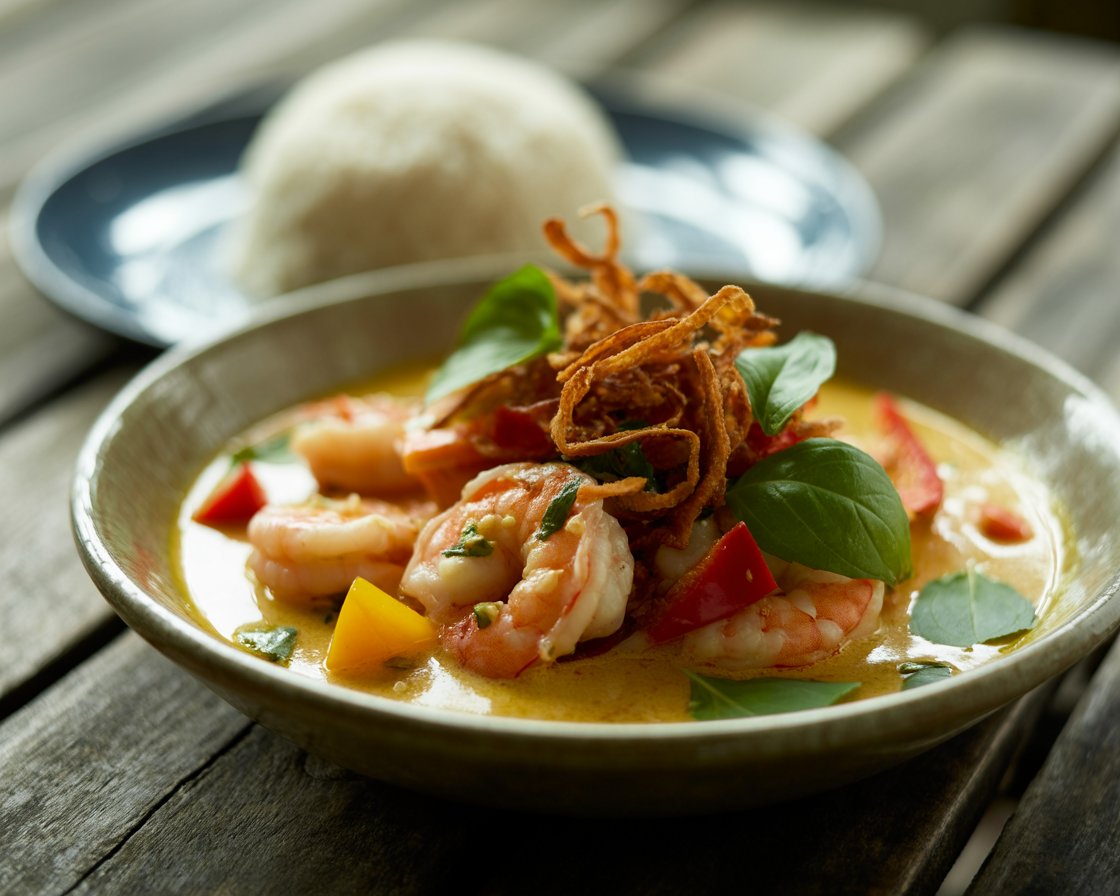
Even without listing ingredients or steps, three variables quietly shape Thai Shrimp Curry with Yummy Shallot Crispies: cut size, water content, and fat management. Consistent cut size leads to consistent texture; high-water components add succulence but can thin the sauce if added too early; and fat management determines whether the sauce looks satin-smooth or greasy. The path to an ideal texture is a kind simmer that invites the elements to emulsify and reduce gently, producing a sauce that clings to a spoon and flatters every bite.
Order of operations also supports quality. The base has to smell awake before liquid joins; the simmer has to look calm before delicate items arrive; and finishing touches make the most impact when they enter last. With these principles in place, the curry becomes less about strict directions and more about watching cues, adjusting heat, and moving with intention.
Aromatic sequencing
A brief, attentive bloom is the flavor engine. The moment fragrance floods the air and color deepens, the base is ready to receive liquid. Skipping or rushing this stage flattens the sauce later, no matter how well-seasoned it might be at the end. Take the time to let the foundation open up; everything layered on top will feel richer, cleaner, and more composed.
Liquid dynamics
Gentle heat keeps a sauce cooperative. The goal is an emulsion that looks glossy, falls in a thin sheet from a spoon, and refuses to separate under calm conditions. High heat roils the surface and breaks the truce between water and fat, so keep the simmer soft and patient. This approach respects delicate aromas and lays a luxurious stage for the final balance.
Finishing theory
Finishing is where intent meets restraint. Edge the sauce toward savoriness until it tastes anchored, then lift it with a small burst of brightness. If heat needs a nudge, do it carefully so the sauce remains friendly. Minor moves travel far at this point; aim for clarity rather than volume so the curry’s personality remains graceful.
| If it tastes… | Add a touch of… | Why it works | What to avoid |
|---|---|---|---|
| Flat or muted | Bright lift | Sharpens focus | Chasing with salt |
| Too fiery | Gentle richness | Buffers intensity | Over-thinning |
| Too sweet | Deeper savoriness | Centers the flavor | More sweetness |
| Too salty | Sweet + bright | Rounds rough edges | Rapid-fire tweaks |
Shallot crispies, engineered for crunch
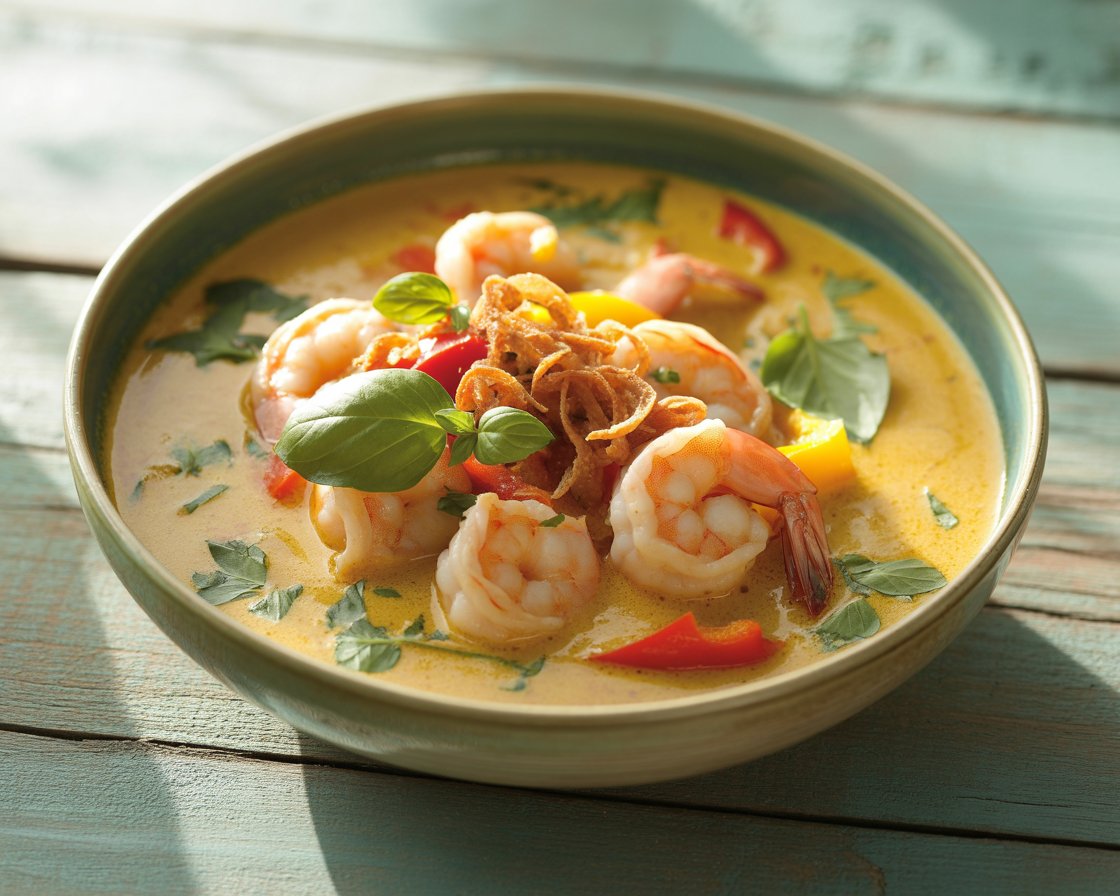
Shallot crispies are a small project with an outsized payoff. The best version shatters delicately, shines with clean oil, and tastes sweet-savory without bitter edges. A controlled sizzle prevents steaming and avoids scorching, and a proper rest protects their glassy texture. The reward is immediate: when the topping meets steam and sauce, it releases aroma and creates a new rhythm in the bowl.
Seasoning and timing preserve their magic. A modest salting while warm helps flavor adhere, and storage in dry conditions keeps the texture intact until serving. If timing stretches, a brief revival warms the crisp back to life without darkening the edges. Treat the topping as a last-moment arrival and Thai Shrimp Curry with Yummy Shallot Crispies will always feel freshly composed.
Pan-fry vs. oven finish
Pan-frying offers fine-grained control over color and aroma. It is easy to steer heat and stir to prevent hot spots, protecting the sweet, clean flavor of shallots. An oven finish is best used as a quick revival when service runs long; think of it as a supportive nudge rather than the primary cooking method. With this combination, the topping emerges consistent, lively, and ready to crown the bowl.
Seasoning logic
Salt enhances sweetness and perfume; too much overwhelms. If adding accents, keep them subtle so they complement rather than compete. The topping’s purpose is to amplify the curry’s qualities, not to introduce loud, conflicting notes. Balance here ensures the first bite is exciting and the last bite still feels refined.
Troubleshooting
Most pitfalls have straightforward fixes. Soggy texture usually traces back to overcrowding or insufficient heat; spacing and patience restore snap. Bitter notes follow over-browning; watching color closely and stirring evenly keep things golden. Greasiness suggests cool oil or under-draining; a proper rest on an absorbent surface resolves it. Blandness is a timing issue with salt—season while warm so flavor bonds to the surface.
| Issue | Likely cause | Immediate fix | Next-time prevention |
|---|---|---|---|
| Soggy | Overcrowding, low heat | Drain, re-crisp gently | Smaller batches, steady heat |
| Bitter | Too dark, hot spots | Remove dark bits | Stir, track color closely |
| Greasy | Cool oil, poor draining | Rack or towel rest | Maintain heat, brief revival |
| Bland | Late, light seasoning | Salt while warm | Prompt, measured salting |
Cook timing that saves shrimp
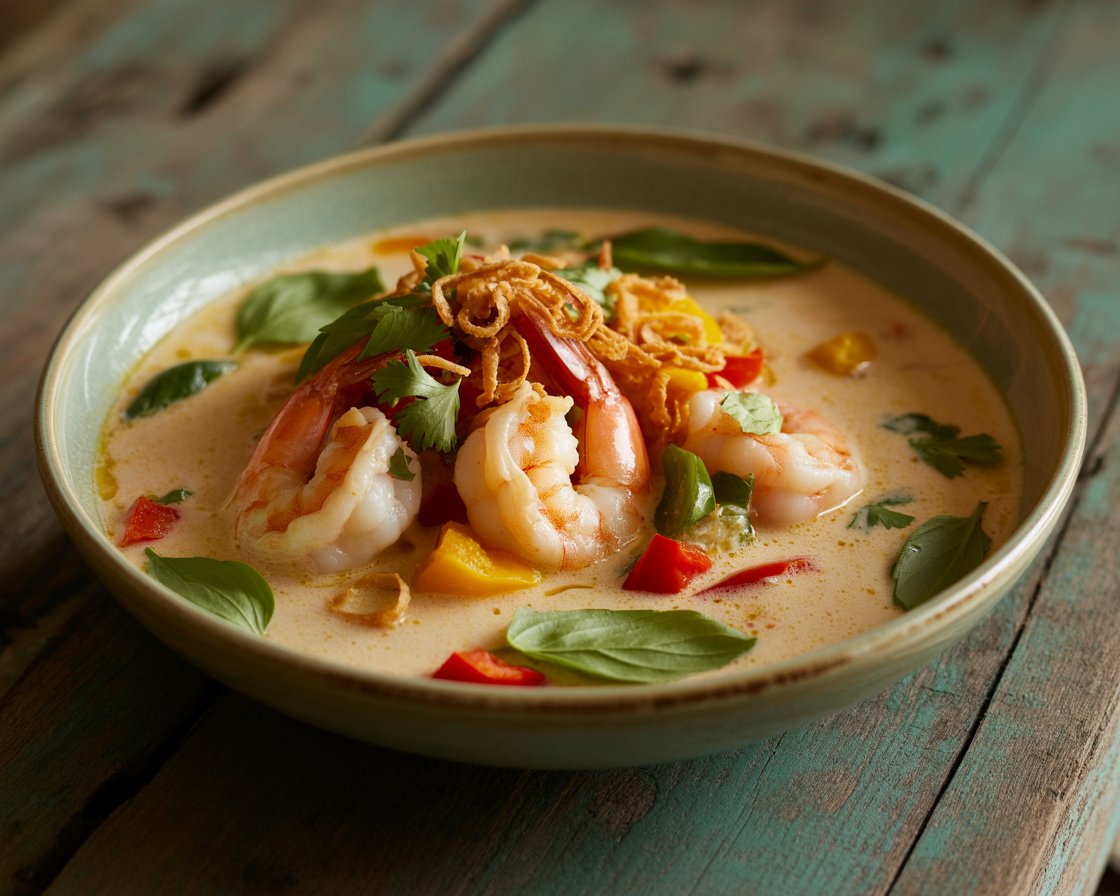
The centerpiece of Thai Shrimp Curry with Yummy Shallot Crispies is tender shrimp that taste sweet and feel springy. Success comes from restraint and preparation: get the sauce calm and ready before the shrimp enter, make sure bowls and garnishes are staged, then poach briefly and plate promptly. This sequence eliminates waiting in a hot pan, which is the main cause of tough texture.
Visual cues make the call simple. Look for opacity and a relaxed C-shape to signal doneness; a tight O-shape is a sign to pull earlier next time. The moment the first piece reaches the target shape, turn off the heat and let residual warmth finish the last degree of cooking while plating begins. This habit alone preserves tenderness and protects the glossy sheen of the sauce.
The “C vs. O” rule
The shape rule is easy to remember under pressure. A gentle curve means juicy and ready, while a perfect circle means it has gone a touch too far. Check a piece from the center, not the edge, and trust the cue even if the clock seems short. This visual test keeps texture in the sweet spot consistently.
Residual heat carryover
There is always more heat in the pan than meets the eye. Use it to finish cooking without further flame. Turn off the burner at the first sign of doneness, stir once to share heat, and plate. While bowls are assembled and the shallot crispies make their entrance, residual warmth completes the task with zero risk of overshooting.
Sauce protection
Silk is the goal. Avoid a roiling surface and rough agitation, both of which can unsettle a fat-rich sauce. If the simmer grows unruly, slide the pan off the heat, rest for a moment, and resume at a gentler pace. A calm sauce coats the spoon like satin and flatters every element in the bowl.
| Item | Visual cue | Texture cue | Time window | Stop point |
|---|---|---|---|---|
| Shrimp | Pink, opaque, C-shape | Springy, juicy | Very short | First full C |
| Sauce | Glossy, lightly thick | Silky, coats spoon | Brief simmer | Before vigorous boil |
| Vegetables | Bright, vibrant | Crisp-tender | Staggered timing | Slight bite intact |
Variations without losing the soul
This dish invites variation while preserving its identity. Keep the core architecture—aromatic base, creamy sauce, gentle heat, and the decisive crunch of shallot crispies—then rotate elements for season and mood. Crisp-tender vegetables bring a lively snap, leafy greens fold in silk and color, and fresh herbs brighten the finish. Modulate spice at the table to accommodate different preferences, making the bowl welcoming for everyone.
When experimenting, change one major variable at a time. Adjust the vegetable profile, tweak the finishing brightness, or introduce a different gentle heat accent—but keep the rest steady. This approach clarifies what works best and makes successes easy to repeat. Over time, a personal style emerges that feels both familiar and new.
Veg-forward riffs
Consider water content, structure, and shape. High-water additions make the bowl juicy and light but need thoughtful timing to preserve sauce body. Firmer choices provide a satisfying bite and help the curry feel structured. Mix shapes—coins, batons, ribbons—for a chorus of textures in a single bowl, and add delicate greens at the end so they relax into the warmth without losing color.
Heat modulation
Keep the base friendly and let diners climb the ladder with optional accents. This preserves balance in the pot while allowing bold eaters to build their own crescendo. The curry remains expressive rather than aggressive, and Thai Shrimp Curry with Yummy Shallot Crispies keeps its signature grace.
Protein pivots
Alternate proteins succeed when timing respects tenderness. Quick-cooking choices should meet a calm sauce and receive only brief heat; slower options appreciate separate partial cooking so the sauce doesn’t over-reduce. The constant aim is texture and sheen: a silky sauce, a lively finish, and the charming crackle of shallot crispies over the top.
| Add-in | When to add | Effect on flavor | Effect on texture |
|---|---|---|---|
| Leafy greens | Very end | Fresh, aromatic lift | Silky ribbons |
| Crunchy veg | Mid simmer | Sweet, clean notes | Crisp-tender bite |
| Extra aromatics | Bloom phase | Deeper base notes | Richer body |
| Fresh herbs | Off heat | Perfumed finish | Delicate freshness |
Serving rituals and pairings
Serving is the moment of transformation. Choose a base that complements the behavior of the sauce—some soak deeply and turn every bite into comfort, others let the sauce pool luxuriously for dramatic spoonfuls, and lighter options keep the experience buoyant. Nestle shrimp so every bite feels generous, ladle enough sauce to gloss the base and coat the spoon, and finish with a confident shower of shallot crispies for visual sparkle and audible delight.
Keep the table lively and participatory. Offer a bright finishing touch, a handful of herbs, and a small dish of extra crispies to pass around. With these simple gestures, Thai Shrimp Curry with Yummy Shallot Crispies becomes a shared experience that invites tuning in the moment, making each bowl feel personal and celebratory.
The bowl build
Layer with intention. Start with a warm base for heat retention, add sauce generously for coverage and cling, and arrange shrimp where they are easy to reach. Finish with a sprinkling of fresh elements and the signature topping. A final whisper of brightness unifies the flavors and gives the bowl a clear, gratifying finish.
Table-side finishes
Finishes preserve delicacy and invite play. The second sprinkle of crispies ensures crunch remains vivid through the final bites, while a last-minute bright note keeps the sauce feeling awake. These table-side touches deliver freshness and customization without complicating the cook’s work.
| Base | Mouthfeel | Sauce cling | Best for |
|---|---|---|---|
| Steamed grains | Soft, cozy | High | Weeknight comfort |
| Rice noodles | Silky, slurpable | Moderate | Bowl-forward meals |
| Vegetable base | Light, crisp | Variable | Fresh and bright plates |
Make-ahead, storage, and reheat
Planning ahead makes weeknights easier without compromising quality. Sauces hold beautifully and often taste more integrated the next day, while delicate elements appreciate being cooked close to serving. Store components separately when possible and reheat with a gentle touch that keeps the sauce calm and glossy. This modular workflow means Thai Shrimp Curry with Yummy Shallot Crispies tastes like it was made to order even when parts were prepared earlier.
Freezer-friendly portions offer a reliable fallback. With clear labeling and sensible sizes, it becomes simple to rewarm a silky base and finish the dish fresh. Avoid aggressive heat during rewarm, which can stress the emulsion; aim for steam and sheen rather than a rolling boil. The final assembly returns the dish to its best self with minimal effort.
Fridge plan
Cool components quickly, store shallow for even chilling, and keep garnishes dry. When it is time to reheat, a gentle simmer is more than enough to restore flow. Resist rushing; a calm sauce rewards patience with a satin texture and a clean, integrated taste that flatters every element.
Freezer plan
Allow headroom for expansion, reduce air exposure, and thaw under conditions that respect texture. Reheat just to the point of steam and gloss, then assemble as usual with fresh delicacy and the joyous crunch of shallot crispies. This approach ensures convenience never compromises the bowl’s grace.
Lunchbox tactics
Pack for texture. Keep crispies separate and add at the last moment. If the base and sauce share a container, leave a bit of air to minimize condensation. With a quick assembly at mealtime, the result tastes bright and newly composed, complete with that crowd-pleasing crackle.
| Component | Storage method | Reheat method | Time | Quality tip |
|---|---|---|---|---|
| Sauce | Fridge or freezer | Gentle stovetop | Short | Avoid vigorous boiling |
| Proteins | Short fridge hold | Brief warm-through | Very short | No double-cooking |
| Vegetables | Separate containers | Warm in sauce | Short | Keep crisp-tender |
| Crispies | Dry, airtight | Quick warm revival | Very brief | Add at the table |
FAQ that solves real problems
Questions tend to cluster around the same decision points: protecting sauce texture, keeping shrimp tender, and adapting when the pantry is thin. These notes cut through the noise with clear guidance that fits right into the workflow. The aim is calm adjustments that bring the bowl back to center without fuss.
As a guiding principle, lean on temperature control and incremental changes. Lower heat restores stability to the sauce, small tweaks refine balance, and restraint around shrimp preserves their best qualities. With a steady hand, Thai Shrimp Curry with Yummy Shallot Crispies returns to form quickly even when minor detours occur.
Why did the sauce split?
Splitting usually arrives with harsh bubbling or rough stirring. Pull the pan from the heat to calm the surface, stir slowly to encourage a smooth emulsion, and return to a gentle simmer. Once the sheen returns, proceed with measured finishing. This cadence restores the sauce’s satin finish without heavy-handed corrections.
How do I keep shrimp tender?
Let readiness guide timing. Ensure the sauce is balanced and calm before adding shrimp, then watch for the color and shape cues that signal doneness. Remove the pan from heat at the first full C-shape and plate promptly so residual warmth finishes the task without pushing texture past its sweet spot.
What if I’m missing herbs or vegetables?
Think in roles rather than specifics. Every bowl benefits from a crunchy element for contrast, a green note for freshness, and a bright accent to tie it together. If choices are limited, rely on good timing and gentle heat to deliver clarity and silk; a well-structured bowl does not need numerous add-ons to feel complete.
| Constraint | Quick move | Weekend upgrade | Payoff |
|---|---|---|---|
| Short on time | Pre-stage toppings | Prepare base ahead | Fast assembly, high polish |
| Mixed spice tolerance | Mild pot, spicy add-ons | Split-heat batches | Customized intensity |
| Texture fatigue | Extra crispies at table | Two crunch styles | Dynamic bites |
| Hosting flow | Hold sauce gently | Finish à la minute | Restaurant-level timing |
Conclusion
Thai Shrimp Curry with Yummy Shallot Crispies shines because every stage respects flavor and texture. A fragrant base anchors the experience, a calm simmer builds body without heaviness, a brief poach keeps shrimp juicy, and a confident snowfall of crisp shallots adds sparkle and snap. The path is simple and repeatable: bloom, simmer, poach, finish—then crown with crunch. With a few visual cues and a gentle hand, the bowl arrives at the table polished and inviting, equally suited to a quiet evening or a lively meal with company.
As comfort grows with the rhythm, personal touches emerge: a preferred level of brightness, a favorite mix of textures, a ritual for the topping that feels just right. The dish becomes a signature—reliable, adaptable, and joyfully craveable. When ready to explore related ideas and complementary dishes, more inspiration awaits at feastrecipe.com, and for general kitchen safety practices, consult resources such as the U.S. Food and Drug Administration. Above all, let the bowl’s contrasts lead the way: silk and snap, warmth and lift, comfort and excitement—each one amplifying the next.
