

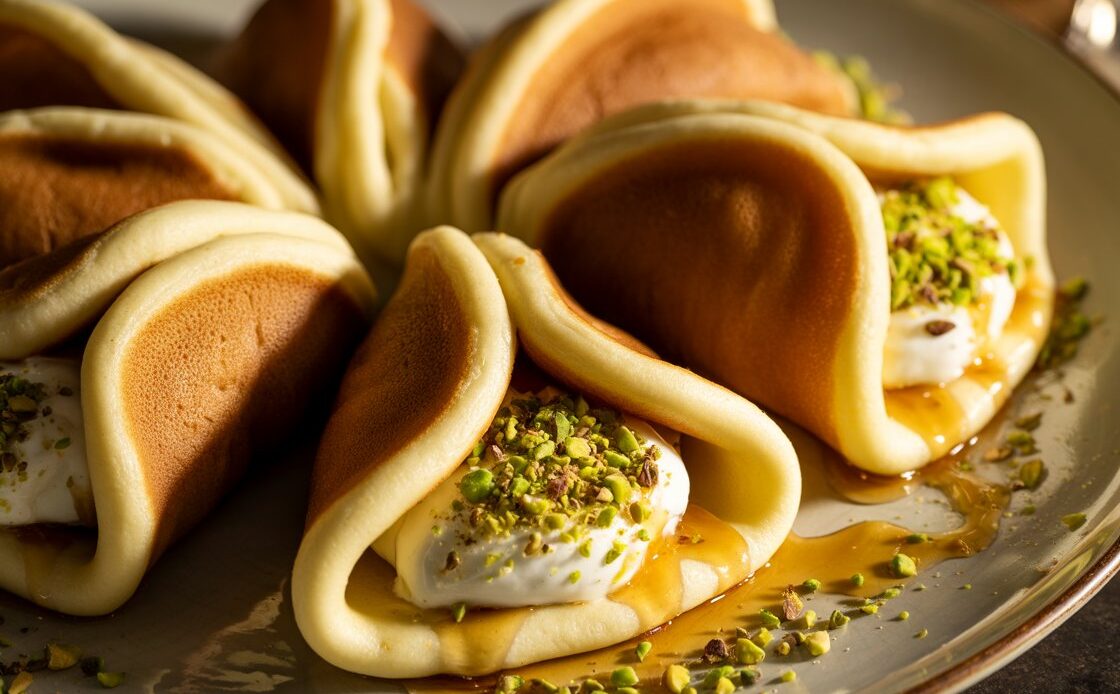
Qatayef is one of the most beloved Middle Eastern desserts, especially during Ramadan. These delicate Arabic pancakes stuffed with nuts, Ashta cream, or sweet cheese are not only a treat for the taste buds but also a symbol of tradition and celebration. In this guide, you’ll discover the secrets behind making perfect Qatayef, explore creative fillings and flavors, and learn how to serve this classic Ramadan dessert in a way that will impress family and friends.
The Fascinating History of Qatayef
Qatayef is more than just a delicious Middle Eastern dessert—it is a culinary tradition that has been enjoyed for centuries. Its delicate texture, sweet fillings, and distinctive folded shape make it instantly recognizable, and its preparation often brings families together. Understanding the history of Qatayef not only deepens appreciation for this Arabic pancake, but also reveals how food can connect us to culture, celebration, and shared memories.
Origins of Qatayef in Middle Eastern Cuisine
Qatayef has a rich history rooted in Levantine cuisine, originating from countries like Lebanon, Syria, Jordan, and Palestine. Traditionally, these sweet Arabic pancakes were made as a special treat during festive occasions, gradually becoming a staple of Middle Eastern desserts. The recipe has been passed down through generations, evolving slightly in different regions while maintaining its core identity.
To help readers visualize its evolution, you can include a timeline or small infographic showing key milestones, such as the earliest mentions in historical cookbooks, regional variations, and the modern adaptations of Qatayef that are popular today.
Qatayef and Ramadan Traditions
Qatayef is deeply intertwined with Ramadan traditions, making it more than just a dessert—it’s a symbol of celebration and community. Families often prepare Qatayef for Iftar, the evening meal that breaks the daily fast, and serve it during Eid al-Fitr festivities. Its presence on the table signifies joy, sharing, and the cultural richness of the season.
Fun Fact: Did you know? Qatayef is often served only during Ramadan in traditional households, emphasizing its special role in the holy month. Including this kind of tidbit can make the article more engaging and provide cultural context that readers will appreciate.
Understanding Qatayef – Fillings, Shapes, and Flavors
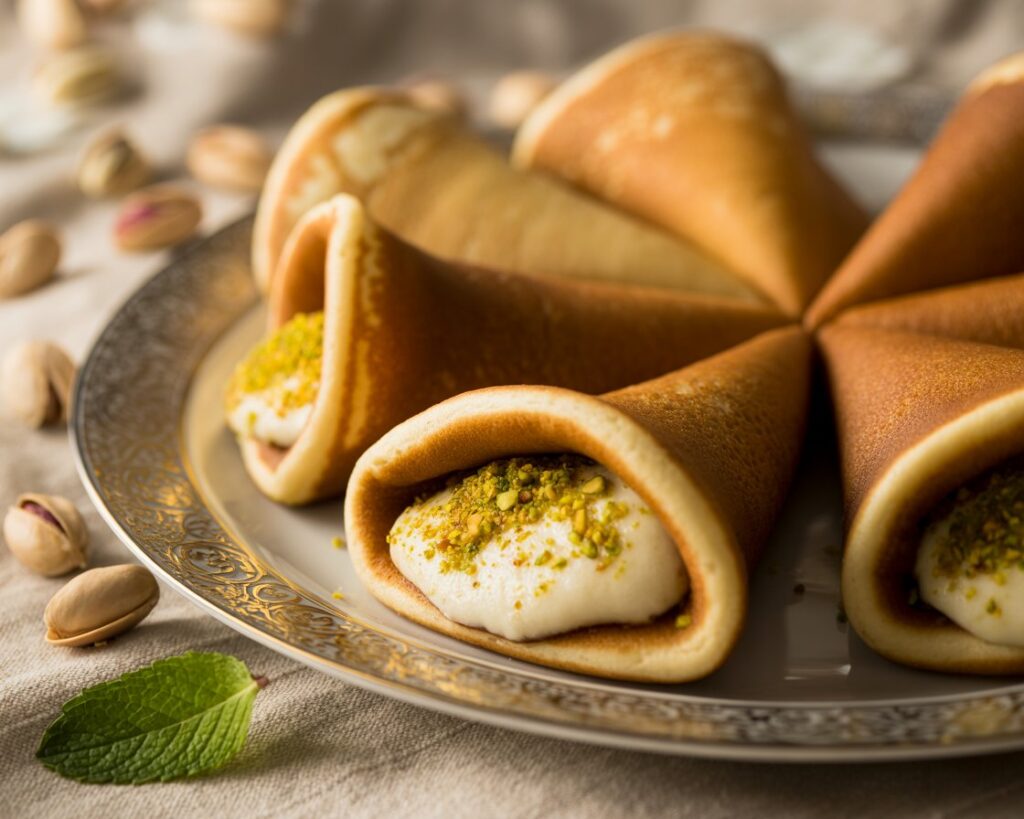
Qatayef is a dessert that captivates not only with its taste but also with its versatility. From the fillings to the shapes and cooking styles, every detail contributes to its charm. Exploring the different variations allows home cooks to experiment with flavors while respecting traditional techniques. Whether you prefer nut-filled pancakes, creamy Ashta, or sweet cheese, there’s a Qatayef style to suit every palate.
Creative Fillings Beyond the Classics
While the classic nut-filled Qatayef remains a favorite, modern twists have introduced a range of delicious options. Ashta cream offers a smooth, rich texture, while sweet cheese provides a lighter, tangy alternative.
You can include a table comparing the main fillings:
| Filling Type | Flavor Profile | Texture | Sweetness Level |
|---|---|---|---|
| Nuts (walnuts, pistachios) | Nutty, rich | Crunchy | Medium |
| Ashta (clotted cream) | Creamy, delicate | Soft, smooth | High |
| Sweet cheese | Mild, slightly tangy | Soft | Medium |
This kind of table helps readers quickly understand the options and decide which Qatayef filling they want to try.
Shapes and Cooking Styles
Qatayef comes in several distinctive shapes, each suited to a specific presentation or occasion. The traditional folded half-moon is most common, while some variations are fully sealed or made as mini pancakes for bite-sized treats.
Visual aids like images or diagrams showing folding techniques can be very helpful for readers attempting Qatayef for the first time. Illustrating the step-by-step folding process enhances clarity and makes the content more engaging.
Frying vs Baking Qatayef
Cooking style also affects texture and flavor. A simple pros and cons table can guide readers:
| Cooking Method | Pros | Cons |
|---|---|---|
| Frying | Crispy, golden exterior | More oil, slightly heavier |
| Baking | Healthier, less oil | Softer texture, less crisp |
Providing these comparisons empowers readers to choose the style that fits their taste and kitchen setup while keeping Qatayef delicious.
How to Make Your Qatayef Stand Out
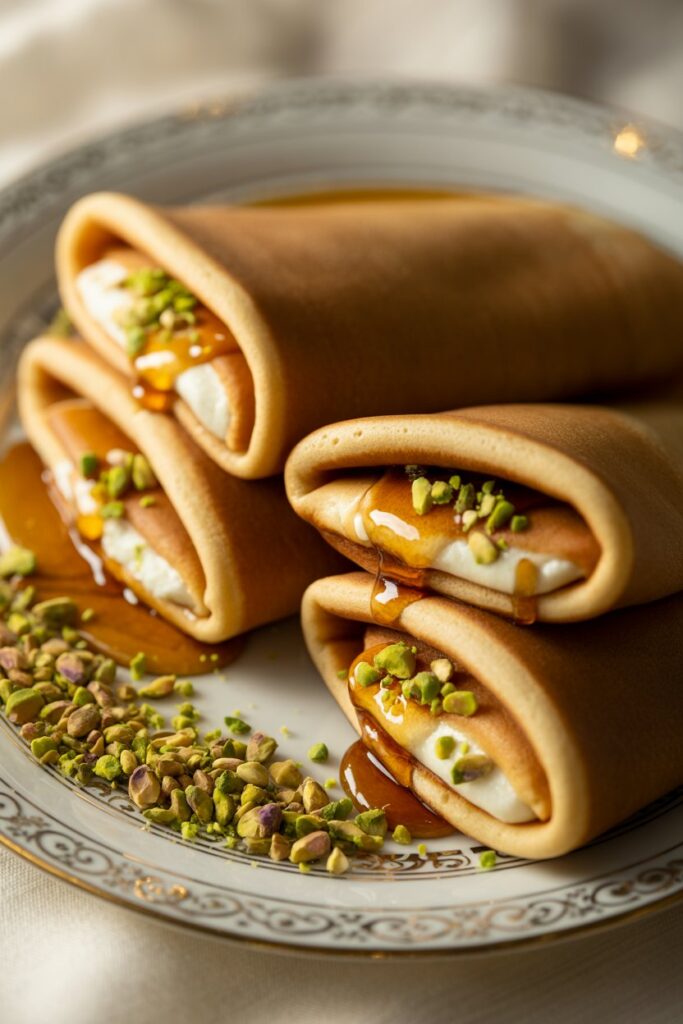
Making Qatayef that impresses isn’t just about following a recipe—it’s about mastering the details that elevate this Middle Eastern dessert from good to exceptional. From achieving the perfect pancake texture to experimenting with flavors and presentation, small adjustments can make a big difference.
Tips for Perfect Pancake Texture
The foundation of great Qatayef starts with the batter. Using semolina in the mixture gives the pancakes a slightly coarse texture that holds fillings well. Achieving the right batter consistency is crucial: it should be smooth, pourable but not too runny. Letting the batter rest for at least 30 minutes allows the semolina to absorb liquid, producing lighter, airier pancakes that cook evenly.
Additional tip: Cook the pancakes on medium heat to ensure they are golden but not overcooked, keeping the interior soft for the fillings.
Flavor Boosters for Syrup
The syrup is where Qatayef truly shines. Traditional flavors like rose water and orange blossom water add floral notes that complement nut-filled or creamy Ashta pancakes. For a twist, a hint of vanilla can enhance the sweetness without overpowering the filling.
Here’s a small “Flavor Combo Table” for inspiration:
| Syrup Flavor | Best Filling Pairing | Notes |
|---|---|---|
| Rose water | Ashta cream | Classic, aromatic |
| Orange blossom water | Nut-filled Qatayef | Traditional and fragrant |
| Vanilla | Sweet cheese | Adds warmth and subtle sweetness |
Creative Presentation Ideas
Presentation can transform Qatayef into a centerpiece dessert. Consider stacking mini Qatayef towers, drizzling syrup artistically, or arranging them on a dessert plate with nuts for a festive look. For a modern touch, showcase your creations with visual examples or create a carousel for Instagram, emphasizing colors, textures, and shapes.
Small decorative elements, like a sprinkle of pistachios or a drizzle of syrup in patterns, make the dessert not only taste amazing but also visually irresistible.
Qatayef Variations Across the Middle East
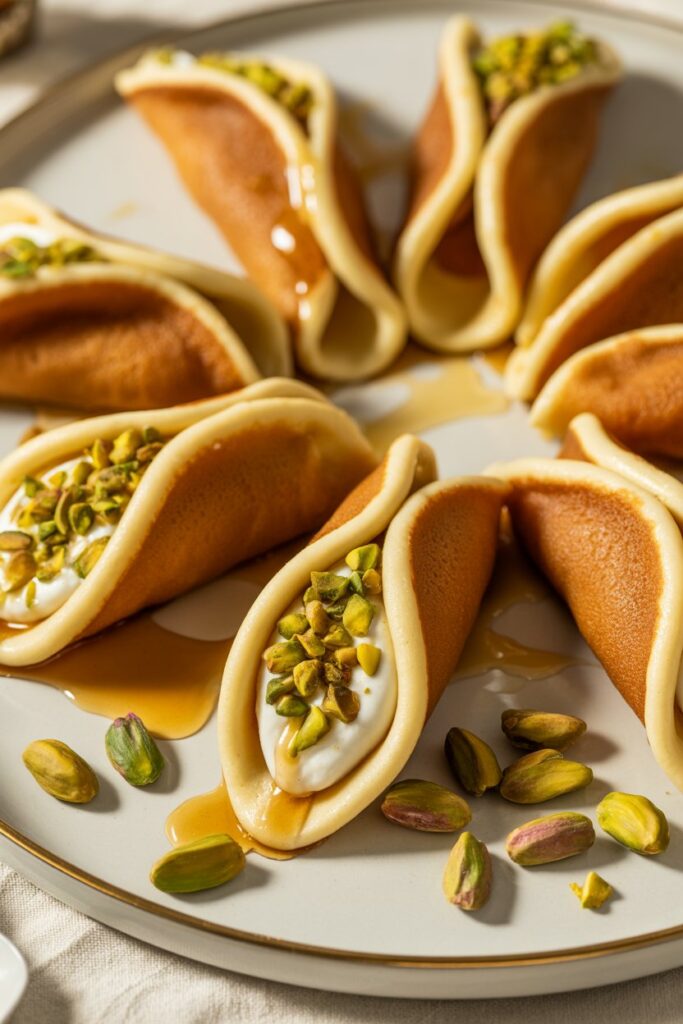
Qatayef is a dessert that varies widely across the Middle East, reflecting local tastes, traditions, and ingredient availability. Exploring these regional twists not only inspires creative variations at home but also offers insight into the cultural richness behind this beloved Arabic pancake.
Regional Twists
Each country has its own way of making Qatayef unique:
- Lebanon: Typically filled with nuts and drizzled with syrup, giving a crunchy texture and rich flavor.
- Jordan and Syria: Ashta cream is the popular choice, creating soft and creamy pancakes, often soaked lightly in syrup.
- Egypt: Sweet cheese is commonly used, offering a slightly tangy taste that balances the syrup’s sweetness.
These variations show how one dessert can adapt to different Middle Eastern culinary traditions, while keeping its essence intact.
Related Middle Eastern Desserts
Qatayef is part of a wider family of Middle Eastern desserts. Some notable ones include Kanafeh, a cheesy and syrup-soaked pastry, and Baklava, layers of flaky pastry with nuts and honey.
A quick comparison table helps readers see the differences:
| Dessert | Sweetness Level | Texture | Main Ingredients |
|---|---|---|---|
| Qatayef | Medium to High | Soft interior, slightly crispy edges | Pancakes, nuts/Ashta/cheese, syrup |
| Kanafeh | High | Gooey, soft, slightly crispy top | Cheese, phyllo, syrup |
| Baklava | High | Crispy, layered | Phyllo, nuts, honey/syrup |
This table allows readers to understand the texture, sweetness, and composition differences at a glance, making it easier to experiment with similar desserts.
Pairing and Serving Qatayef Like a Pro
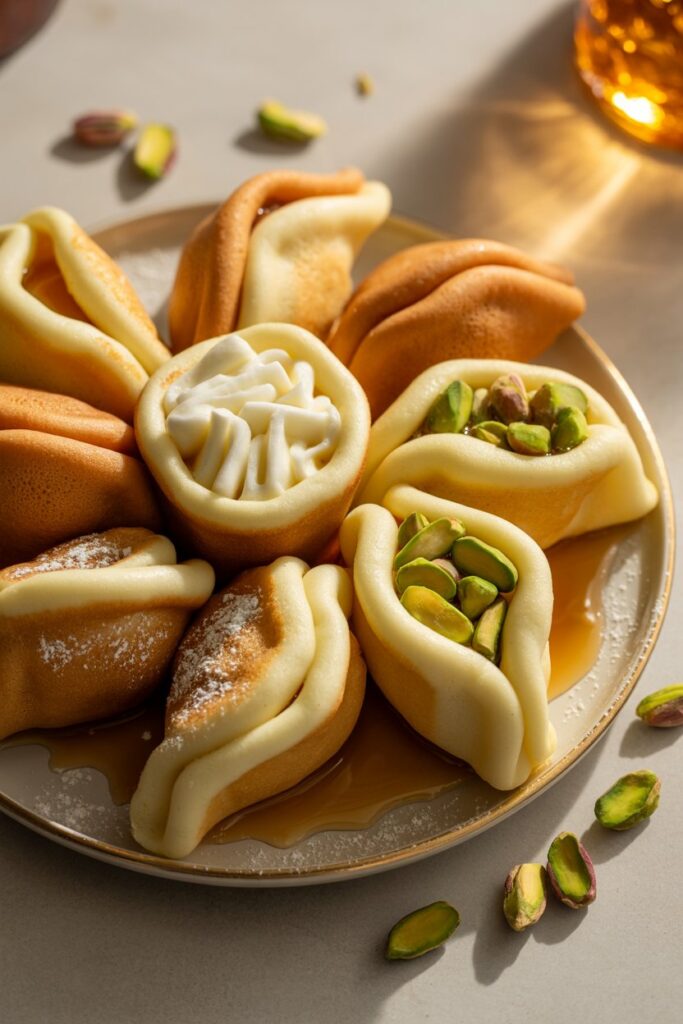
Serving Qatayef is as important as making it. The right pairings and presentation can elevate this Middle Eastern dessert, turning it into a memorable centerpiece for Ramadan nights or festive gatherings.
Best Beverages
Qatayef pairs wonderfully with traditional drinks that balance its sweetness and complement its flavors. Consider these options:
- Tea: Light, aromatic teas, such as mint or black tea, cut through the richness of Ashta cream and nut fillings.
- Coffee: Arabic or lightly roasted coffee enhances the nutty notes in nut-filled Qatayef.
- Milk: A simple, chilled glass of milk softens the sweetness, making it perfect for kids or those who prefer milder flavors.
Including a small visual chart or pairing infographic can help readers quickly see which beverages best suit each Qatayef filling.
Serving Tips
How you serve Qatayef affects both presentation and taste:
- Warm vs Chilled: Nut-filled or cheese Qatayef are best served warm, highlighting their flavors and textures. Ashta-filled Qatayef can be enjoyed slightly chilled for a refreshing twist.
- Plating for Gatherings: Arrange mini Qatayef in circular patterns or stack them into small towers for visual impact. Drizzle syrup artistically and sprinkle crushed pistachios for added color and texture.
You can also include a “Do’s & Don’ts” box for easy reference:
Do’s
- Serve fresh or within a few hours of preparation
- Pair with complementary beverages
- Garnish with nuts for visual appeal
Don’ts
- Avoid leaving syrup-soaked Qatayef for too long
- Don’t overcrowd plates, which can damage delicate pancakes
This guidance ensures that readers not only make delicious Qatayef but also serve it in a way that impresses family and friends.
Fun Facts and Reader Challenges
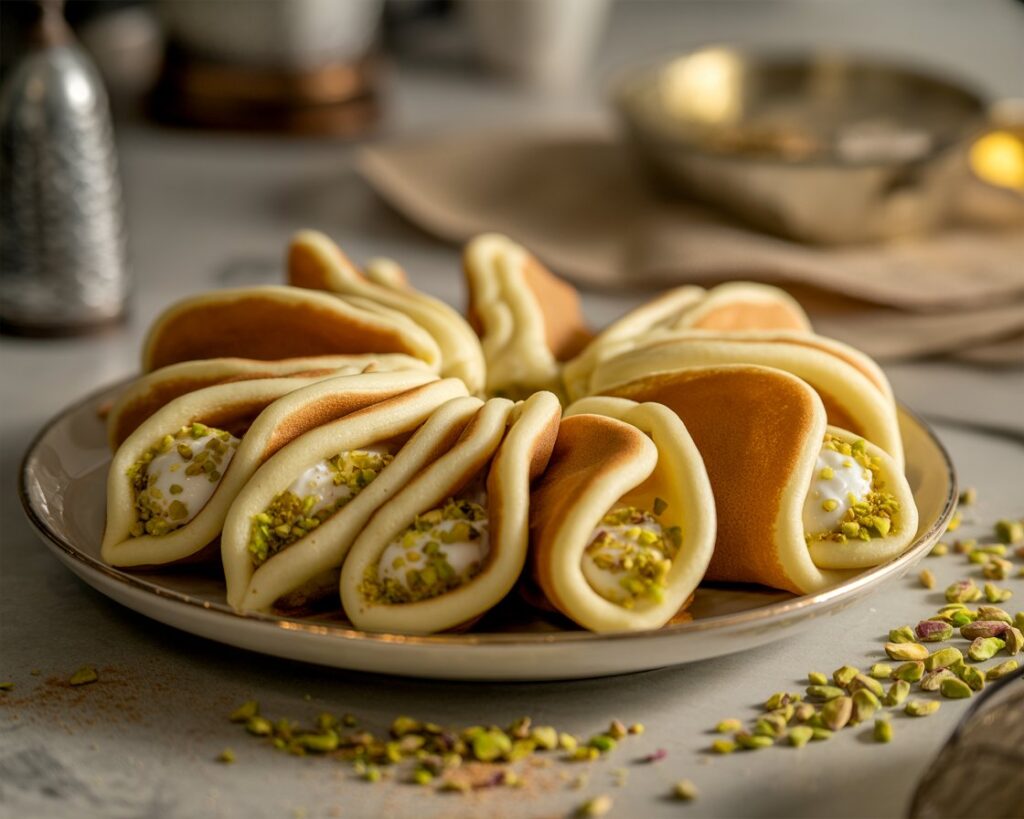
Adding a fun and interactive element to your Qatayef article can engage readers and encourage them to explore the dessert creatively. This section combines cultural insights with hands-on challenges to make the reading experience both informative and enjoyable.
Qatayef Fun Facts
The name Qatayef is believed to come from the Arabic root “qatif,” meaning “to pick up” or “to fold,” which reflects the pancake’s folded shape. Beyond its linguistic origins, this dessert carries cultural significance across the Middle East, symbolizing hospitality, celebration, and togetherness, especially during Ramadan.
Quirky customs include preparing mini Qatayef for children to enjoy as bite-sized treats or gifting them to neighbors as a gesture of goodwill during festive times. Fun anecdotes like these make readers appreciate not just the taste but also the traditions behind this dessert.
Try This at Home Challenge
Encourage your readers to experiment with Qatayef fillings and share their creations. Challenge them to mix traditional options like nuts, Ashta cream, or sweet cheese with innovative flavors such as chocolate, dried fruits, or flavored syrups.
A mini “Reader Poll Table” can make the experience interactive:
| Filling Combo | Sweetness Level | Crunch Factor | Reader Rating (1-5) |
|---|---|---|---|
| Nut + Honey Syrup | Medium | High | |
| Ashta + Rose Water | High | Low | |
| Sweet Cheese + Vanilla Syrup | Medium | Medium | |
| Chocolate + Pistachios | High | Medium |
This encourages engagement, allows readers to vote for their favorite combinations, and creates a sense of community around making this dessert.
Final Thoughts on Qatayef
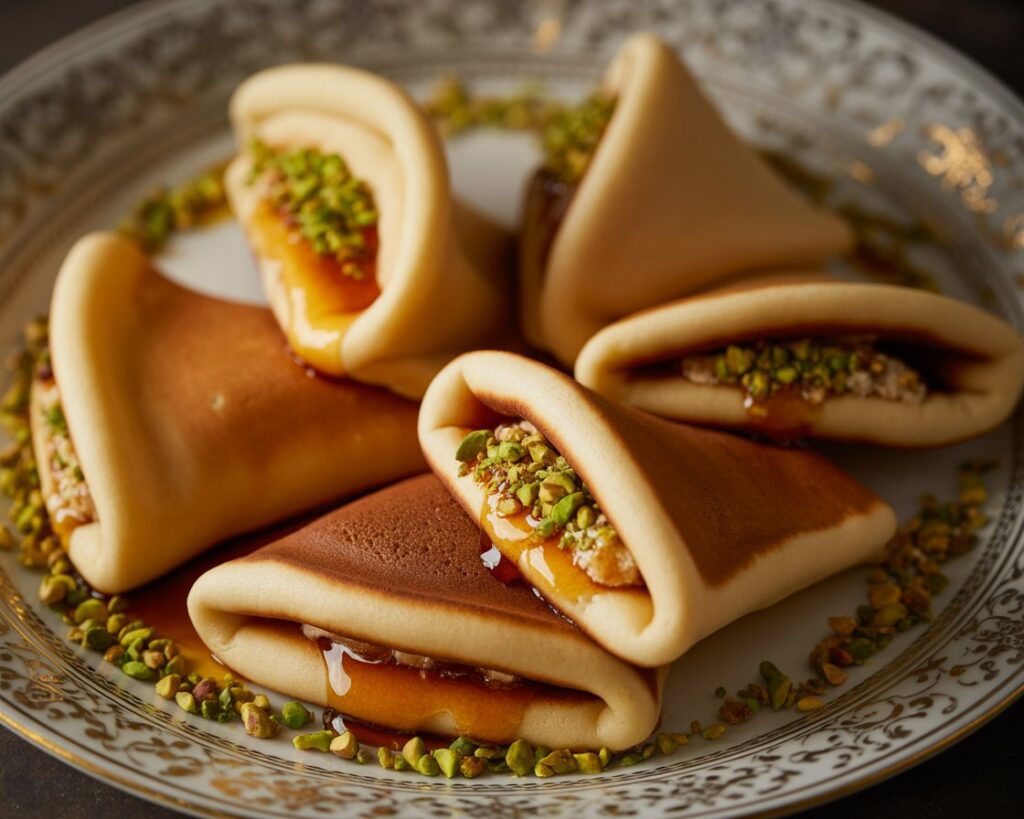
This dessert is more than just a sweet treat—it’s a dessert rich in tradition, flavor, and cultural meaning. Whether you enjoy it with nuts, creamy Ashta, or sweet cheese, this beloved Middle Eastern dessert brings people together, especially during Ramadan. By experimenting with fillings, flavors, and presentations, you can make Qatayef your own while still honoring its timeless roots.
