

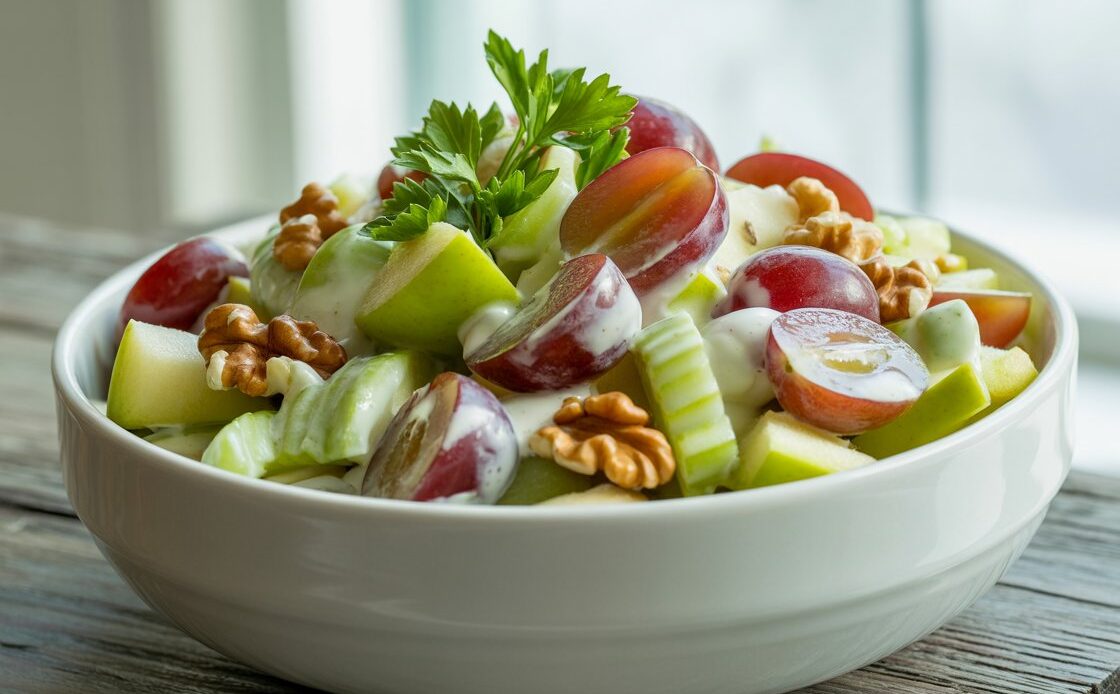
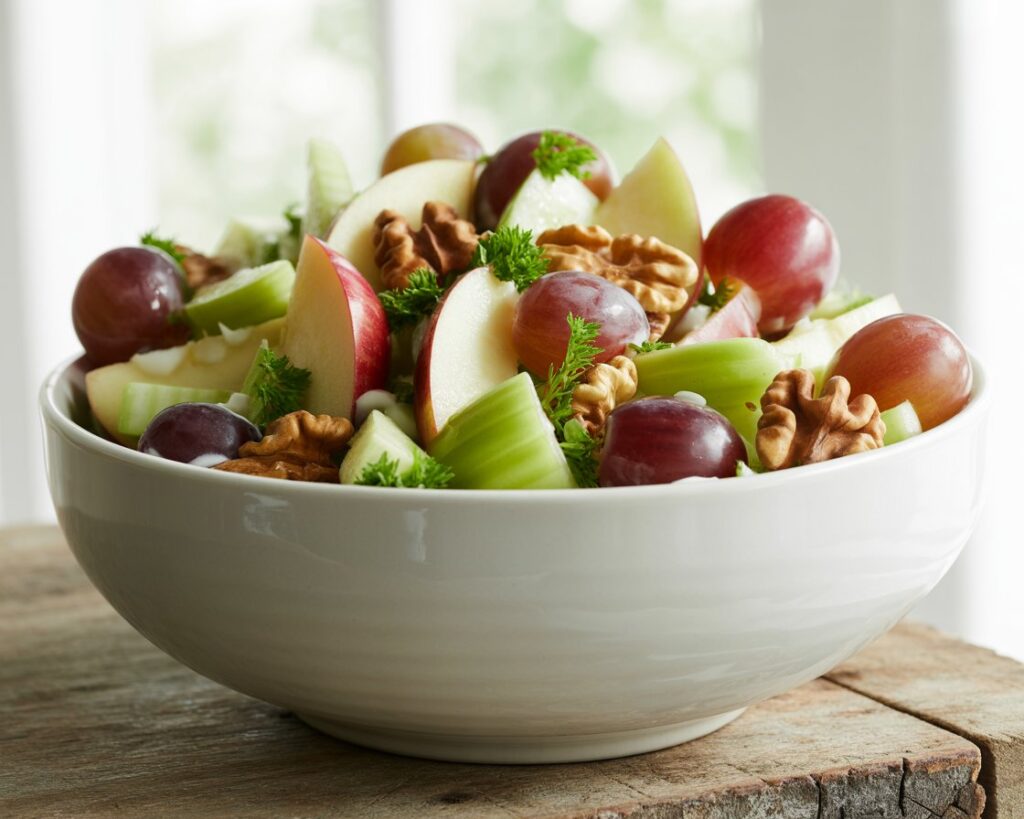
Waldorf Salad is more than just a classic American dish—it’s a timeless blend of crisp apples, crunchy walnuts, juicy grapes, and fresh celery, all brought together with a creamy dressing. Originally created at the Waldorf-Astoria Hotel in New York, this salad has evolved into a versatile favorite that fits perfectly on lunch tables, dinner spreads, and even festive gatherings. In this article, we’ll explore what makes a Waldorf Salad unique, creative twists to try, and expert tips to make every bite unforgettable—plus fun ways to serve and pair it so your guests are impressed every time.
The Story Behind the Waldorf Salad
The Waldorf Salad isn’t just a recipe—it’s a piece of culinary history that combines flavor, texture, and elegance in one bowl. From its creation in a luxury hotel to its rise as a beloved American classic, this salad has an interesting story that goes beyond apples, celery, and walnuts. Understanding its origins and evolution helps you appreciate why it remains a go-to dish for lunches, dinners, and special occasions today.
Origins at the Waldorf-Astoria Hotel
The Waldorf Salad first appeared in the late 19th century at the luxurious Waldorf-Astoria Hotel in New York City. Created by Oscar Tschirky, the hotel’s maître d’hôtel, it was originally a simple mix of apples, celery, and mayonnaise. Over time, the recipe evolved to include grapes and walnuts, giving the salad its signature balance of sweet, crunchy, and creamy textures.
A small timeline infographic could look like this:
| Year | Event |
|---|---|
| 1893 | Oscar Tschirky creates the first Waldorf Salad at the Waldorf Hotel |
| 1929 | Grapes and walnuts are officially added to the classic recipe |
| 1930s | Salad gains national popularity through cookbooks and hotel menus |
| Today | Served worldwide with creative variations |
How It Became a Classic in American Cuisine

The Waldorf Salad quickly became a staple in American cuisine because of its fresh ingredients and versatile nature. Apples provided natural sweetness, celery added crunch, and walnuts offered a rich, nutty flavor—creating a combination that delighted diners across the country. Its adaptability for both casual meals and elegant dinners helped it maintain popularity for over a century.
Fun Trivia About Waldorf Salad
Here are some interesting facts that many food lovers don’t know about the Waldorf Salad:
| Did You Know? | Modern Version |
|---|---|
| Originally served as a side dish at the Waldorf Hotel | Now often served as a main course or appetizer |
| The first version used only apples, celery, and mayonnaise | Grapes and walnuts are now essential ingredients |
| It was created by a Swiss chef working in New York | Today, many variations include yogurt dressing, pomegranate, or dried cranberries |
What Makes a Waldorf Salad Unique
The Waldorf Salad stands out for its perfect balance of textures, flavors, and freshness. Unlike other salads that rely on a single dominant ingredient, this classic combines sweet, nutty, and crisp elements to create a harmonious bite. Understanding the role of each component and the dressing can elevate your salad from ordinary to extraordinary.
Key Ingredients and Their Roles
Each ingredient in a Waldorf Salad plays a distinct part in creating the signature taste and texture:
| Ingredient | Flavor | Texture | Role in Salad |
|---|---|---|---|
| Apples | Sweet & tangy | Crisp | Adds natural sweetness and crunch |
| Celery | Mildly bitter | Crunchy | Provides refreshing crunch and balance |
| Grapes | Sweet & juicy | Soft | Adds a burst of juiciness and color |
| Walnuts | Nutty & rich | Crunchy | Adds depth and a satisfying crunch |
| Lettuce | Mild | Crisp | Serves as a fresh, light base |
Dressing Magic: Mayonnaise vs. Yogurt
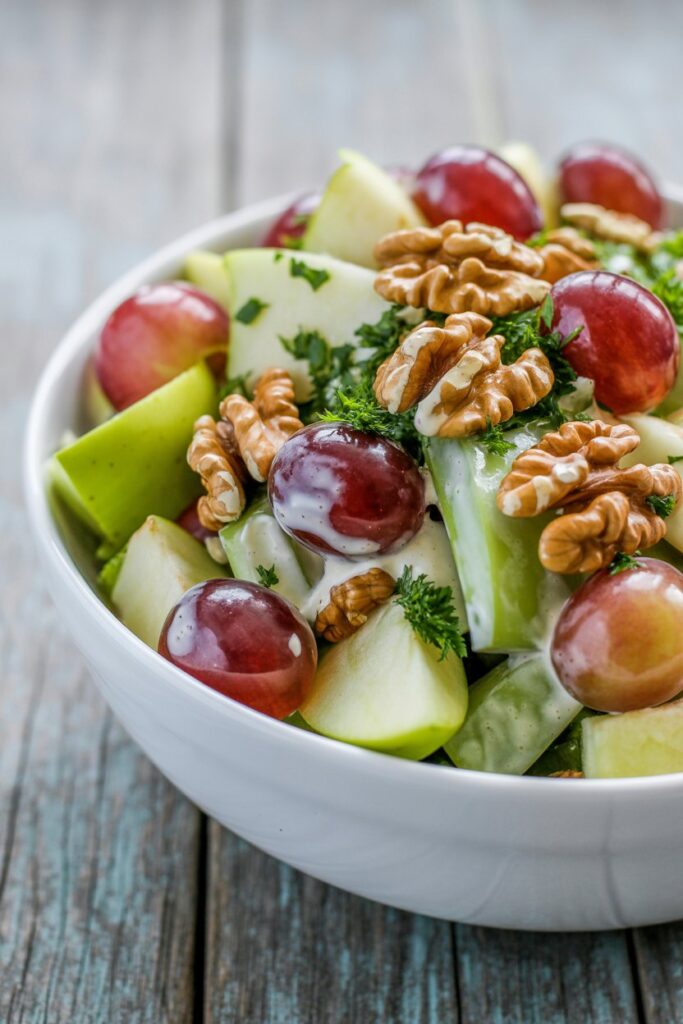
The dressing is what brings the Waldorf Salad together, and choosing the right one can change the flavor profile completely.
| Dressing | Pros | Cons |
|---|---|---|
| Mayonnaise | Rich, creamy, classic flavor | Higher in calories and fat |
| Yogurt | Lighter, tangy, healthier alternative | Slightly less creamy than mayonnaise |
Crunch Factor & Freshness Tips
Maintaining the crispness of walnuts and apples is key to a memorable Waldorf Salad. Here are some expert tips:
- Apples: Toss with a little lemon juice to prevent browning.
- Walnuts: Lightly toast for extra crunch, and store in an airtight container.
- Celery: Keep chilled until ready to serve to preserve crispness.
- Lettuce: Wash, dry thoroughly, and store wrapped in a paper towel in the fridge.
Pro Tip: Assemble the salad just before serving to keep all ingredients fresh and crunchy.
Creative Twists on the Classic Waldorf Salad
While the Waldorf Salad is delicious in its traditional form, there are plenty of ways to modernize it for different tastes, dietary needs, or presentation styles. From adding vibrant flavors to creating diet-friendly swaps, these creative twists keep the salad exciting while maintaining its signature balance of crunch, sweetness, and creaminess.
Modern Flavor Variations
Experimenting with new ingredients can take your Waldorf Salad to the next level:
- Pomegranate seeds: Add a pop of color and a sweet-tart flavor.
- Dried cranberries: Enhance sweetness and chewiness.
- Citrus segments (orange or grapefruit): Bring refreshing tanginess and juiciness.
- Pear slices: A subtle, softer alternative to apples.
- Toasted seeds (pumpkin or sunflower): Add extra crunch and a nutty note.
Diet-Friendly Alternatives
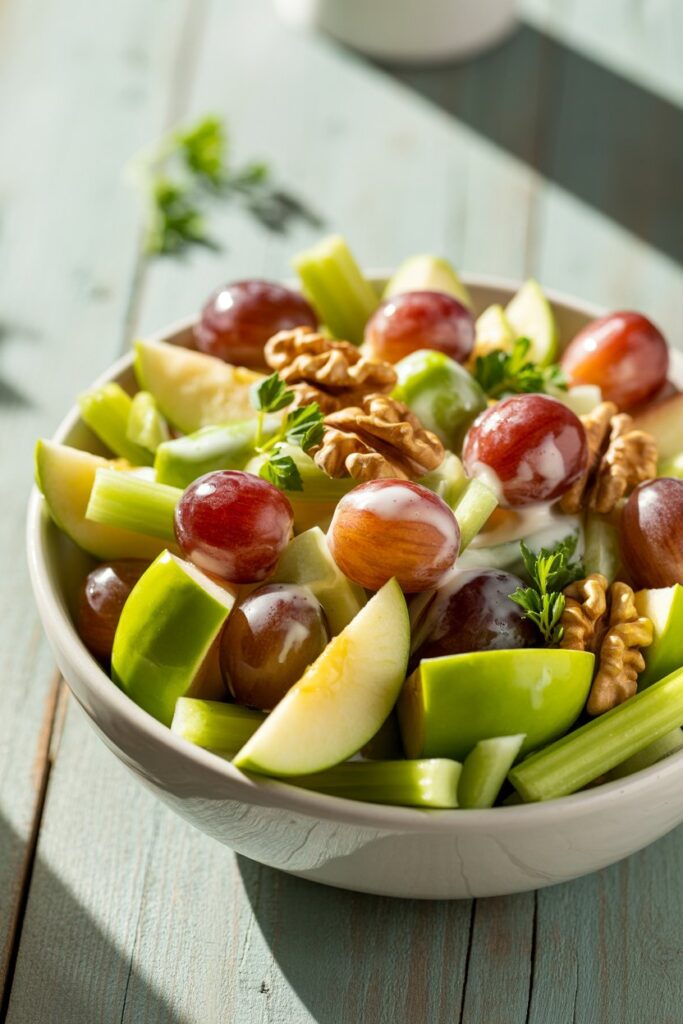
For those looking to reduce calories, go vegan, or make the salad lighter, there are simple swaps that don’t compromise flavor:
| Traditional Ingredient | Diet-Friendly Alternative | Benefit |
|---|---|---|
| Mayonnaise | Greek yogurt or vegan mayo | Lower calories, tangy or creamy texture |
| Walnuts | Almonds, cashews, or seeds | Reduced fat or nut-free options |
| Grapes | Blueberries or diced apples | Lower sugar or seasonal variation |
Serving Ideas Beyond a Salad Bowl
The Waldorf Salad can be presented in creative ways that make it fun and versatile:
- Wraps: Use lettuce or whole grain tortillas for handheld salads.
- Cups: Serve in small glass cups or ramekins for appetizers.
- Side dish: Pair with grilled chicken, fish, or sandwiches for lunch or dinner.
- Layered parfait: Alternate layers of lettuce, fruit, and nuts for a visually appealing presentation.
Pairing Waldorf Salad for Any Occasion
The Waldorf Salad is not only a delicious standalone dish but also a versatile companion to a variety of meals. Whether you’re preparing lunch, planning a dinner party, or contributing to a potluck, knowing how to pair it with other foods and present it beautifully can elevate the entire dining experience.
Perfect for Lunch, Dinner, or Potlucks
Here’s how the Waldorf Salad fits seamlessly into different occasions:
| Occasion | Serving Style |
|---|---|
| Casual Lunch | Serve in a small bowl alongside a sandwich or wrap |
| Dinner Party | Plated individually as a starter or side dish |
| Potluck | Presented in a large salad bowl or as individual cups for easy serving |
| Picnic or Outdoor Meal | Wrapped in lettuce cups or mason jars for portability |
Complementary Foods & Drinks
Pairing the Waldorf Salad with the right foods and drinks enhances its flavors:
- Proteins: Grilled chicken, turkey, or fish complement the crisp fruits and nuts.
- Sandwiches: Light sandwiches, paninis, or wraps balance the creamy dressing.
- Wines: A crisp white wine like Sauvignon Blanc or a light sparkling wine pairs beautifully with the salad’s fresh flavors.
- Other Sides: Serve with roasted vegetables, quinoa, or light soups for a complete meal.
Presentation Tips
A visually appealing Waldorf Salad is just as enjoyable as its taste. Here are some plating and garnish tips:
- Use a wide, shallow bowl to display colorful fruits and nuts.
- Garnish with extra chopped walnuts, a few grape halves, or pomegranate seeds for a pop of color.
- Serve in individual glasses or jars for a modern, Instagram-worthy look.
- Create neat layers or swirls with the dressing for an elegant effect.
- Optional mini checklist for serving:
- Fresh, crisp ingredients
- Balanced colors (greens, reds, and whites)
- Garnish for visual appeal
- Individual or group serving depending on occasion
Tips, Tricks, and Common Mistakes
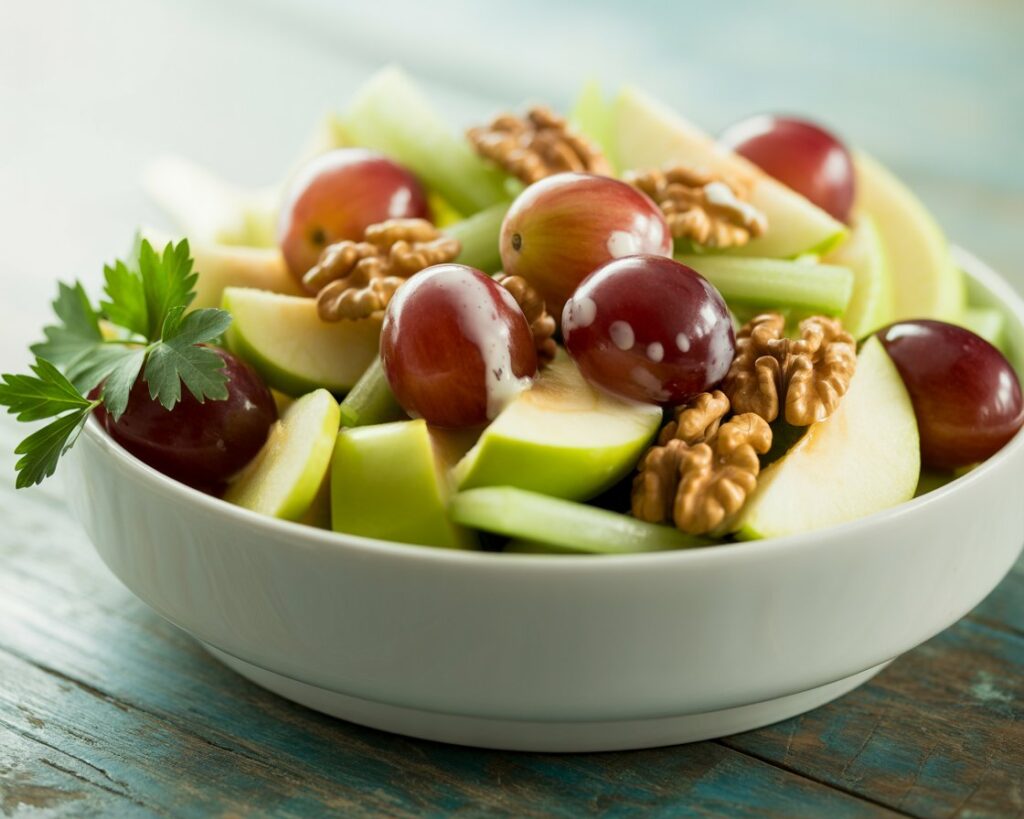
Even though the Waldorf Salad is simple to make, small missteps can affect its texture, freshness, and flavor. With a few expert tips and storage hacks, you can ensure every bite is crisp, balanced, and delicious, whether you’re serving it immediately or preparing it ahead of time.
How to Keep the Salad Fresh Longer
Maintaining the freshness of your Waldorf Salad is key to preserving its crunch and flavor. Here are some techniques:
- Prep separately: Keep apples, celery, grapes, and walnuts separate until just before serving to prevent sogginess.
- Lemon juice for apples: Toss apple slices in a little lemon juice to slow browning.
- Proper storage: Store the salad in an airtight container in the refrigerator. Dressing can be added right before serving.
- Chill ingredients: Keep lettuce and other fresh components cold to maintain crispness.
Common Waldorf Salad Mistakes to Avoid
| Mistake | Fix |
|---|---|
| Apples turning brown too quickly | Toss with lemon juice immediately after slicing |
| Walnuts becoming soft or stale | Toast lightly and store in airtight container |
| Overdressing the salad | Add dressing gradually and toss gently |
| Using too much celery | Balance flavors with fruit and nuts for harmony |
| Lettuce wilting | Keep washed lettuce wrapped in a paper towel in the fridge until serving |
Expert Tips for the Perfect Crunch & Flavor
- Use fresh, seasonal apples for natural sweetness and crunch.
- Lightly toast walnuts for a deeper nutty flavor.
- Mix gently to coat all ingredients without breaking the fruits or nuts.
- Consider adding a small amount of citrus zest to the dressing for a subtle bright flavor.
- Serve immediately after tossing or in separate layers if preparing ahead, to maintain visual appeal and crispness.
Pro Tip: Always taste the salad before serving—adjust sweetness, tang, or crunch to make each batch perfect.
Why Waldorf Salad Remains a Timeless Favorite
The Waldorf Salad is more than just a combination of apples, celery, grapes, and walnuts—it’s a versatile, flavorful dish that has stood the test of time. Whether enjoyed in its classic form or with creative twists, it brings a perfect balance of crunch, sweetness, and creaminess to any meal. By understanding its history, mastering the ingredients, and following simple tips for freshness and presentation, you can make a Waldorf Salad that delights both the eyes and the palate, no matter the occasion.
