

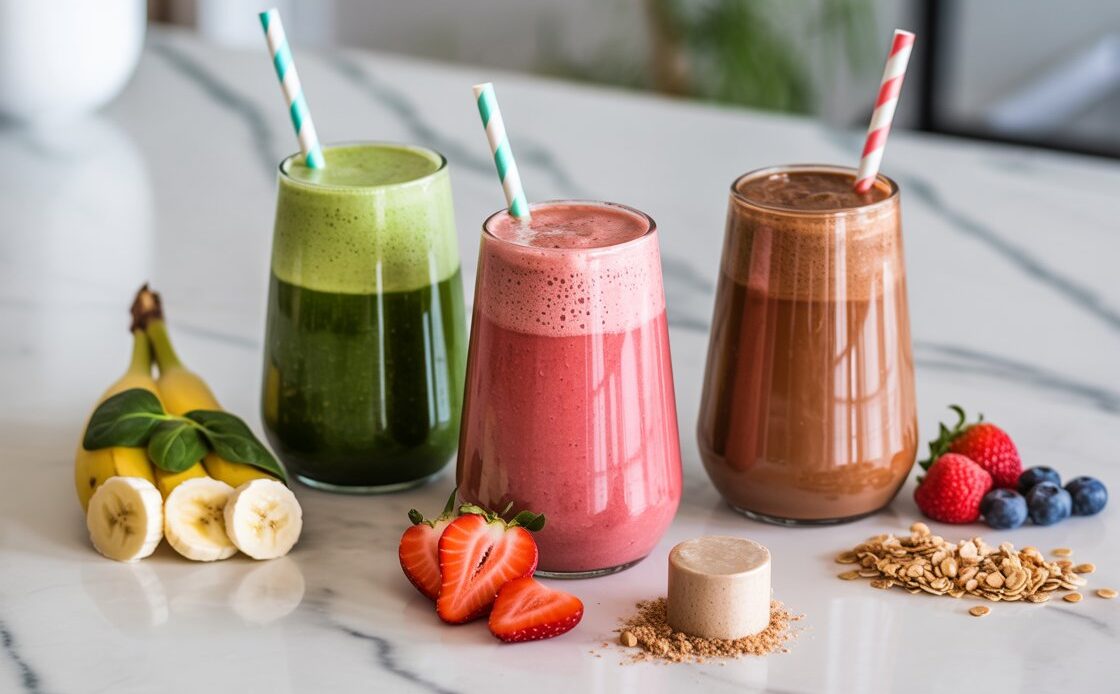
Protein smoothies are more than just a trendy fitness fad—they’ve become a staple in the diets of people seeking convenient, nutritious, and delicious ways to fuel their bodies. Whether you’re hitting the gym, working long hours, or just looking for a healthy snack, protein smoothies are the perfect solution. Packed with essential nutrients and customizable to fit your specific health goals, these smoothies offer a fast, satisfying way to meet your daily protein needs.
But what makes protein smoothies so effective? They combine high-quality protein with other nutrient-dense ingredients to support muscle growth, boost energy levels, and even help with weight management. Plus, they’re incredibly versatile—whether you prefer plant-based, whey, or collagen protein, there’s a smoothie out there for you. In this guide, we’ll explore the benefits, top recipes, and expert tips that will take your protein smoothie game to the next level. Ready to blend up some health? Let’s dive in!
The Science Behind Protein Smoothies: Why They’re So Effective
Protein smoothies are more than just a convenient snack; they are scientifically proven to support muscle repair, enhance recovery, and promote overall health. When consumed at the right time, protein smoothies can work wonders for your body’s recovery after exercise and even support long-term weight management goals. Let’s dive into the science behind why these smoothies are so effective.
How Protein Smoothies Support Muscle Growth and Recovery
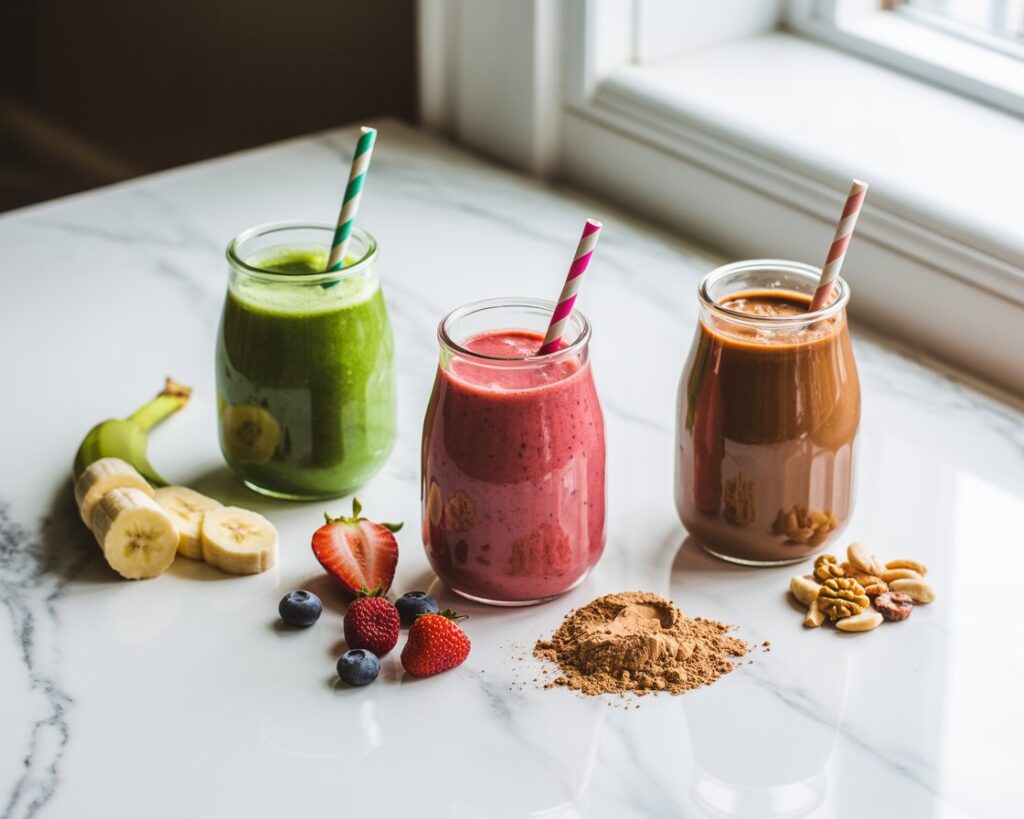
After an intense workout, your muscles are in a state of repair, and they need the right nutrients to rebuild and grow stronger. This is where protein comes into play. Protein is the building block of muscle tissue, and consuming it after exercise helps kick-start the repair process. In fact, studies show that consuming protein within 30 minutes to an hour post-workout maximizes muscle recovery and protein synthesis.
Protein smoothies are an ideal choice for this purpose. They are easily digested, allowing the amino acids from protein to reach muscle fibers quickly and begin repairing the damage caused by your workout. The liquid form of a protein smoothie is absorbed faster than solid foods, ensuring your body gets the nutrients it needs as soon as possible.
To put this into perspective, a protein smoothie can deliver a concentrated dose of protein and other essential nutrients to your muscles much faster than a meal would. This quick absorption time can significantly speed up recovery—so you’re ready to hit your next workout harder and faster.
Here’s a visual chart to illustrate how protein smoothies compare to other post-workout snacks in terms of recovery rate:
| Post-Workout Snack | Recovery Time | Nutrient Absorption Rate | Benefits |
|---|---|---|---|
| Protein Smoothie | 30-60 minutes | High (liquid form, quick absorption) | Fast muscle repair, optimal protein synthesis |
| Solid Meal (e.g., Chicken & Rice) | 1-2 hours | Moderate (requires digestion) | Sustained energy, gradual muscle recovery |
| Granola Bar | 1-2 hours | Low (limited protein content) | Convenient but not as effective for muscle repair |
| Banana (Fruit) | 1-2 hours | Low (mostly carbs, minimal protein) | Good for replenishing glycogen but not muscle repair |
How Protein Smoothies Help with Weight Loss and Appetite Control
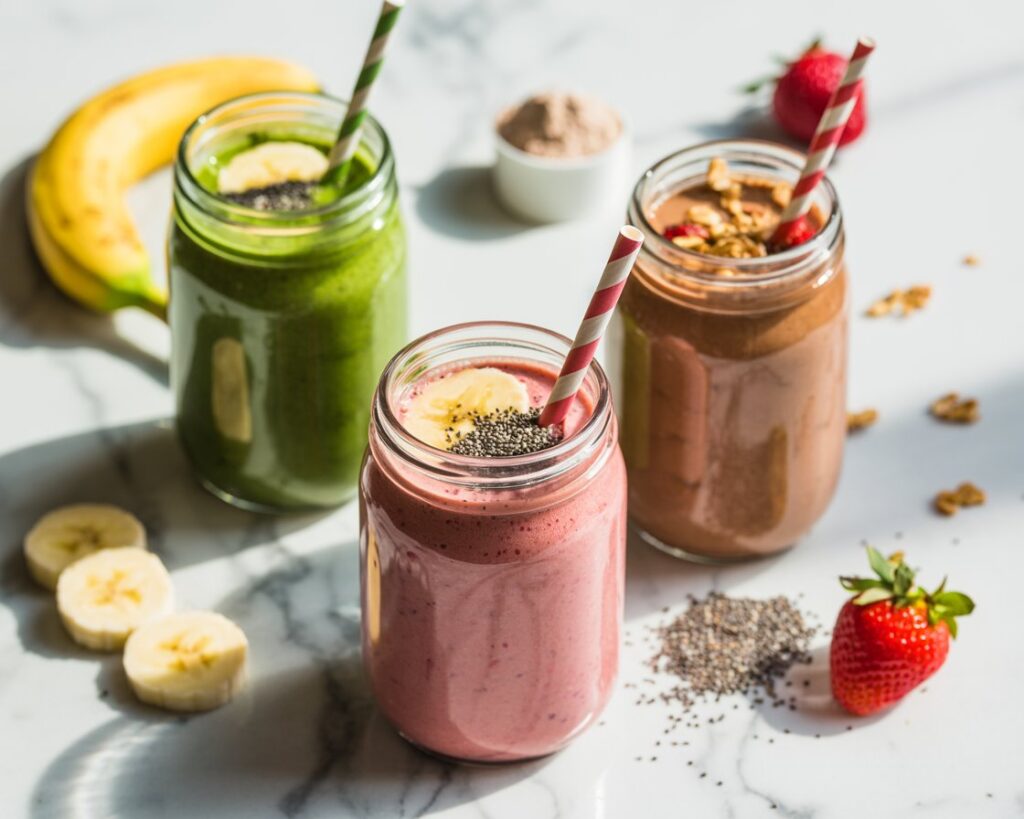
When it comes to weight loss or maintaining a healthy weight, protein plays a crucial role. Protein has a high thermic effect, meaning your body burns more calories digesting and metabolizing protein than it does with carbs or fats. It also helps regulate hunger hormones, making you feel fuller for longer and reducing the likelihood of overeating.
Protein smoothies are an excellent tool for controlling appetite. By adding a high-quality protein powder (whether whey, plant-based, or collagen) to your smoothie, you can boost its satiating effect, helping you stay satisfied between meals. But it doesn’t stop there—fiber-rich ingredients like chia seeds, flaxseeds, or spinach can further enhance these appetite-suppressing benefits, providing a combination of protein and fiber that helps stabilize blood sugar levels and prevent energy crashes.
The key here is the combination of protein and fiber—while protein helps curb hunger, fiber slows digestion and keeps you feeling full for longer periods. Together, they work harmoniously to help you resist cravings and avoid overeating, making protein smoothies a powerful ally for anyone looking to manage their weight.
Here’s a table comparing the protein content in a typical protein smoothie versus other common snacks:
| Snack | Protein Content | Fiber Content | Calories |
|---|---|---|---|
| Protein Smoothie | 20-30g (depending on protein powder) | 4-8g (from fruits, seeds, or greens) | 250-350 |
| Granola Bar | 4-8g | 2-4g | 150-200 |
| Greek Yogurt | 10-15g | 0-2g | 100-150 |
| Fruit Salad | 1-3g | 3-5g | 100-150 |
Hormonal Balance and Protein: What You Need to Know
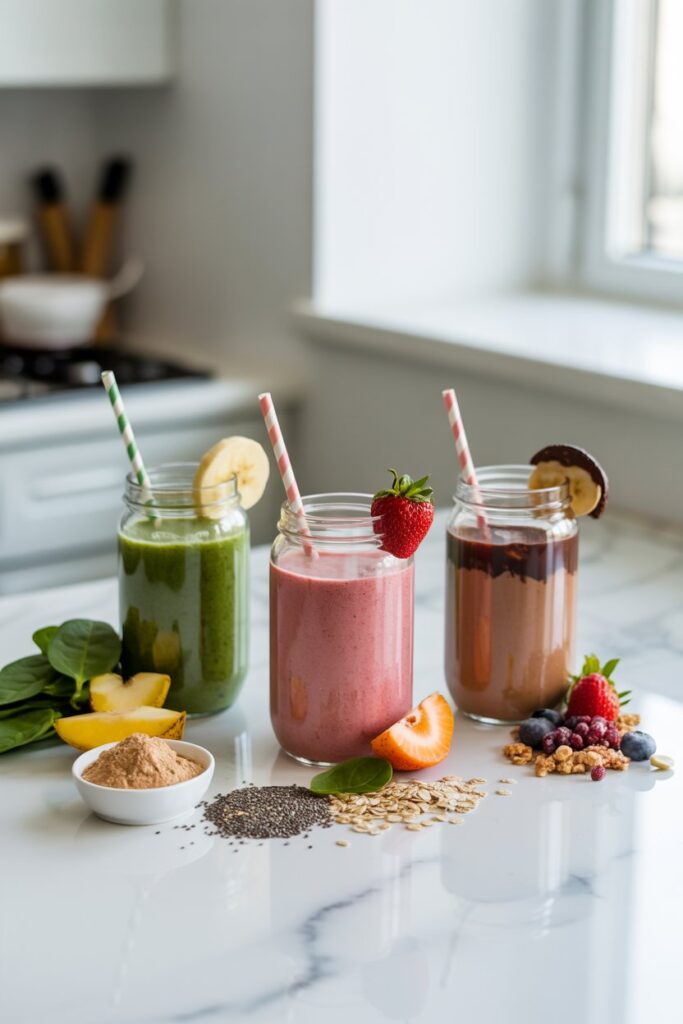
In addition to curbing hunger and supporting muscle growth, protein can also have a profound impact on your hormones. Two key hormones related to hunger regulation are insulin and ghrelin. Insulin helps regulate blood sugar, while ghrelin is known as the “hunger hormone,” signaling to your brain when it’s time to eat.
When you consume a protein smoothie, it helps regulate both hormones in a way that keeps your body in balance. Protein helps stabilize blood sugar levels, which prevents the sharp insulin spikes and crashes that can lead to cravings and energy dips. By balancing insulin and keeping ghrelin in check, protein smoothies can make it easier to manage your hunger and maintain a healthy weight.
Not only do protein smoothies satisfy hunger more effectively than many other foods, but they also help prevent the emotional overeating that often stems from blood sugar imbalances. This is why protein smoothies are often recommended for anyone looking to improve their overall health or embark on a weight-loss journey.
By understanding how protein supports muscle recovery and hormone regulation, you can harness the full potential of your post-workout or daily protein smoothies. They’re not just convenient—they’re an essential tool for both fitness goals and overall well-being.
The Hidden Powers of Different Protein Sources for Your Smoothie
When it comes to protein smoothies, the type of protein you choose can make a significant impact on your health and fitness goals. While whey protein is a classic go-to for many, plant-based options have become increasingly popular as more people embrace vegan or dairy-free lifestyles. But how do you choose the right one for your smoothie? Let’s explore the key differences between whey protein and plant-based protein, as well as introduce some lesser-known options that might surprise you!
Whey Protein vs. Plant-Based Protein: Which One Should You Choose?
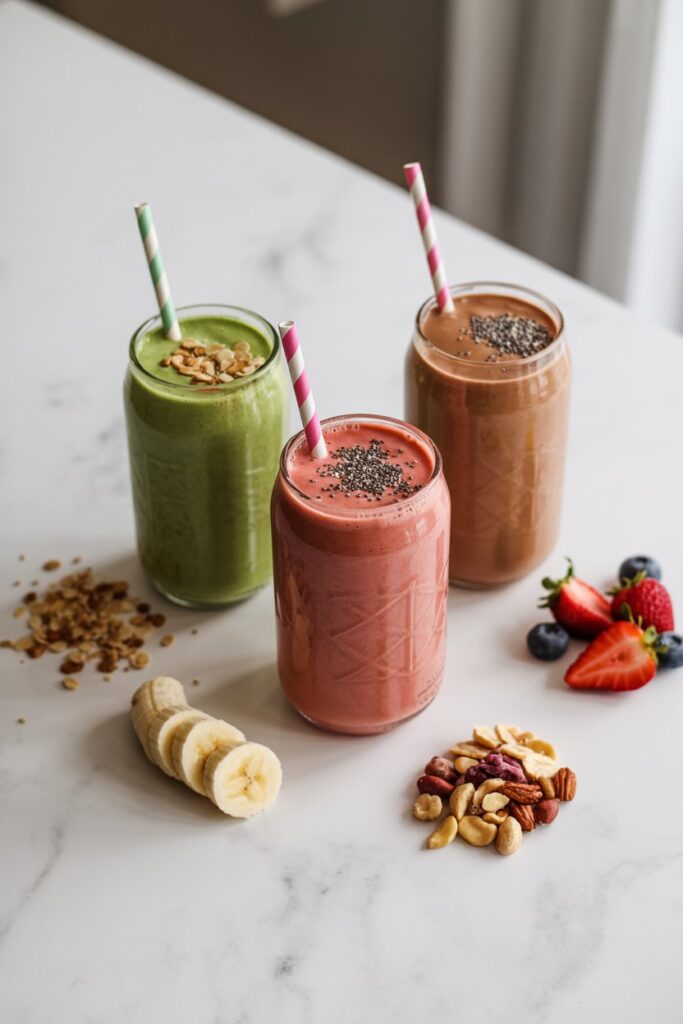
Choosing between whey protein and plant-based protein comes down to several factors, including your dietary preferences, digestion, and fitness goals. Both types have their unique benefits, but they also come with distinct differences.
Amino Acid Profiles
- Whey Protein: This is a complete protein, meaning it contains all nine essential amino acids required by the body for muscle growth and repair. Whey is particularly high in branched-chain amino acids (BCAAs), which are known for promoting muscle protein synthesis and speeding up recovery.
- Plant-Based Protein: While some plant proteins (like pea and hemp) are complete proteins, others, like rice or soy, may lack one or more of the essential amino acids. However, many plant-based protein powders combine multiple sources to create a balanced profile, such as pea, rice, and hemp blends.
Digestibility
- Whey Protein: Generally easy to digest for most people, but those with lactose intolerance may experience discomfort. However, whey isolate is low in lactose, making it a good option for those sensitive to it.
- Plant-Based Protein: Often easier on the stomach for individuals with lactose intolerance or sensitivities to dairy. It’s also a good choice for anyone following a vegan or vegetarian diet. Some plant proteins, like hemp, are rich in fiber, which can support digestion and gut health.
Health Benefits
- Whey Protein: Excellent for muscle growth, recovery, and overall fitness goals. It’s particularly beneficial for people looking to build lean muscle or enhance strength.
- Plant-Based Protein: In addition to supporting muscle recovery, plant-based proteins are often higher in fiber, antioxidants, and anti-inflammatory compounds, making them great for overall health, immunity, and gut support.
Quick Guide to Choosing Your Protein:
- Choose Whey Protein if:
- You have no issue with dairy.
- You want a protein with a fast absorption rate.
- Your primary goal is muscle gain and recovery.
- Choose Plant-Based Protein if:
- You follow a vegan, vegetarian, or dairy-free lifestyle.
- You prefer a slower-digesting protein with added fiber and antioxidants.
- You are concerned about digestive health or have food sensitivities.
Here’s a side-by-side comparison of whey protein vs. plant-based protein (with options like pea, hemp, and soy) to help you make a more informed decision:
| Factor | Whey Protein | Plant-Based Protein |
|---|---|---|
| Amino Acid Profile | Complete, high in BCAAs | Often blends multiple plant sources to be complete |
| Digestibility | Fast-digesting, but may cause discomfort for some | Easier on the stomach, especially for sensitive individuals |
| Ideal For | Muscle gain, strength athletes, quick recovery | Vegan/vegetarian diets, those with dairy sensitivities, general health |
| Nutrient Content | High in protein, low in carbs and fat | Often contains more fiber, antioxidants, and healthy fats |
| Taste | Creamy, mild flavor | Earthy, nutty flavor, may need flavor enhancements |
Lesser-Known Protein Sources: Collagen, Hemp, and More
While whey and plant-based proteins are the most popular, several lesser-known protein sources are gaining recognition for their unique health benefits. These proteins not only support muscle growth but also offer additional advantages for skin, joints, and digestion.
Collagen Protein
Collagen is a structural protein that makes up a significant portion of our skin, hair, nails, and joints. As we age, collagen production naturally declines, leading to wrinkles, joint discomfort, and slower recovery. By adding collagen protein to your smoothie, you can support joint health, skin elasticity, and gut function. Collagen protein is also an excellent choice for anyone looking to improve hair growth and skin health from the inside out.
Unlike whey or other plant proteins, collagen is not a complete protein because it lacks some essential amino acids, but it still plays a crucial role in improving connective tissue health and enhancing beauty from within.
Hemp Protein
Hemp protein is another fantastic option for those seeking a plant-based source of protein. It’s derived from the seeds of the hemp plant and contains all nine essential amino acids. Hemp protein is also packed with omega-3 fatty acids, which support heart and brain health. Additionally, it contains fiber, which can aid in digestion and promote gut health. Hemp protein’s earthy taste may take some getting used to, but when blended into a smoothie, it’s a nutritious powerhouse that supports overall wellness.
Other Plant Proteins:
- Pea Protein: A great option for muscle recovery, it’s rich in BCAAs and is easy to digest, making it suitable for those with sensitive stomachs.
- Brown Rice Protein: Often used in combination with pea protein to create a complete protein profile. It’s gentle on digestion and perfect for those with food sensitivities.
Choosing the Right Protein Powder: What to Look For on the Label
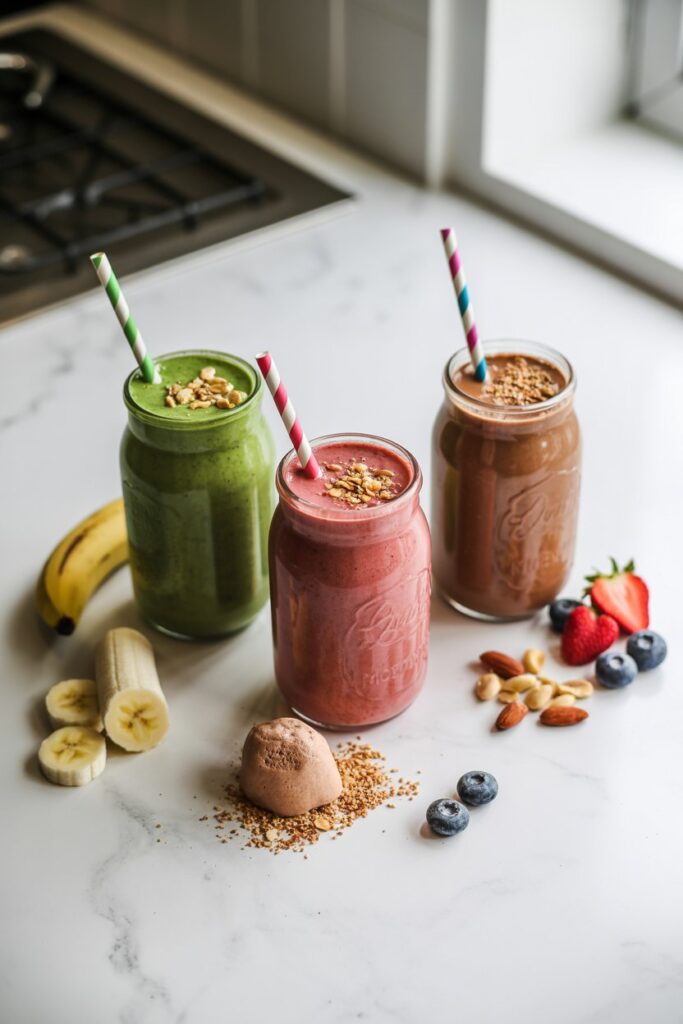
When selecting a protein powder for your smoothies, it’s important to look beyond the marketing and check the ingredient label carefully. Here’s what to look for:
- Protein Source: Ensure the powder lists a high-quality protein source, like whey, pea, or hemp. Check for blends if you need a complete amino acid profile.
- Added Sugars: Many protein powders contain added sugars or artificial sweeteners that can derail your health goals. Look for options with little to no added sugars, or those sweetened naturally with stevia or monk fruit.
- Artificial Ingredients: Avoid protein powders with artificial colors, flavors, or preservatives. These can add unnecessary chemicals to your diet.
- Allergen-Free: If you have allergies, check for certifications like gluten-free, dairy-free, or soy-free.
- Nutrient Profile: Some protein powders offer additional nutrients like fiber, vitamins, or minerals that can enhance your smoothie’s health benefits.
With these tips in mind, you can select a protein powder that aligns with your dietary preferences, fitness goals, and overall health.
Creative and Fun Ways to Supercharge Your Protein Smoothie
Protein smoothies are delicious and nutritious on their own, but why stop there? With a little creativity, you can easily elevate your smoothies to the next level by incorporating superfoods, unique ingredients, and even turning them into fun variations like smoothie bowls or popsicles. Let’s explore how you can take your protein smoothie game to new heights!
Add Superfoods for Extra Nutritional Punch
Superfoods aren’t just a buzzword—they’re power-packed ingredients that offer serious nutritional benefits. Adding them to your protein smoothie can transform an already healthy drink into a powerhouse of vitamins, minerals, and antioxidants. Here are a few popular superfoods to consider:
Spirulina
Spirulina is a blue-green algae that’s rich in protein, iron, vitamin B12, and antioxidants. It’s known for its potential to boost energy, support immune health, and fight inflammation. Just a teaspoon can pack a powerful punch, giving your smoothie a vibrant green color and a nutrient boost without overpowering the taste.
Acai
Acai berries are packed with antioxidants, particularly anthocyanins, which support heart health and help combat oxidative stress. Adding acai to your smoothie not only enhances its color but also boosts its fiber content. Acai purée or freeze-dried powder works great in smoothies and pairs perfectly with tropical fruits like pineapple and mango.
Matcha
Matcha is a finely ground powdered green tea known for its calming effects and increased focus. It’s loaded with antioxidants and offers a mild caffeine boost, making it a great addition to any smoothie. It pairs well with creamy coconut milk, vanilla protein, and even berries, creating a delicious and energizing drink.
Creative Add-ins for Flavor and Nutrition
- Avocado: Adds a creamy texture and healthy fats, which help keep you full longer. It pairs well with chocolate-flavored protein or tropical fruits like mango and pineapple.
- Turmeric: Known for its anti-inflammatory properties, turmeric can add a warm, slightly earthy flavor to your smoothie. Combine it with black pepper to increase its absorption, and add a pinch of cinnamon for a unique twist.
- Chia Seeds: High in fiber and omega-3 fatty acids, chia seeds add texture and enhance satiety. They’re perfect for thickening smoothies or adding a bit of crunch to the mix.
Creative Smoothie Idea:
Try this tropical twist—blend mango, spinach, avocado, and a scoop of pea protein. Add a pinch of turmeric and top with chia seeds. This smoothie will give you healthy fats, antioxidants, and protein, all in one delicious drink.
Protein Smoothies Beyond the Glass: How to Make Smoothie Bowls & Popsicles
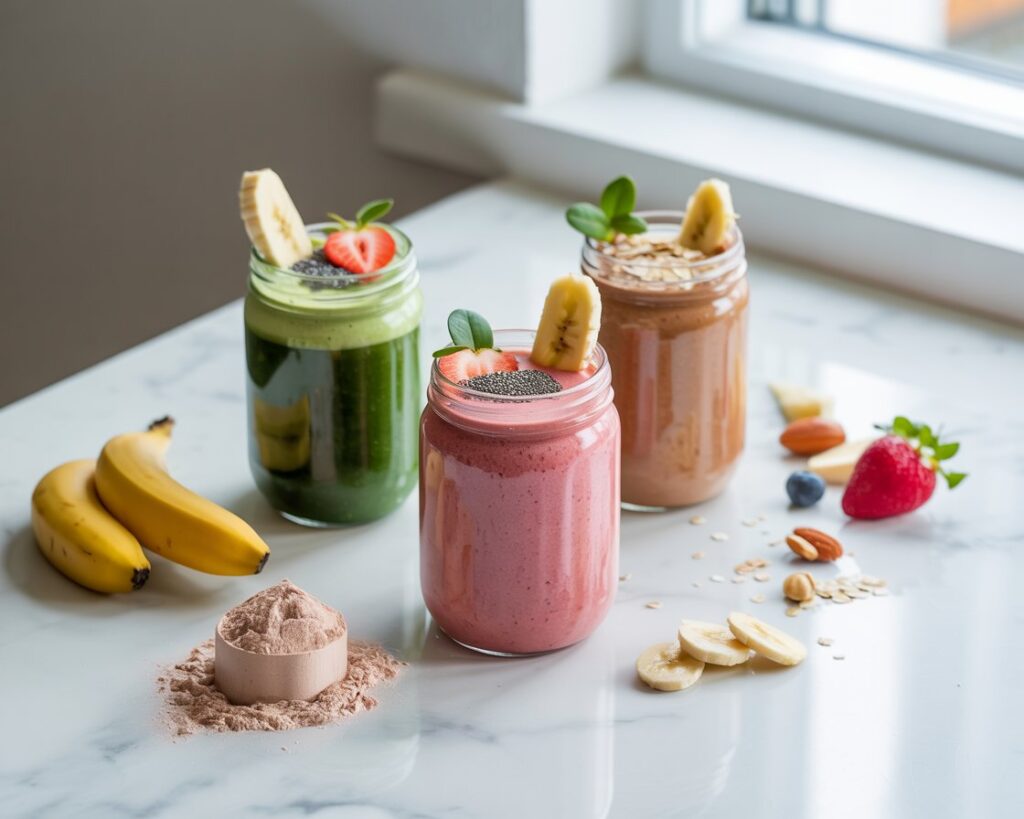
Sometimes, you want more than just a smoothie in a glass. Transform your protein smoothie into a fun and refreshing treat with these unique variations: smoothie bowls and popsicles.
Smoothie Bowls
Smoothie bowls are thicker than regular smoothies and served in a bowl with toppings like granola, fresh fruit, seeds, or nuts. The thicker texture allows you to get creative with the toppings, making your smoothie bowl feel more like a dessert, but with all the healthy goodness you need.
Here’s how to make a basic smoothie bowl:
- Blend your usual protein smoothie ingredients, but use less liquid to create a thicker consistency.
- Pour into a bowl and top with things like berries, coconut flakes, chia seeds, and a sprinkle of cacao nibs.
Fun Smoothie Bowl Idea:
Blend frozen banana, spinach, and whey protein for a base. Top it with strawberries, almond butter, and a few goji berries for extra antioxidants. You can even add a drizzle of honey for sweetness.
Popsicles
Protein popsicles are a great way to cool down while still getting your protein fix. You can use any protein smoothie blend and pour it into popsicle molds. Let them freeze for a few hours, and you’ll have a refreshing, protein-packed treat.
Popsicle Idea:
Combine frozen mango, coconut milk, and vanilla protein for a tropical flavor. Pour into molds and freeze for a delicious post-workout treat. Add a few pieces of chopped mint or a slice of lime in the molds for an extra zing.
Comparison of Protein Smoothies vs. Bowls & Popsicles:
| Variation | Texture | Flavor Profile | Ideal For |
|---|---|---|---|
| Protein Smoothie | Smooth, liquid consistency | Sweet, fruity, or savory | Quick meal replacement, breakfast, or snack |
| Smoothie Bowl | Thick, creamy, with crunchy toppings | Sweet with added textures | A more filling meal or dessert-like treat |
| Protein Popsicle | Frozen, icy texture | Refreshing and fruity | Perfect for hot days or a fun post-workout snack |
The Secret Ingredient for Creamy, Dreamy Smoothies
The texture of a smoothie can make all the difference. You want it to be rich, creamy, and indulgent without loading it with sugar or empty calories. Here are some ingredients that can create the perfect smooth and creamy texture:
Greek Yogurt
Greek yogurt is a powerhouse ingredient that adds protein and a rich, creamy texture to your smoothie. It also contains probiotics, which promote gut health. Greek yogurt works especially well in tropical or berry-based smoothies.
Frozen Cauliflower
It may sound odd, but frozen cauliflower is an incredible way to thicken your smoothie without adding flavor. It’s rich in fiber and vitamins, and it won’t affect the taste of your smoothie. Plus, it helps create a creamy texture while keeping your smoothie low in calories.
Coconut Milk
For a truly indulgent texture, coconut milk is a fantastic choice. It adds a tropical, velvety smooth texture to your smoothie, along with healthy fats. Use full-fat coconut milk for a rich, dessert-like consistency or opt for light coconut milk to reduce the calorie count.
Avocado (Again!)
Already mentioned as a nutrient powerhouse, avocado is a secret weapon for creating creamy smoothies without the added sugar. It provides healthy fats and helps make your smoothie luxuriously smooth.
5 Mistakes You Might Be Making with Your Protein Smoothie (And How to Fix Them)
Protein smoothies are a great way to fuel your body with essential nutrients, but if you’re not careful, they could be doing more harm than good. From adding too much sugar to not balancing your macronutrients properly, there are a few common mistakes that can derail your smoothie goals. Let’s break down five common smoothie mistakes and how to fix them to ensure you’re getting the most out of every blend.
Overloading on Sugar: Why Your Protein Smoothie Might Be Sabotaging Your Goals
It’s easy to fall into the trap of thinking that fruit-based protein smoothies are automatically healthy. However, too much sugar—even natural sugars from fruit—can spike your blood sugar levels and derail your weight management or fitness goals. A common mistake is adding large amounts of high-sugar fruits (like bananas, mangoes, or pineapple) or using store-bought juices that are loaded with added sugars.
The problem with these ingredients is that they can quickly turn your smoothie into a sugar bomb. This can cause a blood sugar spike followed by an energy crash, leading to cravings and overeating later in the day.
How to Fix It:
- Use whole fruits in moderation: Stick to lower-sugar fruits like berries, kiwi, or apples. These provide antioxidants and fiber, while keeping the sugar content in check.
- Ditch the store-bought juices: Opt for unsweetened almond milk, coconut water, or simply water as your base. This will keep the sugar content low without sacrificing flavor.
- Use natural sweeteners: Instead of adding extra sugar or sweetened syrups, use stevia, monk fruit, or a dash of cinnamon or vanilla extract to bring out the natural sweetness in your smoothie.
By making these adjustments, you’ll keep the sugar levels in check while still enjoying a tasty, satisfying drink.
Skipping the Balance: Why You Need More Than Just Protein
A common mistake when making protein smoothies is focusing solely on protein, neglecting the other crucial macronutrients that make a meal truly satisfying. Protein is essential, but to ensure your smoothie is both nutrient-dense and satisfying, it’s important to incorporate healthy fats, complex carbs, and fiber.
Without these additional nutrients, you might feel hungry again shortly after finishing your smoothie. Plus, missing out on fats and carbs can leave you with an unbalanced nutrient profile that might not fuel your body for long-term energy or support your fitness goals.
How to Fix It:
- Healthy Fats: Add ingredients like avocado, chia seeds, flax seeds, or a tablespoon of nut butter. These fats not only make your smoothie creamy and delicious but also help to keep you full longer.
- Fiber: Include fiber-rich ingredients like spinach, chia seeds, or oats. Fiber helps to slow digestion, keeping you satisfied and preventing energy crashes.
- Complex Carbs: Consider adding ingredients like sweet potato, quinoa, or berries for slow-releasing energy. These carbs help stabilize blood sugar levels, giving you sustained energy.
By incorporating these macronutrients into your protein smoothie, you’ll create a more balanced and nourishing meal that satisfies hunger and supports your overall health.
Quick Infographic: Balanced vs. Protein-Only Smoothie
| Smoothie Component | Balanced Smoothie | Protein-Only Smoothie |
|---|---|---|
| Protein | 20-30g (e.g., Whey, Pea, Collagen) | 20-30g (e.g., Whey, Pea) |
| Carbs | 20-30g (e.g., Berries, Oats, Quinoa) | 0-10g (typically just fruits or none) |
| Healthy Fats | 5-10g (e.g., Avocado, Nut Butter, Chia Seeds) | 0g or minimal (can feel hungry after) |
| Fiber | 5-10g (e.g., Spinach, Chia, Flaxseeds) | 0-2g (usually lacks fiber) |
Forgetting to Plan: How to Make Your Protein Smoothie a Convenient, Everyday Habit
One of the biggest hurdles in making protein smoothies regularly is the time it takes to prepare them. While smoothies are often quick to blend, gathering all the ingredients, chopping fruits, and measuring out protein can be tedious, especially on busy mornings.
The secret to making smoothies an everyday habit is planning ahead. If you prep your ingredients in advance, making a smoothie becomes a breeze.
How to Fix It:
- Pre-portion ingredients: Measure out individual servings of protein powder, fruits, and other mix-ins (like seeds or greens) and place them into zip-lock bags or reusable containers. Store them in the freezer so they’re ready to blend.
- Use frozen fruits: Frozen fruits are not only convenient but also help create a thicker, creamier smoothie. Stock up on frozen berries, mango, or spinach to save time.
- Set a routine: Make smoothie-making part of your daily routine. Consider preparing your smoothie the night before, so it’s ready to go in the morning. You can even prep your smoothies in bulk for the week ahead.
By planning your smoothies ahead of time, you’ll eliminate the hassle and ensure that making a nutritious, protein-packed smoothie is a quick and easy habit.
How to Customize Your Protein Smoothie for Your Fitness Goals
Protein smoothies are versatile, but the key to making them truly effective for your fitness journey lies in customizing them based on your specific goals. Whether you’re looking to recover after a workout, lose weight, or fuel an active lifestyle, your smoothie can be tailored to provide the right nutrients at the right time. Let’s dive into how you can create a protein smoothie that aligns with your fitness objectives.
Building a Post-Workout Smoothie for Recovery
Post-workout nutrition is critical for muscle recovery, energy replenishment, and minimizing muscle soreness. After a tough workout, your body needs both protein for muscle repair and carbohydrates to replenish the glycogen stores that get depleted during exercise. The ideal protein-to-carb ratio for post-workout recovery is about 1:3 or 1:4 (protein to carbs), ensuring you get enough energy and muscle-building nutrients.
What to Include:
- Protein: Aim for around 20–30 grams of protein, which can come from sources like whey protein, pea protein, or even Greek yogurt. Protein helps with muscle repair and growth.
- Carbohydrates: Add around 60–120 grams of carbs (depending on the intensity of your workout). For strength training, carbs like sweet potatoes, bananas, or oats work well to replenish muscle glycogen. After cardio or endurance training, opt for faster-digesting carbs like mango, pineapple, or beets.
- Hydration: Don’t forget to hydrate! Add coconut water or a pinch of electrolyte powder to replenish sodium and potassium levels lost through sweat.
Sample Post-Workout Smoothie:
- 1 scoop whey protein
- 1/2 cup oats
- 1/2 banana
- 1 tablespoon peanut butter (for some healthy fats)
- 1 cup almond milk or coconut water
This combination provides a perfect balance of protein and carbs, ideal for a strength-focused workout or a heavy cardio session.
Protein Smoothies for Weight Loss: Focus on Filling Ingredients
When creating a smoothie for weight loss, the goal is to craft something that is low in calories but high in nutrients to help keep you full and satisfied. The best way to achieve this is by focusing on fiber-rich ingredients, lean protein, and healthy fats that promote satiety without tipping the scale in terms of calories.
What to Include:
- Fiber: Incorporate high-fiber ingredients like spinach, kale, chia seeds, flax seeds, or avocado. Fiber slows down digestion, helping you feel fuller for longer and reducing the likelihood of snacking.
- Healthy Fats: Add a small amount of almond butter, chia seeds, or coconut oil to provide sustained energy and keep hunger at bay.
- Low-Calorie Liquids: Use a low-calorie base like unsweetened almond milk or coconut water to keep your smoothie creamy without the extra calories of milk or fruit juices.
Tip Box: Quick Weight-Loss Smoothie Hacks
- Swap dairy milk for almond milk to cut calories and add healthy fats.
- Add spinach or kale for a volume boost without many calories—plus, the green flavor is often masked by fruit.
- Use frozen fruits like berries to reduce sugar and calorie content while keeping the smoothie thick and refreshing.
- Add protein powder (about 20 grams) to make the smoothie more filling and prevent hunger pangs later in the day.
- Limit high-sugar fruits like bananas and grapes. Instead, use low-sugar options like berries or avocado.
Sample Weight-Loss Smoothie:
- 1 scoop plant-based protein (pea or hemp)
- 1/2 cup spinach
- 1/2 avocado
- 1/4 cup frozen berries
- 1 tablespoon chia seeds
- 1 cup unsweetened almond milk
This smoothie provides a healthy dose of fiber, protein, and healthy fats while keeping the calorie count low.
Protein Smoothies for Active Lifestyles: Fueling Before and After Workouts
If you’re leading an active lifestyle, whether it’s a full day of work, travel, or intense sports training, protein smoothies can be a lifesaver for fueling and recovering efficiently. They can be consumed before a workout for a quick energy boost or after a workout to aid in recovery.
Pre-Workout Smoothies:
Before a workout, you want to consume something that provides a combination of carbs for energy and protein to prepare your muscles for the activity ahead. You don’t want something too heavy, but it should be nourishing enough to keep you energized throughout the session.
What to Include:
- Carbs for Energy: A small amount of banana, apple, or sweet potato for sustained energy release.
- Protein: About 15–20 grams of protein to help with muscle endurance and recovery. You can add Greek yogurt or protein powder here.
- Healthy Fats: A dash of nut butter or flaxseeds for stable energy release.
Sample Pre-Workout Smoothie:
- 1 scoop whey protein
- 1/2 banana
- 1 tablespoon almond butter
- 1/2 cup unsweetened almond milk
Long Days of Activity:
For active professionals, travelers, or athletes on-the-go, having a portable smoothie can be a game changer. Consider making smaller smoothies or smoothie bowls for quick fuel during the day.
You can prep ingredients in advance by making frozen smoothie packs (just add water or almond milk when ready to blend).
Sample Active Lifestyle Smoothie (for a long day ahead):
- 1 scoop pea protein
- 1 tablespoon flax seeds
- 1/4 cup oats
- 1 cup coconut water
- 1/2 cup mixed berries
This combo provides sustained energy for a busy day, from morning work meetings to an evening workout or sports practice.
How to Make Protein Smoothies Part of Your Daily Routine
Incorporating protein smoothies into your daily routine doesn’t have to be a chore—it can actually be a fun and rewarding part of your day. Whether you’re looking to enhance your workout recovery, fuel your weight loss journey, or simply add more nutritious options to your diet, smoothies are an easy way to pack a ton of benefits into one delicious drink.
Remember, the key is to experiment and find combinations that suit your tastes, preferences, and fitness goals. There are endless possibilities with protein smoothies, from using different protein sources to adding a variety of superfoods, healthy fats, and fiber-rich ingredients. Don’t be afraid to get creative—what works for someone else might not work for you, and that’s totally okay. The more you play with different flavors and ingredients, the more you’ll discover what truly satisfies you.
Encouragement:
Making protein smoothies a part of your routine doesn’t have to be complicated or boring. With just a few basic ingredients and some creativity, you can whip up smoothies that are not only nutritious but also taste amazing. Start simple—grab your favorite protein powder, add a handful of greens, toss in a couple of fruits, and you’re good to go.
As you get more comfortable, feel free to explore new flavors and try different ingredients to elevate your smoothie game. Whether you’re looking for a quick breakfast, a post-workout snack, or a midday energy boost, protein smoothies are the perfect way to support your health goals, all while keeping things fun and delicious.
